Royal Flying Corps Sopwith F.1 Camel in 1914-1916 period.
The Sopwith Camel was a British First World War single-seat biplane fighter aircraft that was introduced on the Western Front in 1917. It was developed by the Sopwith Aviation Company as a successor to the Sopwith Pup and became one of the best known fighter aircraft of the Great War.
The Camel was powered by a single rotary engine and was armed with twin synchronized Vickers machine guns. Though proving difficult to handle, it provided for a high level of manoeuvrability to an experienced pilot, an attribute which was highly valued in the type’s principal use as a fighter aircraft. In total, Camel pilots have been credited with downing 1,294 enemy aircraft, more than any other Allied fighter of the conflict. Towards the end of the First World War, the type had also seen use as a ground-attack aircraft, partially due to it having become increasingly outclassed as the capabilities of fighter aircraft on both sides were rapidly advancing at that time.
The main variant of the Camel was designated as the F.1; several dedicated variants were built for a variety of roles, including the 2F.1 Ship’s Camel, which was used for operating from the flight decks of aircraft carriers, the Comic night fighter variant, and the T.F.1, a dedicated “trench fighter” that had been armoured for the purpose of conducting ground attacks upon heavily defended enemy lines. The Camel also saw use as a two-seat trainer aircraft. In January 1920, the last aircraft of the type were withdrawn from RAF service.

Harry Cobby sitting in the cockpit of a Sopwith Camel
Development
When it became clear the Sopwith Pup was no match for the newer German fighters such as the Albatros D.III, the Camel was developed to replace it, as well as the Nieuport 17s that had been purchased from the French as an interim measure. It was recognised that the new fighter needed to be faster and have a heavier armament. The design effort to produce this successor, initially designated as the Sopwith F.1, was headed by Sopwith’s chief designer, Herbert Smith.
Early in its development, the Camel was simply referred to as the “Big Pup”. A metal fairing over the gun breeches, intended to protect the guns from freezing at altitude, created a “hump” that led pilots to call the aircraft “Camel”, although this name was never used officially. On 22nd December 1916, the prototype Camel was first flown by Harry Hawker at Brooklands, Weybridge, Surrey; it was powered by a 110 hp Clerget 9Z.
In May 1917, the first production contract for an initial batch of 250 Camels was issued by the British War Office. Throughout 1917, a total of 1,325 Camels were produced, almost entirely the initial F.1 variant. By the time that production of the type came to an end, approximately 5,490 Camels of all types had been built. In early 1918, production of the naval variant of the Sopwith Camel, the “Ship’s” Camel 2F.1 began.
Design
Overview
The Camel had a mostly conventional design for its era, featuring a wooden box-like fuselage structure, an aluminium engine cowling, plywood panels around the cockpit, and a fabric-covered fuselage, wings and tail. While possessing some clear similarities with the Pup, it was furnished with a noticeably bulkier fuselage. For the first time on an operational British-designed fighter, two 0.303 in (7.7 mm) Vickers machine guns were mounted directly in front of the cockpit, synchronised to fire forwards through the propeller disc – initially this consisted of the fitment of the Sopwith firm’s own synchronizer design, but after the mechanical-linkage Sopwith-Kauper units began to wear out, the more accurate and easier-to-maintain, hydraulic-link Constantinesco-Colley system replaced it from November 1917 onward. In addition to the machine guns, a total of four Cooper bombs could be carried for ground attack purposes.

Replica Sopwith Camel showing internal structure
The bottom wing was rigged with 5° dihedral while the top wing lacked any dihedral; this meant that the gap between the wings was less at the tips than at the roots; this change had been made at the suggestion of Fred Sigrist, the Sopwith works manager, as a measure to simplify the aircraft’s construction. The upper wing featured a central cutout section for the purpose of providing improved upwards visibility for the pilot.
Production Camels were powered by various rotary engines, most commonly either the Clerget 9B or the Bentley BR1. In order to evade a potential manufacturing bottleneck being imposed upon the overall aircraft in the event of an engine shortage, several other engines were adopted to power the type as well.
Flight characteristics
Unlike the preceding Pup and Triplane, the Camel was considered to be difficult to fly. The type owed both its extreme manoeuvrability and its difficult handling to the close placement of the engine, pilot, guns and fuel tank (some 90% of the aircraft’s weight) within the front seven feet of the aircraft, and to the strong gyroscopic effect of the rotating mass of the cylinders common to rotary engines. Aviation author Robert Jackson notes that: “in the hands of a novice it displayed vicious characteristics that could make it a killer; but under the firm touch of a skilled pilot, who knew how to turn its vices to his own advantage, it was one of the most superb fighting machines ever built”.

1917 Sopwith F.1 Camel at Steven F. Udvar-Hazy Center
The Camel soon gained an unfortunate reputation with pilots. Some inexperienced pilots crashed on take-off when the full fuel load pushed the aircraft’s centre of gravity beyond the rearmost safe limits. When in level flight, the Camel was markedly tail-heavy. Unlike the Sopwith Triplane, the Camel lacked a variable incidence tailplane, so that the pilot had to apply constant forward pressure on the control stick to maintain a level attitude at low altitude. The aircraft could be rigged so that at higher altitudes it could be flown “hands off”. A stall immediately resulted in a dangerous spin.
A two-seat trainer version of the Camel was later built to ease the transition process: in his Recollections of an Airman Lt Col L.A. Strange, who served with the central flying school, wrote: “In spite of the care we took, Camels continually spun down out of control when flew by pupils on their first solos. At length, with the assistance of Lieut Morgan, who managed our workshops, I took the main tank out of several Camels and replaced [them] with a smaller one, which enabled us to fit in dual control.” Such conversions, and dual instruction, went some way to alleviating the previously unacceptable casualties incurred during the critical type-specific solo training stage.

USAS Sopwith Camel
Operational history
Western front
In June 1917, the Sopwith Camel entered service with No. 4 Squadron of the Royal Naval Air Service, which was stationed near Dunkirk, France; this was the first squadron to operate the type. Its first combat flight and reportedly its first victory claim were both made on 4 July 1917. By the end of July 1917, the Camel also equipped No. 3 and No. 9 Naval Squadrons; and it had become operational with No. 70 Squadron of the Royal Flying Corps. By February 1918, 13 squadrons had Camels as their primary equipment.

Pilot’s view from the cockpit of a Camel, June 1918
The Camel proved to have better manoeuvrability than the Albatros D.III and D.V and offered heavier armament and better performance than the Pup and Triplane. Its controls were light and sensitive. The Camel turned more slowly to the left, which resulted in a nose-up attitude due to the torque of the rotary engine, but the torque also resulted in being able to turn to the right quicker than other fighters, although that resulted in a tendency towards a nose-down attitude from the turn. Because of the faster turning capability to the right, some pilots preferred to change heading 90° to the left by turning 270° to the right.
Agility in combat made the Camel one of the best-remembered Allied aircraft of the First World War. RFC crew used to joke that it offered the choice between “a wooden cross, the Red Cross, or a Victoria Cross”. Together with the S.E.5a and the SPAD S.XIII, the Camel helped to re-establish the Allied aerial superiority that lasted well into 1918.
Major William Barker’s Sopwith Camel (serial no. B6313, the aircraft in which he scored the majority of his victories) was used to shoot down 46 aircraft and balloons from September 1917 to September 1918 in 404 operational flying hours, more than any other single RAF fighter.

Camels being prepared for a daylight raid on German trenches
Home defence and night fighting
An important role for the Camel was home defence. The RNAS flew Camels from Eastchurch and Manston airfields against daylight raids by German bombers, including Gothas, from July 1917. The public outcry against the night raids and the poor response of London’s defences resulted in the RFC deciding to divert Camels that had been heading to the frontlines in France to Britain for the purposes of home defence; in July 1917, 44 Squadron RFC reformed and reequipped with the Camel to conduct the home defence mission. By March 1918, the home defence squadrons had been widely equipped with the Camel and by August 1918, a total of seven home defence squadrons were operating these aircraft.
When the Germans switched to performing nighttime attacks, the Camel proved capable of being flown at night as well. Accordingly, those aircraft assigned to home defence squadrons were quickly modified with navigation lights in order that they could serve as night fighters. A smaller number of Camels were more extensively reconfigured; on these aircraft, the Vickers machine guns were replaced by overwing Lewis guns and the cockpit was moved rearwards so the pilot could reload the guns. This modification, which became known as the “Sopwith Comic” allowed the guns to be fired without affecting the pilot’s night vision, and allowed the use of new, more effective incendiary ammunition that was considered unsafe to fire from synchronised Vickers guns.

A downed Sopwith Camel near Zillebeke, West Flanders, Belgium, 26 September 1917
The Camel was successfully used to intercept and shoot down German bombers on multiple occasions during 1918, serving in this capacity through to the final German bombing raid upon Britain on the night of the 20th/21st May 1918. During this air raid, a combined force of 74 Camels and Royal Aircraft Factory S.E.5s intercepted 28 Gothas and Zeppelin-Staaken R.VIs; three German bombers were shot down, while two more were downed by anti-aircraft fire from the ground and a further aircraft was lost to engine failure, resulting in the heaviest losses suffered by German bombers during a single night’s operation over England.
The Camel night fighter was also operated by 151 Squadron to intercept German night bombers operating over the Western Front. These aircraft were not only deployed defensively, but often carried out night intruder missions against German airstrips. After five months of operations, 151 Squadron had claimed responsibility for shooting down 26 German aircraft.

Replica of Camel F.1 flown by Lt. George Vaughn Jr., 17th Aero Squadron at the USAF Museum
Shipboard and parasite fighter
The RNAS operated a number of 2F.1 Camels that were suitable for launching from platforms mounted on the turrets of major warships as well as from some of the earliest aircraft carriers to be built. Furthermore, the Camel could be deployed from aircraft lighters, which were specially modified barges; these had to be towed fast enough that a Camel could successfully take off. The aircraft lighters served as means of launching interception sorties against incoming enemy air raids from a more advantageous position than had been possible when using shore bases alone.
During the summer of 1918, a single 2F.1 Camel (N6814) participated in a series of trials as a parasite fighter. The aircraft used Airship R23 as a mothership.

Navalised Camels on the aircraft carrier HMS Furious prior to raiding the Tondern airship hangars
Ground attack
By mid-1918, the Camel had become obsolescent as a day fighter as its climb rate, level speed and performance at altitudes over 12,000 ft (3,650 m) were outclassed by the latest German fighters, such as the Fokker D.VII. However, it remained viable as a ground-attack and infantry support aircraft and instead was increasingly used in that capacity. The Camel inflicted high losses on German ground forces, albeit suffering from a high rate of losses itself in turn, through the dropping of 25 lb (11 kg) Cooper bombs and low-level strafing runs. The protracted development of the Camel’s replacement, the Sopwith Snipe, resulted in the Camel remaining in service in this capacity until well after the signing of the Armistice.
During the German Spring Offensive of March 1918, squadrons of Camels participated in the defence of the Allied lines, harassing the advancing German Army from the skies. Jackson observed that “some of the most intense air operations took place” during the retreat of the British Fifth Army, in which the Camel provided extensive aerial support. Camels flew at multiple altitudes, some as low as 500 feet for surprise strafing attacks upon ground forces, while being covered from attack by hostile fighters by the higher altitude aircraft. Strafing attacks formed a major component of British efforts to contain the offensive, the attacks often having the result of producing confusion and panic amongst the advancing German forces. As the March offensive waned, the Camel was able to operate within and maintain aerial superiority for the remainder of the war.

Sopwith 2F.1 Camel suspended from airship R 23 prior to a test flight
Postwar service
In the aftermath of the First World War, the Camel saw further combat action. Multiple British squadrons were deployed into Russia as a part of the Allied intervention in the Russian Civil War. Between the Camel and the S.E.5, which were the two main types deployed to the Caspian Sea area to bomb Bolshevik bases and to provide aerial support to the Royal Navy warships present, Allied control of the Caspian region had been achieved by May 1919. Starting in March 1919, direct support was also provided for White Russian forces, carrying out reconnaissance, ground attack, and escort operations. During the summer of 1919, Camels of No. 47 Squadron conducted offensive operations in the vicinity of Tsaritsyn, primarily against Urbabk airfield; targets including enemy aircraft, cavalry formations, and river traffic. In September 1919, 47 Squadron was related to Kotluban, where its aircraft operations mainly focused on harassing enemy communication lines. During late 1919 and early 1920, the RAF detachment operated in support of General Vladimir May-Mayevsky’s counter-revolutionary volunteer army during intense fighting around Kharkov. In March 1920, the remainder of the force was evacuated and their remaining aircraft were deliberately destroyed to avoid them falling into enemy hands.

The Sopwith 2F.1 Camel used to shoot down Zeppelin L 53, at the Imperial War Museum, London. Note mounting of twin Lewis guns over the top wing
Variants
Camels were powered by several makes of rotary engines:
130 hp Clerget 9B rotary (standard powerplant)
140 hp Clerget 9Bf rotary
110 hp Le Rhône 9J rotary
150 hp Bentley BR1 rotary (gave best performance – standard for R.N.A.S. machines)
100 hp Gnome Monosoupape 9B-2 rotary
160 hp Gnome Monosoupape 9N rotary
Sopwith Camel F.1
The F.1 was the main production version. It was armed with twin synchronised Vickers guns.

Belgian Sopwith Camel flown by Adj. Léon Cremers with n° 11 Squadron “Cocotte” marking
Sopwith Camel 2F.1
The 2F.1 was a shipboard variant, flown from HMS Furious. It had a slightly shorter wingspan and a Bentley BR1 as its standard engine. Additionally, one Vickers gun was replaced by an overwing Lewis gun.
Sopwith Camel “Comic” Night fighter
The “Comic” was a Camel variant designed specifically for night-fighting duties. The twin Vickers guns were replaced by two Lewis guns on Foster mountings firing forward over the top wing, as the muzzle flash of the Vickers guns could blind the pilot. To allow reloading of the guns, the pilot was moved about 12 inches (30 cm) to the rear and to compensate the fuel tank was moved forward. It served with Home Defence Squadrons against German air raids. The “Comic” nickname was unofficial, and was shared with the night fighter version of the Sopwith 1½ Strutter.
F.1/1
The F1/1 was a version with tapered wings.

Portrait of Major Wilfred Ashton McCloughry MC, the Commanding Officer of No. 4 Squadron AFC, and his Sopwith Camel, 6th June 1918
T.F.1
The T.F.1 was an experimental trench fighter used for development work for the Sopwith Salamander. Its machine guns were angled downwards for efficient strafing, and it featured armour plating for protection.
Trainer
The trainer variant had a second cockpit behind the normal pilot’s position. The weapons were removed, although the hump was sometimes kept.

Sopwith Camel at the Royal Air Force Museum
Corgi Aviation Archive Photo Updates.
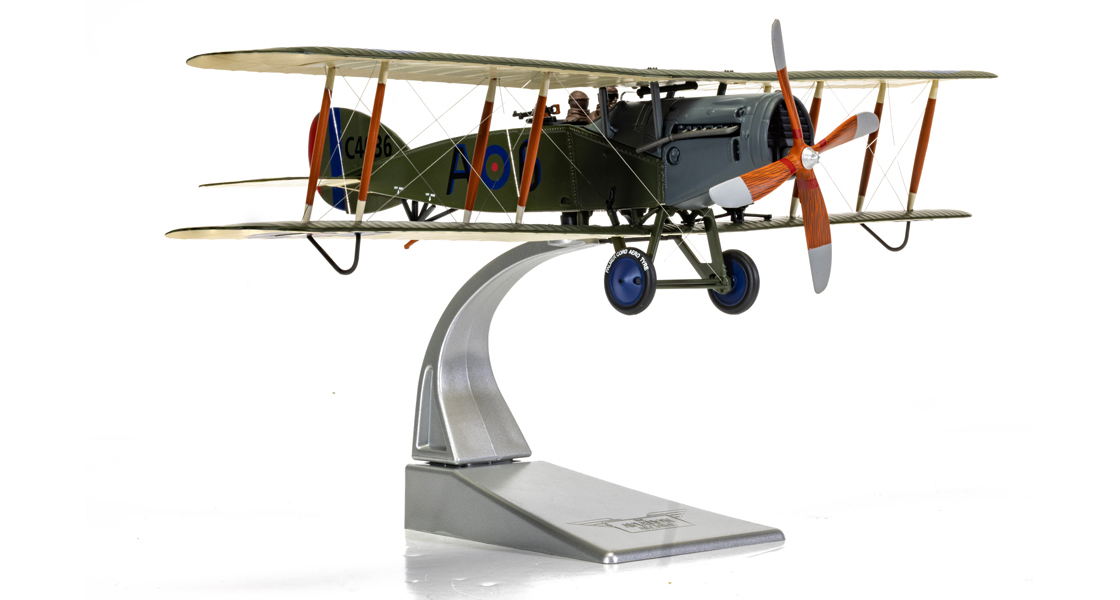
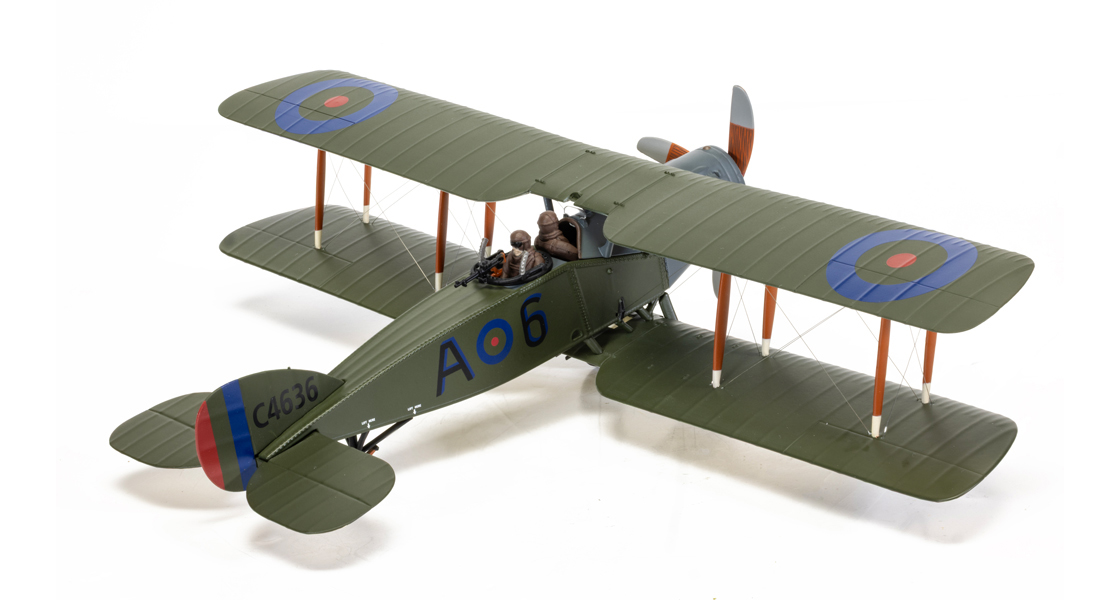
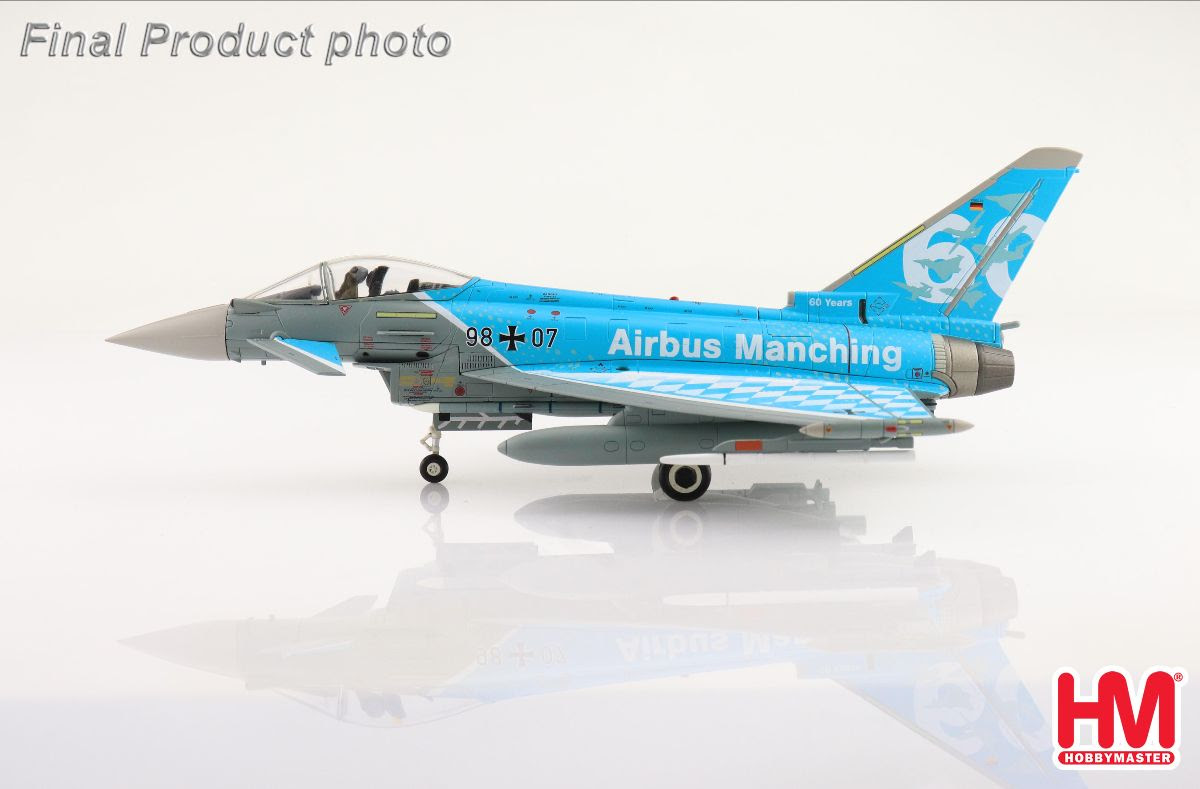
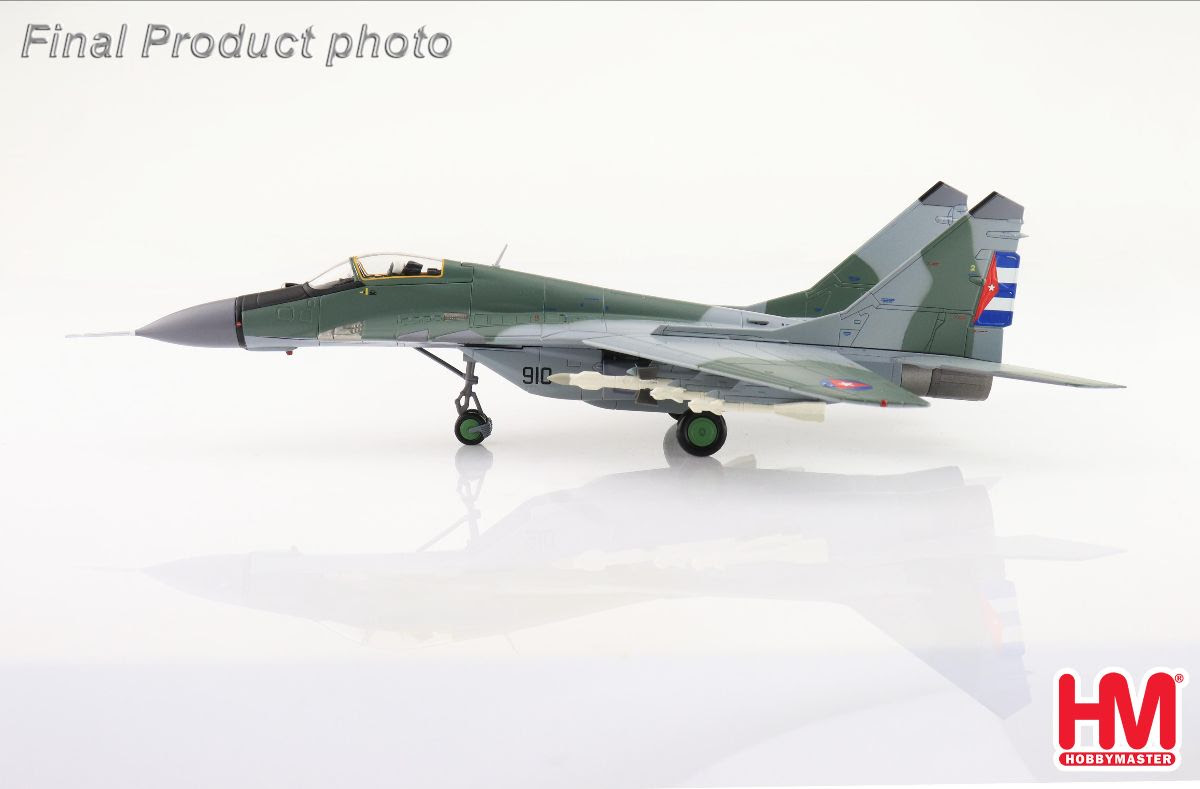
Check out the latest 1/48th scale Corgi Aviation Archive Models due to arrive soon! Please click on the images and links below to go to the model of your choice and order yours now!
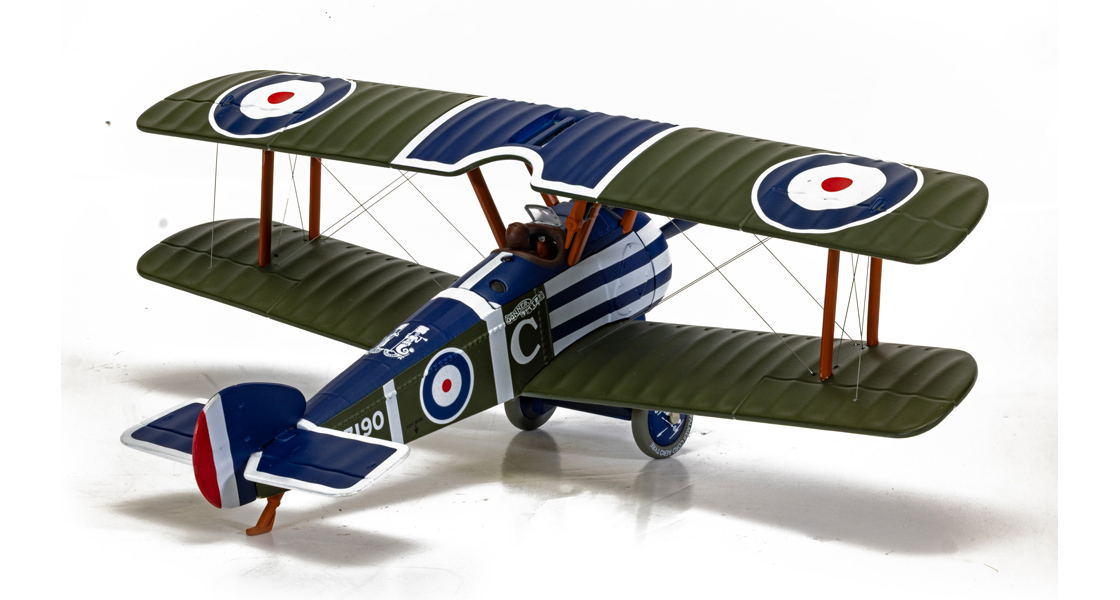
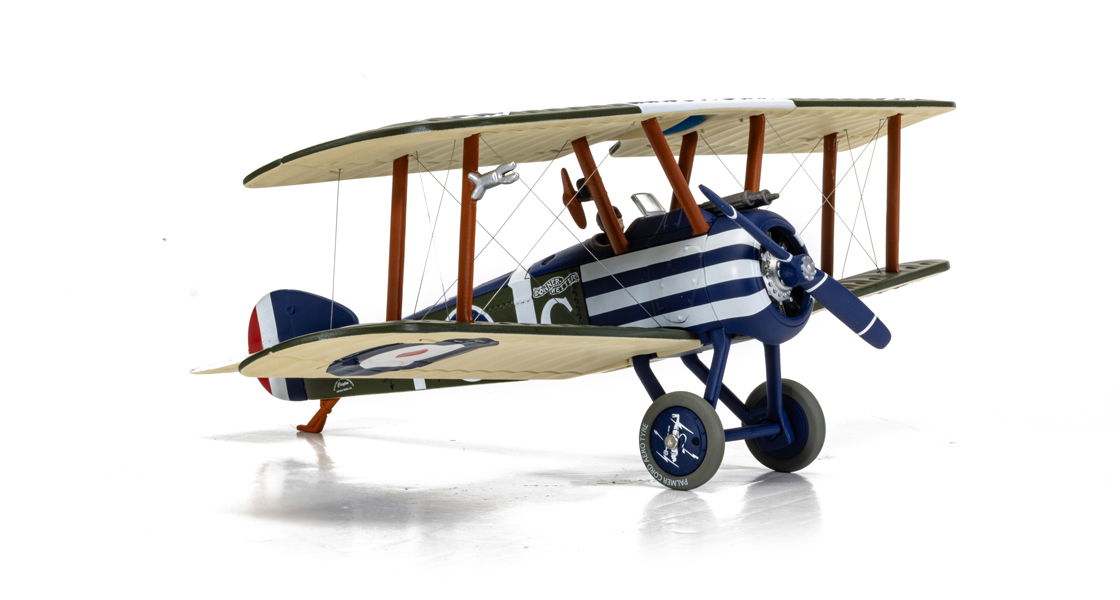

|
|

|
|

|
|

|
|
|
|
|
|

|
|

|
|

|
|
|
|

|
|
|
|
|
|

|
|

|
|

|
|

|
|

|
|

|
|

|
|
|
|
|
|

|
|

|
|

|
|

|
|

Flying Tigers… Military & Civilian Aviation SALE NOW ON !
Check out Flying Tigers … Military Aviation Sale is now on!
All models are Brand New models Mint in Box. Limited stocks when they are gone…they are gone!
Please allow extra time during Sale periods.
OFFER ENDS SUNDAY 16TH NOVEMBER AT 23.00 GMT OR WHILST STOCKS LAST.
Standard UK delivery only £4.95 (click here for details)
Please CLICK HERE to see all the models in the Sale!
Thank you for reading this week’s Newsletter.
Richard
Flying Tigers.