A Harrier GR9 aircraft from 1(F) Squadron takes off from Kandahar Airfield, Helmand, Afghanistan.
1 (F) Squadron marked the end of Harrier air operations in Afghanistan in 2009, five years after RAF and Royal Navy pilots first engaged the Taliban in Operation Herrick. This 97 year old Squadron – the oldest fighter squadron in the RAF – returned home on 1 July 2009 and was replaced by 12 Squadron’s Tornado GR4s, based at RAF Lossiemouth.
Operation Herrick was the codename under which all British operations in the War in Afghanistan were conducted from 2002 to the end of combat operations in 2014. It consisted of the British contribution to the NATO-led International Security Assistance Force (ISAF), and support to the American-led Operation Enduring Freedom (OEF), within the central Asian country.
Operation Herrick superseded two previous efforts in Afghanistan. The first of these was Operation Veritas, which consisted of support during the United States invasion of Afghanistan in October 2001. The last major action of this was a sweep in east Afghanistan by 1,700 Royal Marines during Operation Jacana, which ended in mid-2002. The second was Operation Fingal, which involved leadership and a 2,000 strong contribution for a newly formed ISAF in Kabul after December 2001. Command was subsequently transferred to NATO ally Turkey several months later and the British contingent was scaled back to 300. Since then, all combat operations in Afghanistan have been conducted under Operation Herrick. After 2003, Operation Herrick increased in size and breadth to match ISAF’s growing geographical intervention in Afghanistan.
In December 2012 the UK Prime Minister David Cameron announced that 3,800 troops, almost half of the force serving in Helmand Province, would be withdrawn during 2013 with numbers to fall to approximately 5,200. The UK ceased all combat operations in Afghanistan and withdrew the last of its combat troops on the 27 October 2014. Between 2001 and 24 July 2015 a total of 454 British military personnel have died on operations in Afghanistan.
With the end of combat operations, British military operations in Afghanistan focused on training as part of Operation Toral, the UK’s contribution to the NATO Resolute Support Mission. This operation ended in July 2021.
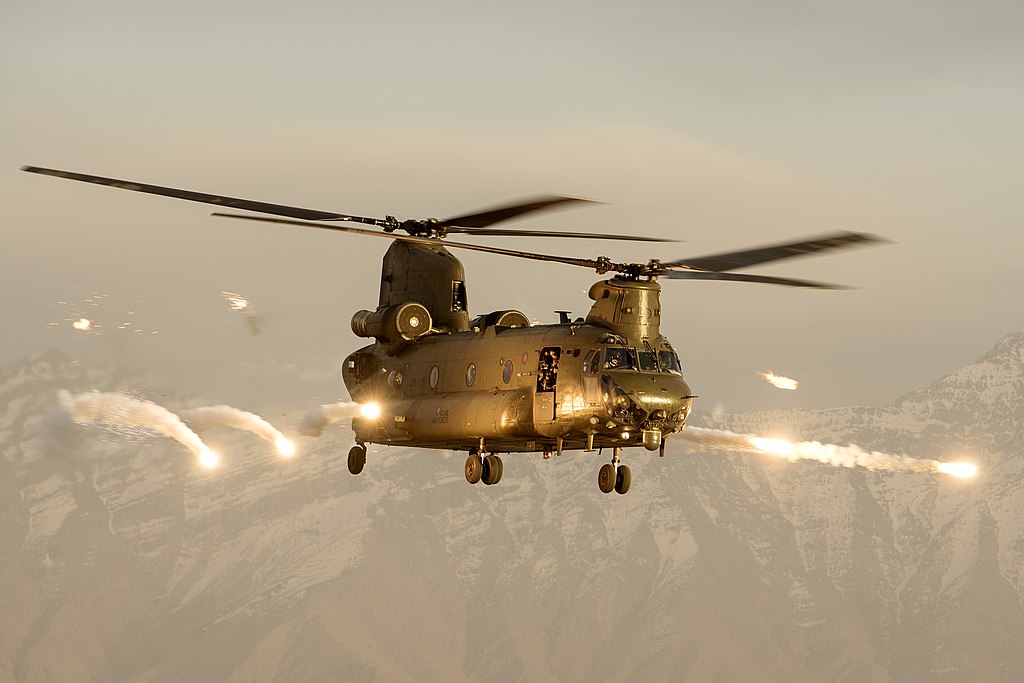
An RAF Chinook firing flares over Afghanistan
Strategic Threat
In 2001 the Taliban regime in Afghanistan enabled Al-Qaeda to plot terror around the world and this led to tragic consequences of 9/11. As the Taliban were removed from power and Al-Qaeda, including their training camps, was driven from Afghanistan by Coalition forces, Al-Qaeda has relocated to the remote mountains of Pakistan’s northwest frontier province and Federally Administered Tribal Areas (FATA).
The main threat continues to originate from Al-Qaeda and the Pakistan part of the Afghanistan-Pakistan border region. Al-Qaeda retains some contacts and provides limited support to the Afghan-Pakistan insurgency, principally through the provision of training for foreign fighters and military expertise; continues to view Afghanistan as fundamental in the establishment of a pan-Islamic caliphate; and therefore a peaceful and stable Afghanistan would be a severe propaganda blow and strategic failure for Al-Qaeda.
If the Taliban are allowed to undermine legitimate government in either Afghanistan or Pakistan, that would enable Al-Qaeda and other terrorist groups to have greater freedom and a sanctuary from which to train, plan and launch terrorist attacks across the world – and would have longer term implications for the credibility of NATO and the international community – and for the stability of both this crucial region and globally.
The UK’s position, both under the Labour Government (April 2009 – May 2010) and the Liberal-Conservative coalition government (May 2010 – May 2015), is that the prevention of terrorism on the streets of the UK, America and other countries depends on providing stability in the region spanning the Afghanistan-Pakistan border through strengthening the authorities in both Pakistan and Afghanistan to defeat Al-Qaeda, and also the Pakistan and Afghan Taliban.
In July 2009 the Director-General of the UK Security Service estimated that three quarters of the most serious plots against the UK have links into this region. As of June 2010, the Prime Minister stated that the threat to the UK from Al-Qaeda from Afghanistan and Pakistan has reduced, primarily due to the current strategy, although this was assessed as not yet irreversible. As of May 2011 it was the UK’s position that there was still a threat that Al-Qaeda could reestablish itself within the region and therefore a continued military presence was still needed.
Kandahar
In 2004, a detachment of six Royal Air Force fighters from Joint Force Harrier was based at Kandahar Airfield to support American OEF forces there. A planned withdrawal in mid-2006 was postponed to provide air support for the new ISAF expansion across the south. The force was later reinforced with more Harriers and an RAF Regiment squadron. The Harriers were withdrawn in 2009 and replaced by a Panavia Tornado GR4 squadron on rotation.
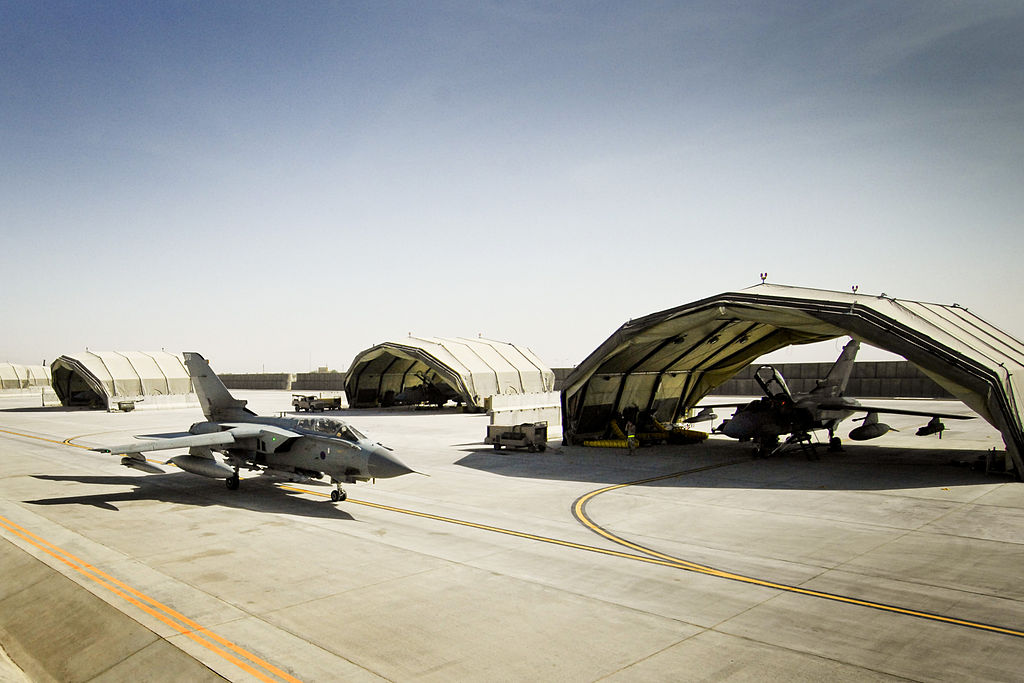
A 12 Sqn Tornado GR4 at Kandahar Airfield
On the 2nd September 2006, a Hawker Siddeley Nimrod MR2 patrol aircraft, serial number XV230 supporting Canadian forces in Operation Medusa crashed near Kandahar, killing all 14 service members aboard. The cause was related to fuel lines.
4 more Harrier GR9s were committed in May 2007 bringing them to a total of eleven, along with an extra C130 transport plane and four Westland Sea Kings from the Fleet Air Arm. Harriers have been succeeded by Tornados. Merlin and Chinook helicopters are also based there.
The majority of aircraft deployed for Herrick were based at Kandahar.
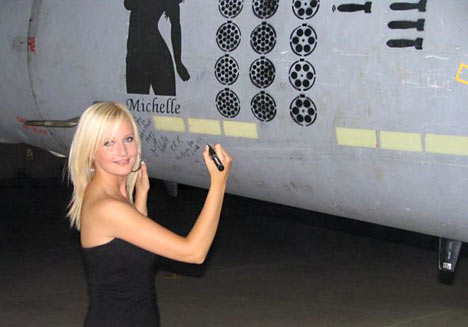
Model Michelle Marsh signing a ‘regulation’ silhouetted image of herself on a Harrier plane during her Afghanistan trip.
Corgi Aviation Archive 1/48th scale BAe Harrier GR7A, ZD437/49A ‘Michelle’, RAF No.1 Squadron, Operation Herrick
Selling Fast ! Check out the latest Corgi Aviation Archive 1/48th scale jet available to pre-order. Please click on the image / links below to go straight to the model page to order your now.
Don’t forget NO DEPOSIT necessary with Flying Tigers and if you order with your debit or credit card your payment is not taken until your model is available to dispatch.
Flying Tigers will also consolidate your orders to save on postage costs across all brands !

Marking a significant development in the history of this magnificent aircraft, the Harrier II may have shared many visual similarities with its famous VSTOL predecessor, however, was actually a very different aeroplane altogether, one which owed much to the American McDonnell Douglas Corporation. Essentially, this new generation of Harrier was a completely different aircraft, a much more capable aeroplane in every respect and a space age development of this now familiar VSTOL Harrier theme. This programme would eventually result in the introduction of the much more capable British Harrier GR.5 in 1987 and further successive upgrades over the next couple of decades which would maintain the Harrier’s position as one of the world’s foremost strike/attack aircraft and one which possessed such unique attributes that it was described by many as being the most valuable fixed wing aviation asset available to any air arm in the world.
With increased range, power and weapons carrying capability, this new generation of Harrier was intended to strike hard and fast, often at the outset of any military contact engagement, before returning once refuelled and rearmed to support infantry units in their endeavours. Always on station and always in the thick of the action, is it any wonder why military personnel held the Harrier in the same affection in which the public always have. This upgrade development only served to enhance the legacy of the Harrier, with this later generation of aircraft regarded as arguably the most flexible aviation asset available to any air force in times of conflict and the one most likely to be deployed first.
Without doubt, the attribute which made the Harrier famous and cemented its place in the hearts of aviation enthusiasts all over the world was its ability to take off and land vertically, a capability which gave the aircraft incredible versatility and making it something akin to a helicopter, but with the speed and striking power of a fixed wing jet. In truth, performing a vertical take-off in an operational situation was something which rarely happened, as this would use too much fuel, place a strain on the engine and not allow the aircraft to operate with anything like an effective weapons load. A rolling take-off would still see the Harrier taking to the air in a much shorter distance than traditional strike aircraft, but would also allow it to carry a much more effective weapons load and additional fuel.
At its heart, the Harrier was a mud mover, an aircraft ground forces could rely on to help them dislodge enemy strongholds or particularly stubborn areas of resistance, undoubtedly saving the lives of countless troops in the process. As the Harrier II continued to be developed, this famous aircraft would become ever more effective, be that whilst operating from a land base, or from the deck of an appropriate ship – the Harrier didn’t even need a large aircraft carrier from which to conduct offensive operations. As one of the most capable aviation assets in RAF service, Harriers were never too far from the world’s conflict hotspots, such as Operation ‘Herrick’, Britain’s commitment to supporting British and NATO personnel on operations in Afghanistan.
Providing air cover, ground close air support and air strikes against enemy insurgents, the first detachment of six RAF Harriers arrived at Kandahar Airfield in 2004, with aircraft remaining in theatre until Harriers were relieved by RAF Tornados in 2009. Flying a punishing schedule of these vital missions in support of ground operations, Harriers from Nos 3, 1 and 4 Squadrons would rotate through Kandahar during that time, augmented by No.800 Naval Air Squadron from September 2006 until January 2007.
During one of the busy periods of operational flying from Kandahar, a morale boosting visit was arranged for British troops to meet two rather high profile celebrities between hectic flying commitments. Page three pin up girls Michelle Marsh and Lucy Pinder travelled to Afghanistan to show their support for the troops and in preparation for their visit, ground crews made two rather unique artistic additions to two of their Harriers. Harrier ZD437 had a silhouette of Michelle Marsh applied to her nose at the head of her impressive mission marking scoreboard and was also given the name ‘Michelle’. The other aircraft, Harrier ZD404, benefitted for a similar application, but this time carrying a representation of Lucy Pinder on its nose and appropriately given the name ‘Lucy’.
The two celebrities appeared to be rather taken with this unique tribute and several photographs of them posing with their respective Harriers were taken and used for publicity purposes. Unfortunately, RAF officials were less enthusiastic about this development and quickly ordered the artwork to be removed, meaning that these Harriers would only carry their rather notorious artwork for a relatively short period. During Operation Herrick, the vast majority of British aircraft committed to the mission were based and operated from RAF Kandahar.
BAe Harrier GR7 ZD437 made its first flight on 3rd November 1989 and was delivered to the RAF later that same month. She was one of the aircraft still based at Cottesmore on the occasion of the Harrier’s final flight operation in British service on 15th December 2010, although she had long since shed her famous page three nose artwork by then.As proved to be the case with most of the airworthy Harriers withdrawn from British service in 2010 and in a move which infuriated a great many people at the time, the remaining UK Harrier fleet of around 74 airframes, plus all available spares and associated equipment, were sold as a single lot to America in 2011. They needed the aircraft in order to maintain their own fleet of US Marine Corps Harriers flying, aircraft which they intended to keep in service for many years to come.
With many of the British aircraft only recently having undergone upgrade and re-fit at significant expense to the treasury, the Americans were getting something of an aviation bargain. One knowledgeable aviation commentator at the time described how the US were ruthlessly taking advantage of this unexpected situation, benefiting from all the money the Brits had only recently spent on extending the service life of their Harriers. ‘It’s like they are buying a car with only 15,000 miles on the clock at a knock-down price’ and with that cost being a staggeringly modest £110 Million, this was certainly a shrewd piece of international aviation business.
New 2023 Corgi Aviation Archive Catalogue Models ! (May to August Update)
New 2023 Corgi Aviation Archive Catalogue Models have just been announced and are available to pre-order at Flying Tigers today. If you want any of these models it is always safer to pre-order as quantities are limited.
Don’t forget NO DEPOSIT necessary with Flying Tigers and if you order with your debit or credit card your payment is not taken until your model is available to dispatch.
Flying Tigers will also consolidate your orders to save on postage costs across all brands !
Please click on the images / links below to go straight to the model page of your choice.


Hobbymaster updated photo gallery.
Check out the latest photos below. Please click on the images or links to go straight to the model page to order.
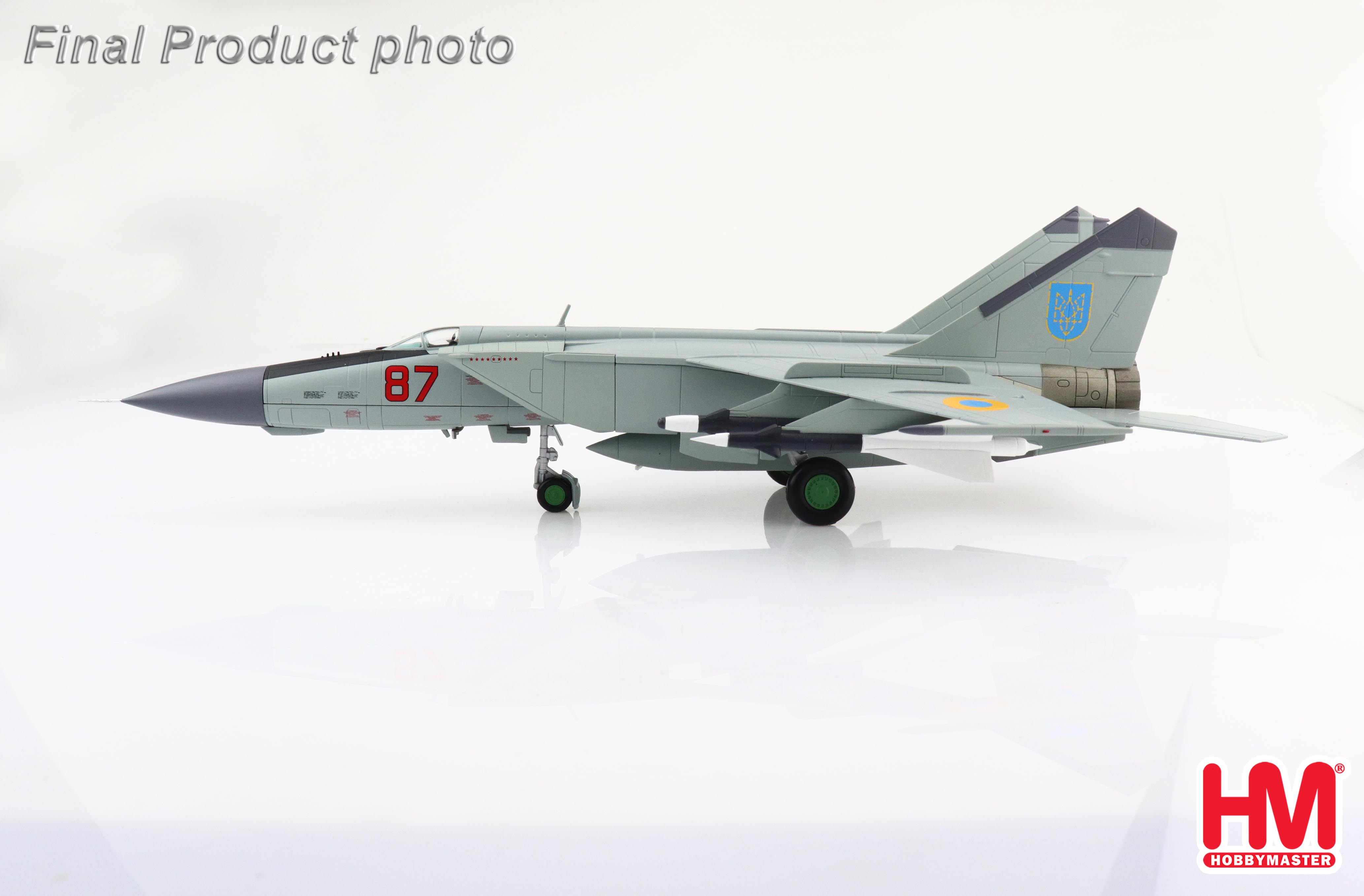
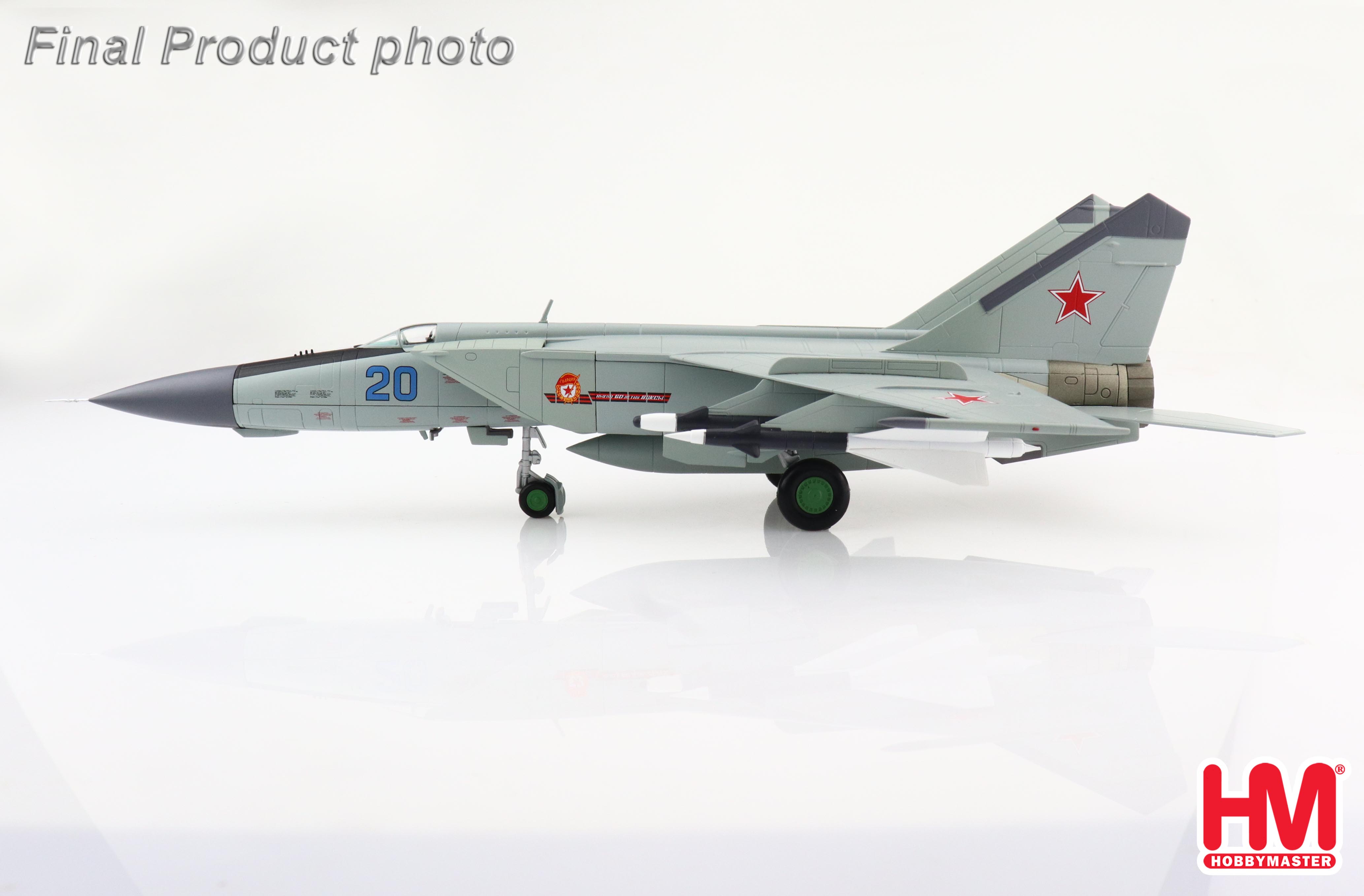
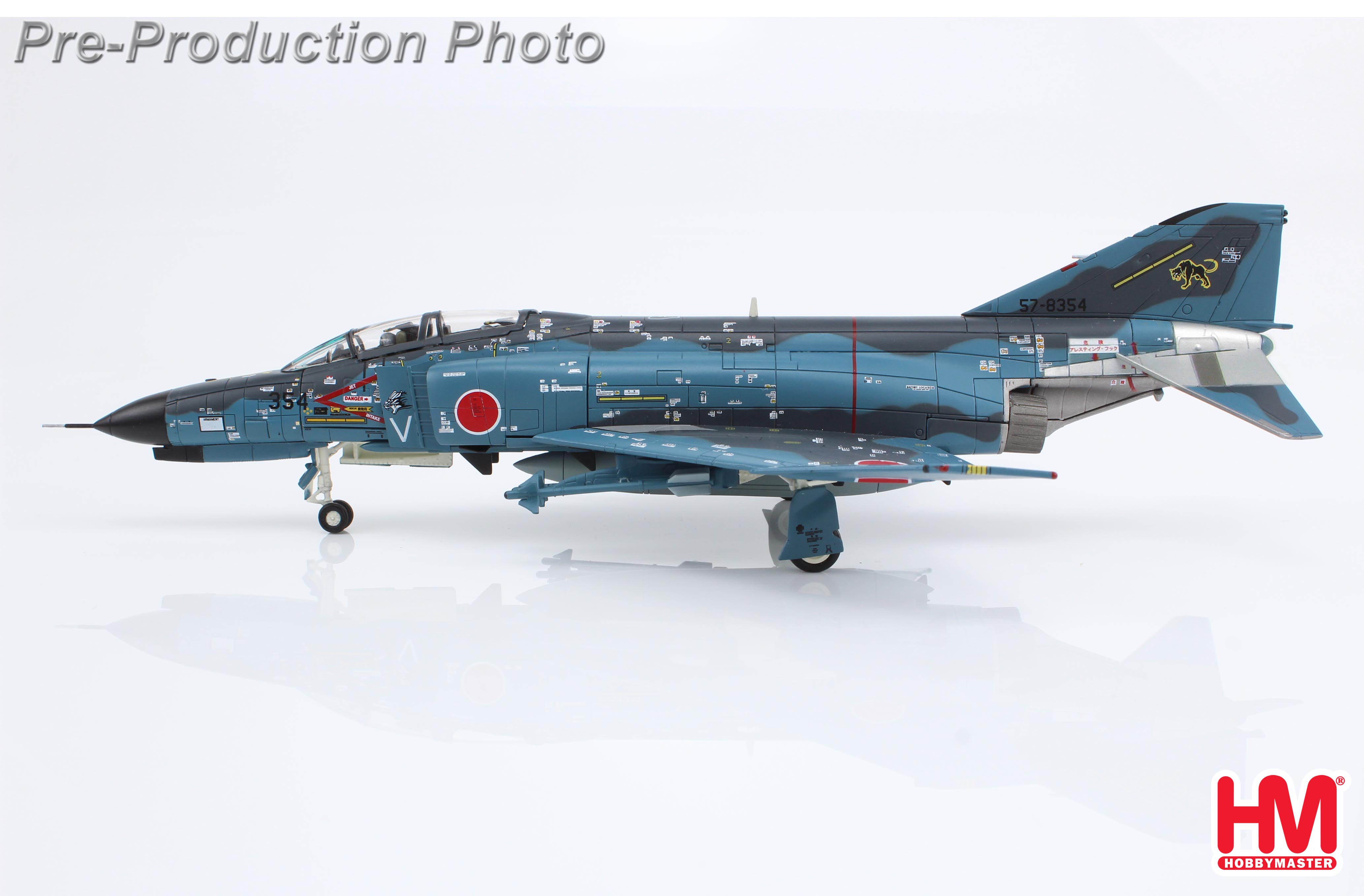
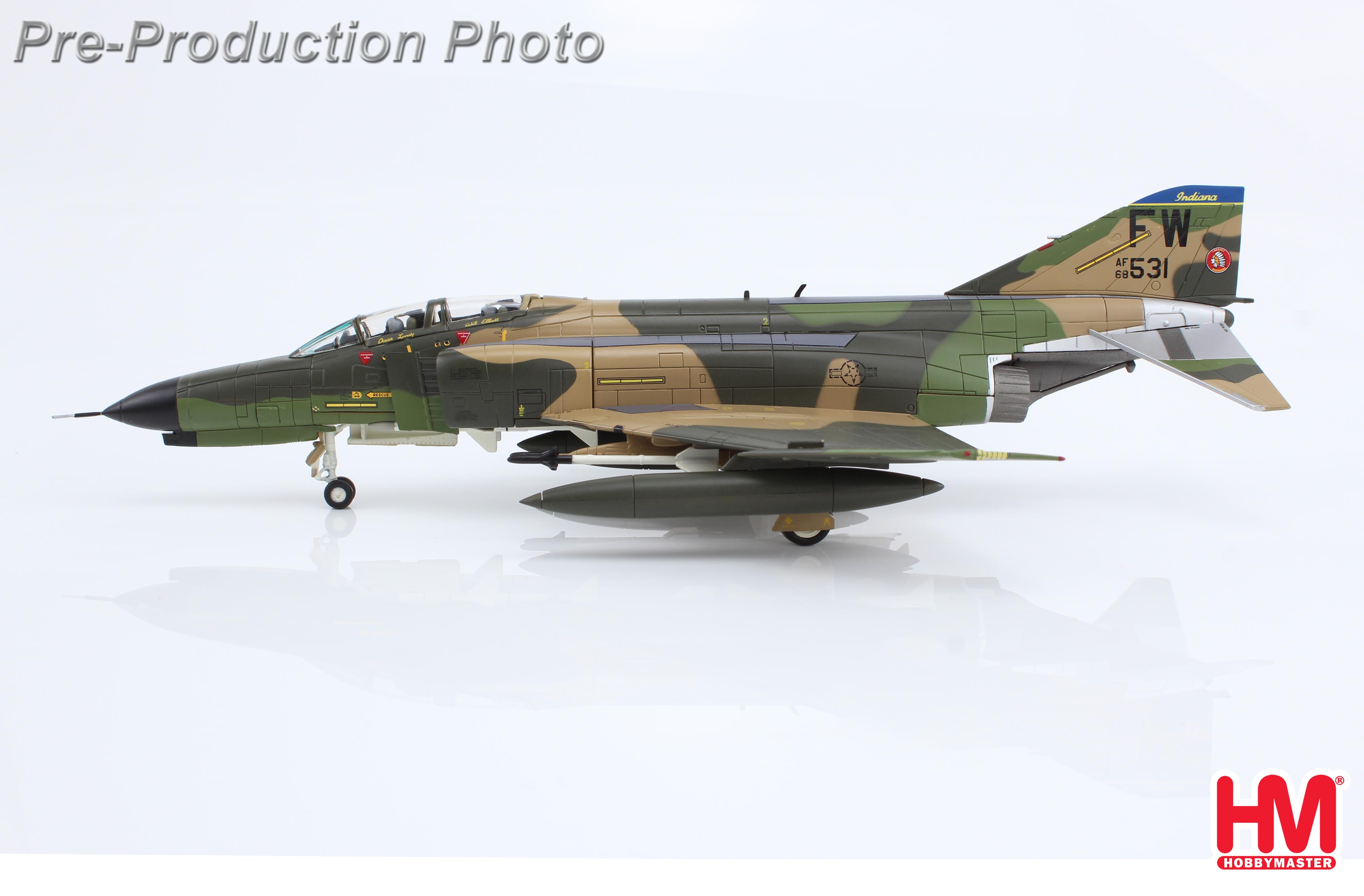
Hobbymaster models due to arrive next week at Flying Tigers.
These Hobbymaster models are due to arrive next week and can be pre-ordered at Flying Tigers today.
Don’t forget NO DEPOSIT necessary with Flying Tigers and if you order with your debit or credit card your payment is not taken until your model is available to dispatch.
Flying Tigers will also consolidate your orders to save on postage costs across all brands !
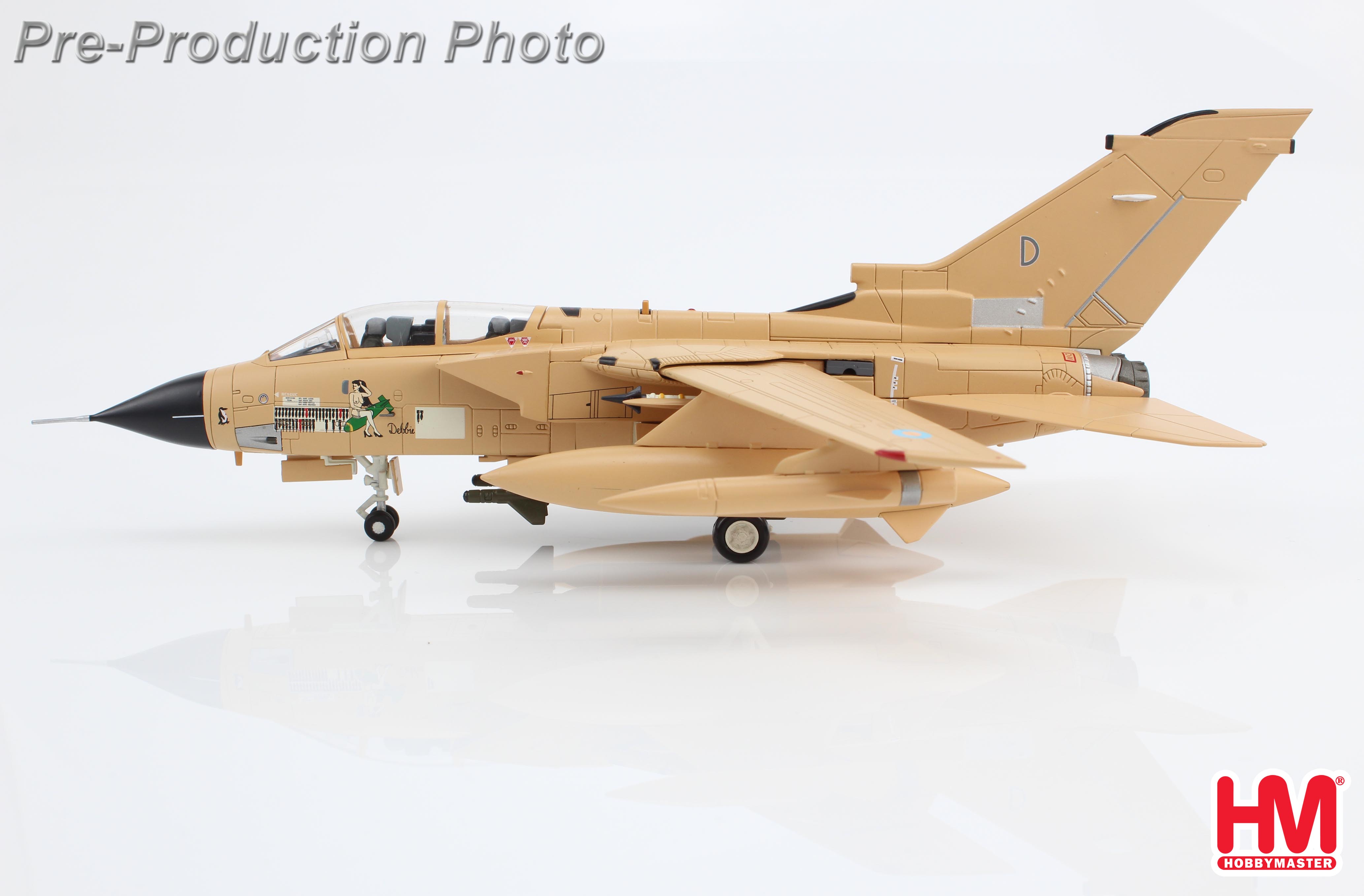
Please click on the images / links below to go to the model of your choice, or CLICK HERE to see them all.


Thank you for reading this week’s Newsletter.
Richard
Flying Tigers.