Messerschmitt Bf-109
The history of the Swiss Air Force began in 1914 with the establishment of an ad hoc force consisting of a handful of men in outdated and largely civilian aircraft. It was only in the 1930s that an effective air force was established at great cost, capable of inflicting several embarrassing defeats on the Nazi Luftwaffe in the course of an initially vigorous defence of neutral Swiss airspace. The Swiss Air Force as an autonomous military service was created in October 1936. After World War II it was renamed the Swiss Air Force and Anti-Aircraft Command (Schweizerische Flugwaffe Kommando der Flieger und Fliegerabwehrtruppen) and in 1996 became a separate service independent from the Army, under its present name Schweizer Luftwaffe.
World War II
The Swiss Air Force mobilized on 28th August 1939, three days before Germany attacked Poland and initiated World War II, with 96 fighter and 121 observation aircraft; by some accounts the country possessed only eight antiaircraft searchlights. Of the 21 units of the Swiss Air Force, only three were judged combat-ready and five were not yet equipped with aircraft. The Air Force relied on 40 single-seat interceptors for first-line air defence.
This deficiency was addressed by procuring further German Bf 109 and French Morane D-3800 fighters. In 1942, the Swiss-built F+W C-36 multipurpose aircraft was introduced into service, and in 1943, Switzerland opened its own aircraft factory, Flugzeugwerk Emmen. Caverns were built in which to shelter aircraft and maintenance personnel from air attack, for example in Alpnach, Meiringen and Turtmann. In 1942–43, an air gunnery range at Ebenfluh-Axalp was opened for training. The Surveillance Squadron (Überwachungsgeschwader) was formed in 1941 and made combat-ready in 1943. A night fighter squadron was formed for evaluation purposes in 1944 and disbanded in 1950.

Messerschmitt Bf-108 Taifoon
The role of the Swiss Air Force during World War II went through four distinct phases:
- September 1939 to May 1940: Air patrol, in an attempt to enforce a comprehensive no-fly ban issued by the Swiss government to the combatants, made largely ineffective by a 5–kilometer buffer along the border which Swiss fighters were forbidden to enter.
- May to June 1940: Air combat between Switzerland and Germany in which the Luftwaffe pilots tested Swiss air defenses, and were defeated.
- July 1940 to October 1943: A total ban on air operations, and a release of interned German aircraft and pilots, resulting from the encirclement of Swiss territory by the Axis, the implementation of the Réduit strategy, and recognition that the Air Force would be overwhelmed by the Germans in a sustained campaign.
- October 1943 to May 1945: Resumption of air patrols, a largely passive response, measured by the numbers of intercepts versus the numbers of violations.
Defence of Swiss airspace
During the first months of the war, airmen and anti-aircraft soldiers saw only sporadic combat; it was on 10th May 1940, when Germany commenced the drive into the west, that the Swiss army as a whole was mobilized a second time. At the onset of the campaign, German military aircraft first violated Swiss airspace.

C-3603-1 indigenous fighter/reconnaissance aircraft, in use from 1942 to 1952.
The first serious combat involving the Swiss Air Force began in June 1940. In six days of aerial battles, eleven German aircraft were downed, with a loss of two Swiss aircraft and three airmen killed. Following these incidents, on 6th June, the chief of the Luftwaffe, Hermann Göring, protested the attacks, claiming that most of the German planes had been in French airspace and that the Luftwaffe had entered Swiss airspace only by mistake. Germany demanded financial compensation and an apology by the Swiss government. In a second, more pointed demand on 19th June, Germany stated that they viewed the air battles as a flagrant act of aggression, and if these interceptions continued, Switzerland would face sanctions and retaliation. The next day, General Henri Guisan ordered all Swiss units to stop engaging foreign aircraft, and on 1st July 1940, the Federal Council apologized for possible border violations by Swiss pilots, without admitting any had occurred. On 16th July, the German government declared that the events were settled. Engaging aircraft of the combatant nations was prohibited until October 1943, when strategic bombing of Bavaria and Austria by the Allies became an increasing likelihood.
In September 1944, the last Swiss airman died in combat, shot down by an American P-51 Mustang while escorting a crippled U.S. B-17 Flying Fortress to the Dübendorf airfield. During the entire war, 6,501 Allied and Axis aircraft violated Swiss airspace, 198 of which aircraft landed on Swiss soil and were interned, and 56 of which crashed.
Swiss aircraft also intercepted U.S. aircraft who were off-course, or whose crews preferred asylum in Swiss internment camps over German or Italian POW camps; they were then forced to land on Swiss airstrips. When the bombers did not cooperate or even fired at the Swiss (who were using Axis-type interceptors), they were shot down.
Night fighter incident
In 1944 a Luftwaffe Bf 110G-4 night fighter pursued a British Lancaster heavy bomber into Swiss airspace on the night of April 28th–29th. Engine trouble forced the German pilot, Wilhelm Johnen, to land at Dübendorf airfield where the pilot was interned. By international law, the Swiss had a right to put the fighter into service, and the Germans were concerned that Allied intelligence would examine its FuG 220 Lichtenstein radar and “Schräge Musik” gun installation.

Morane Saulnier MS-406
The Nazi government quickly negotiated a deal in which the Swiss burned the Bf 110 under the supervision of German observers in return for a sale to the Swiss of 12 new Bf 109G-6 Gustav to replace combat losses. The new fighters were delivered in batches of six on 20th and 22nd May. The new planes had serious manufacturing defects from the poor workmanship and production disruptions caused by Allied bombings, and after complaints the Germans refunded half of the six million Swiss franc purchase price. In 1947, the Swiss Air Force tried to purchase new replacement Daimler-Benz DB 605 engines from Sweden, licence built by Svenska Flygmotor AB (Swedish Aero Engines, Ltd.), but this was ruled out due to the prohibitive quoted price of 191,000 Swiss francs per engine. Such a purchase would have amounted to a total cost of over 2 million francs to re-power all 11 surviving postwar Swiss Gustav aircraft, plus the costs of spare engines, spare parts and any other repairs needed to bring them to an acceptable level of serviceability.
Attacks on Swiss cities
Swiss cities and railway lines were repeatedly bombed by Allied aircraft during the war, beginning with minor attacks by the Royal Air Force on Geneva, Basel, and Zürich in 1940. Possibly the most egregious occurred 1st April 1944 when 50 B-24 Liberators of the U.S. 14th Combat Bombardment Wing bombed Schaffhausen, killing and injuring more than 100, and damaging a large portion of the city. In reaction to comments by Swiss Foreign Minister Marcel Pilet-Golaz that the incident “apparently was a deliberate attack”, American apologies were undermined by ill-advised statements made by Air Force commanders in London which blamed weather and minimized the size and accuracy of the attack. Although an in-depth investigation showed that weather in France, particularly winds that nearly doubled the ground speed of the U.S. bombers, did in fact cause the wing to mistake Schaffhausen for its target at Ludwigshafen am Rhein, the Swiss were not mollified. Incidents escalated, resulting in 13 separate attacks on Swiss territory on 22nd February 1945—the day President Franklin D. Roosevelt’s special assistant, Lauchlin Currie, went to Schaffhausen to lay a wreath on the graves of those killed a year earlier—and simultaneous attacks 4th March that dropped 29 tons of high explosives and 17 tons of incendiaries on Basel and Zürich.
Swiss air defences were incapable of counteracting large formations of aircraft, but did intercept and, on occasion attack, small groups. Since these were often aircraft crippled by battle damage and seeking asylum, resentment among Allied aircrew was considerable. The causes of the misdirected bombing attacks were bad weather, faulty equipment, incompetence, or excess pilot zeal, rather than malice or purposeful planning, but the lack of intent did not allay the sufferings and suspicions of the Swiss, and the embarrassment to the United States was considerable. A pattern of violation, diplomatic apology, reparation, and new violation ensued through much of the war, and grew in scope as Allied tactical forces neared Germany. It is still a matter of debate if these bombings occurred by accident, since U.S. strategic air forces had a standing order requiring visual identification before bombing any target within 50 miles (80 km) of the Swiss frontier, or if some members of the Allies wanted to punish Switzerland for their economic and industrial cooperation with Nazi Germany. In particular, Switzerland permitted train transportation through its territory carrying matériel between Germany and Italy, which was readily visible from the air by Allied pilots.
The incidents drew to a close only after a USAAF delegation appointed by U.S. Army Chief of Staff George C. Marshall met with the Swiss in Geneva on 9th March 1945. The Swiss enumerated every violation since Schaffhausen and demanded full indemnity. The Americans advised that the area requiring positive target identification was henceforth expanded to 150 miles (240 km) from Swiss borders, that no targets within 50 miles (80 km) would be attacked even in clear weather except by personal authorization from American commander General Carl Spaatz, and then only by hand-picked crews, and that tactical air was forbidden to attack any target within ten miles (16 km) of the Swiss border. Even though these restrictions provided the Germans significant protection from air attack over a large part of southern Germany for the final two months of the war, they were effective in ending the violations and did not seriously hamper Allied prosecution of the war.
Combat service Bf-109 with Switzerland
Switzerland took delivery of the first of its 115 Bf 109s in 1938 when ten Bf 109Ds were delivered. After this, 80 109 E-3s were purchased which arrived from April 1939 until just before the German invasion of France in summer 1940. During the war, a further four 109s (two Fs and two Gs) were acquired by the Swiss Air Force through internment. The 109Es were supplemented by eight aircraft licence manufactured from spare parts by Doflug at Altenrhein, delivered in 1944.
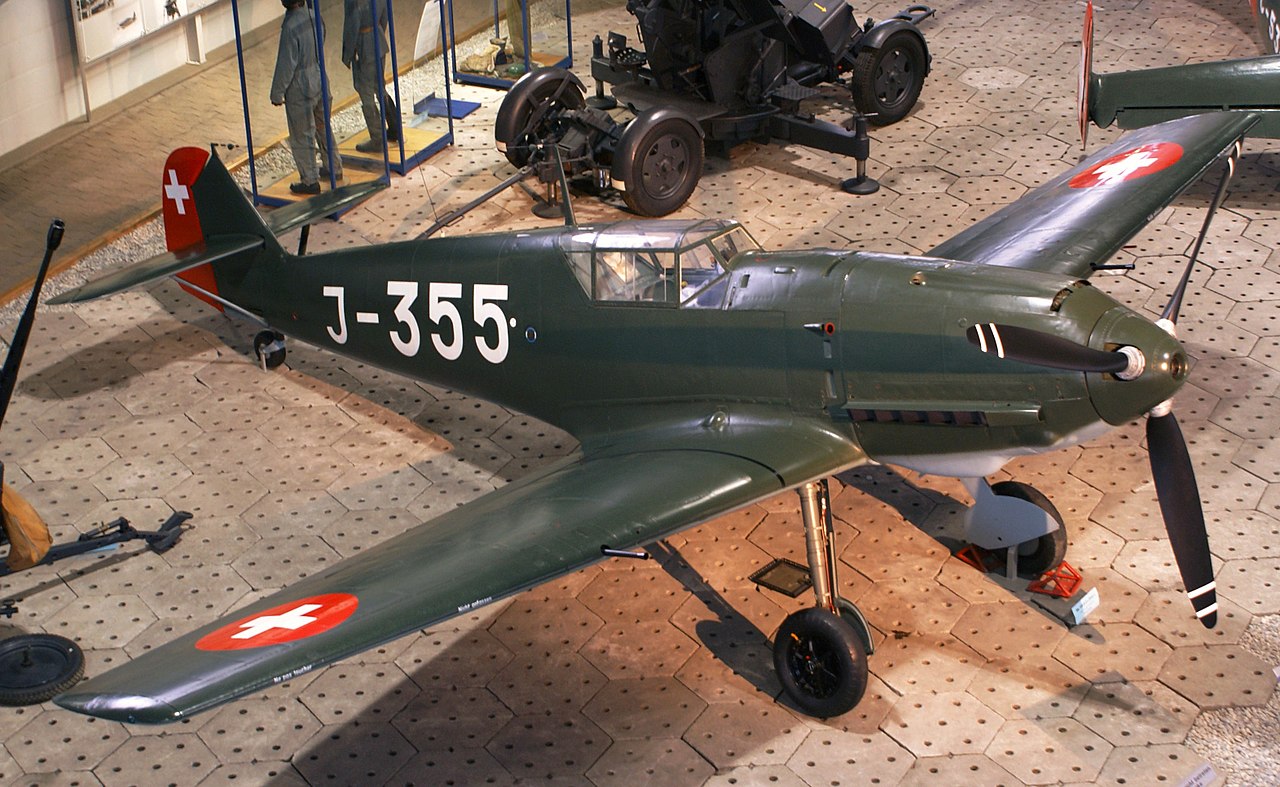
Bf 109E of the Swiss Air Force.
In April 1944, 12 further G-6s were acquired in exchange for the destruction of a highly secret Messerschmitt Bf 110G night fighter which made an emergency landing in Switzerland. The new 109Gs suffered from numerous manufacturing defects and after problematic service were withdrawn from use by May 1948. The 109Es continued in service until December 1949.
With the start of the Battle of France, Swiss fighters began intercepting and occasionally fighting German aircraft intruding Swiss airspace. On 10th May 1940, several Swiss Bf 109s engaged a German Dornier Do 17 near the border at Bütschwil; in the ensuing exchange of fire, the Dornier was hit and eventually forced to land near Altenrhein.
On 1st June, the Flugwaffe dispatched 12 Bf 109 E-1s to engage 36 unescorted German Heinkel He 111s of Kampfgeschwader 53 that were crossing Swiss airspace to attack the Lyon – Marseilles railway system. The Swiss Air force sustained its first casualty in the engagement when Sub Lieutenant Rudolf Rickenbacher was killed when the fuel tank of his Bf 109 exploded after being hit by the Heinkel’s return fire. However, the Swiss “Emils” shot down six He 111s.
On 8th June, a C-35 observation aircraft, an antiquated biplane, was attacked over the Jura Mountains by two German Bf 110s; the pilot and observer were killed. Later on the same day, Swiss Captain Lindecker led about 15 Swiss Emils to intercept a formation of German He 111s escorted by II./Zerstörergeschwader 1’s Bf 110s. The engagement resulted in five Bf 110s being shot down (including the Staffelkapitän Gerhard Kadow) for the loss of one Swiss Bf 109.
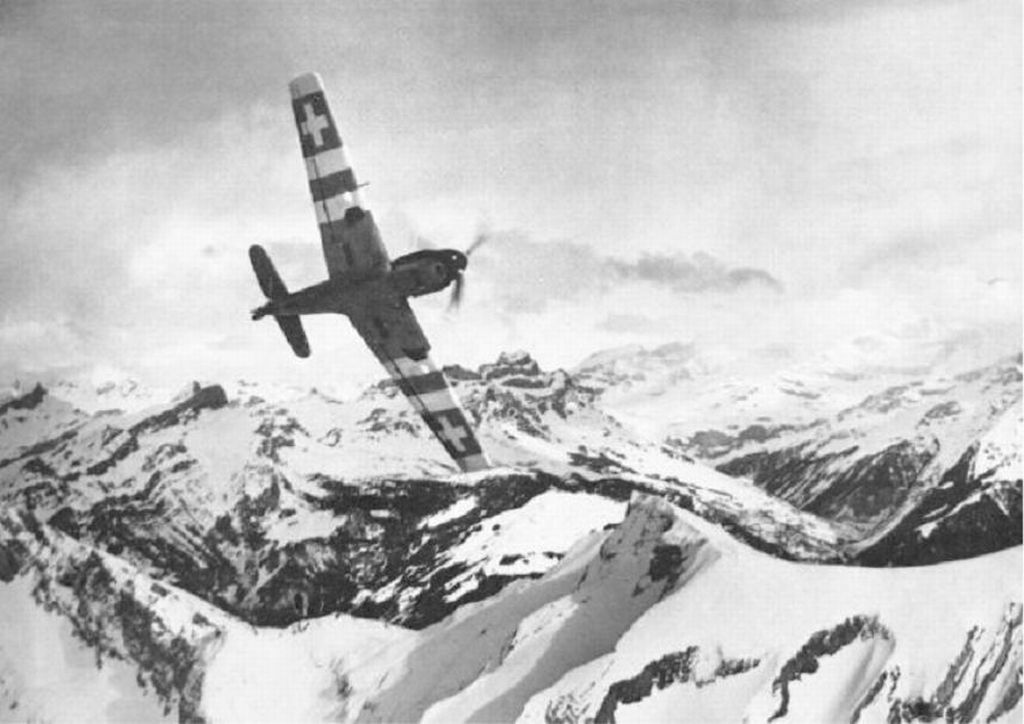
In the latter stages of the war, Swiss Messerschmitts were painted with red and white striped “neutrality markings” around the fuselage and main wings to avoid confusion with German 109s.
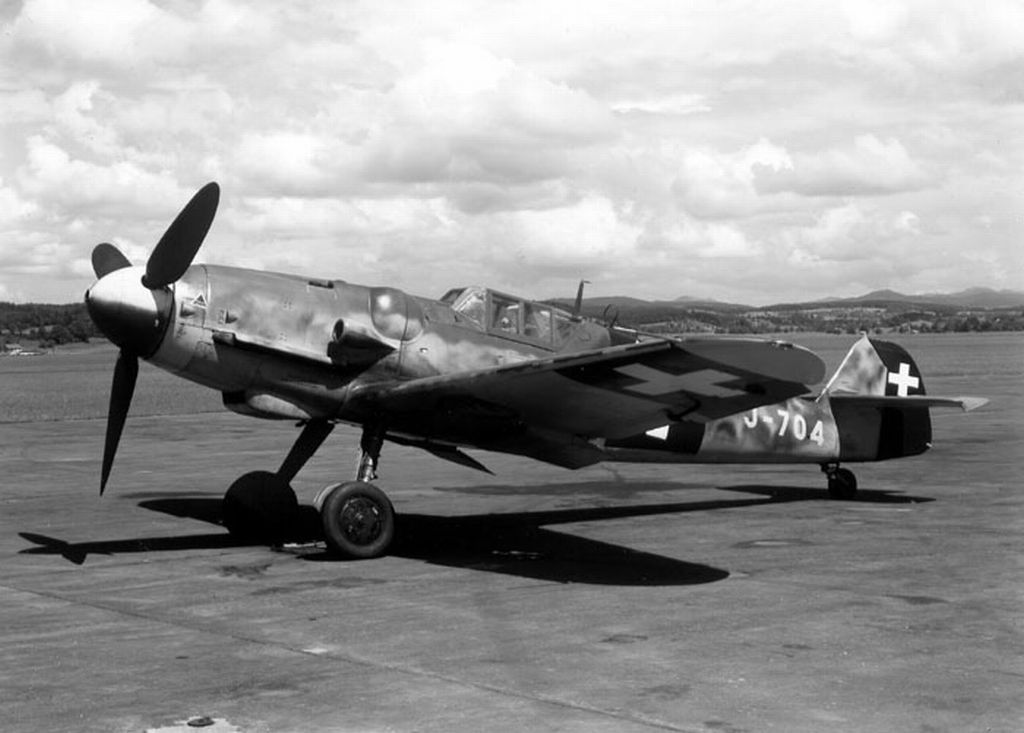
Swiss Messerschmitt Bf 109 G
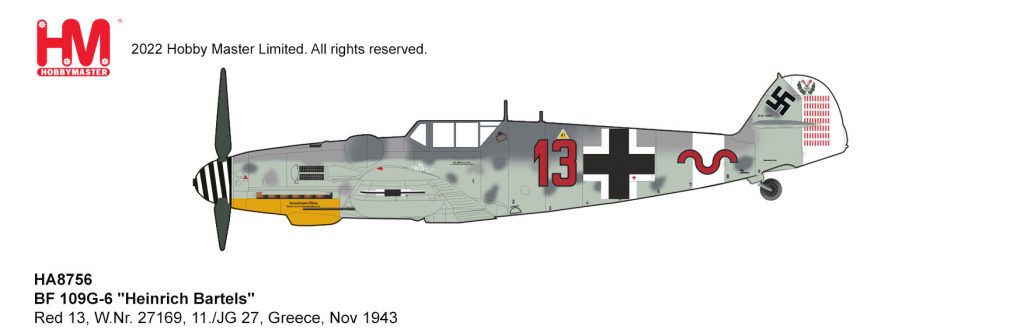
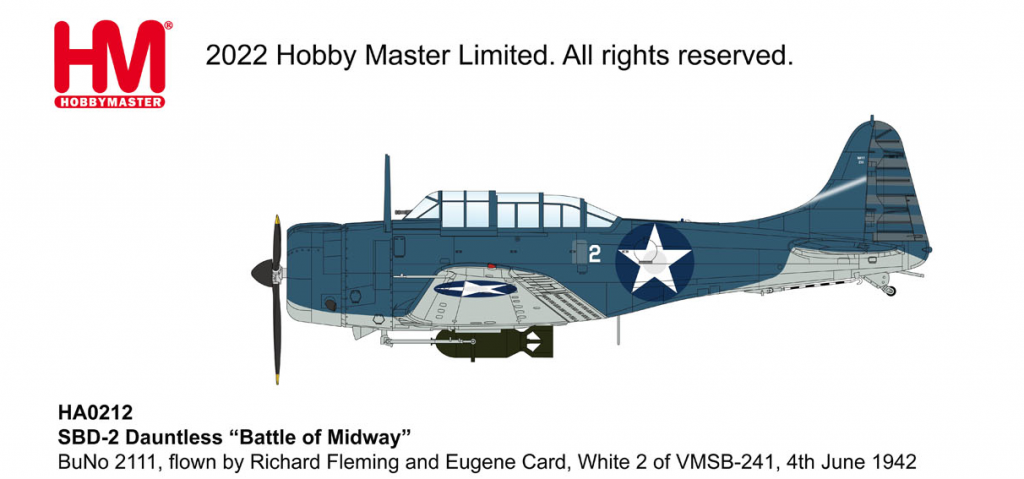
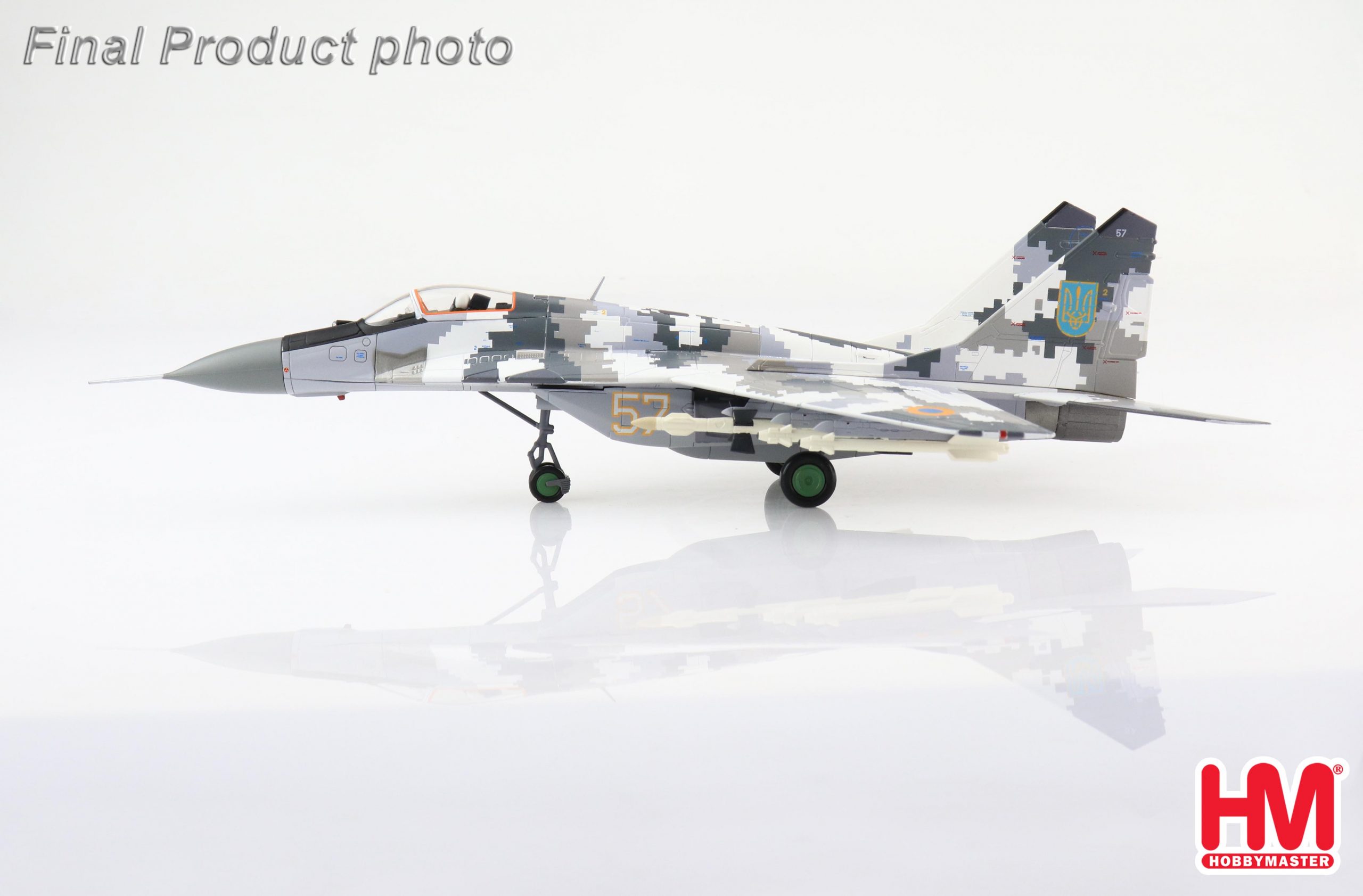
Hobbymaster model delivery due 2nd week of December at Flying Tigers.
This Hobbymaster model delivery is due 2nd week of December and can be pre-ordered at Flying Tigers today.
Don’t forget NO DEPOSIT necessary with Flying Tigers and if you order with your debit or credit card your payment is not taken until your model is available to dispatch.
Flying Tigers will also consolidate your orders to save on postage costs across all brands !
Please click on the images / links below to go to the model of your choice, or CLICK HERE to see them all.




New Corgi Aviation Archive Model Due Soon!
Check out the Corgi Aviation Archive 1/48th scale Albatros D.V which is due soon ( by the end of November) at Flying Tigers. If you want any of these models it is always safer to pre-order as quantities are limited.
Don’t forget NO DEPOSIT necessary with Flying Tigers and if you order with your debit or credit card your payment is not taken until your model is available to dispatch.
Flying Tigers will also consolidate your orders to save on postage costs across all brands !
Please click on the images / links below to go to the model of your choice, or CLICK HERE to see them all in the Future Models section.
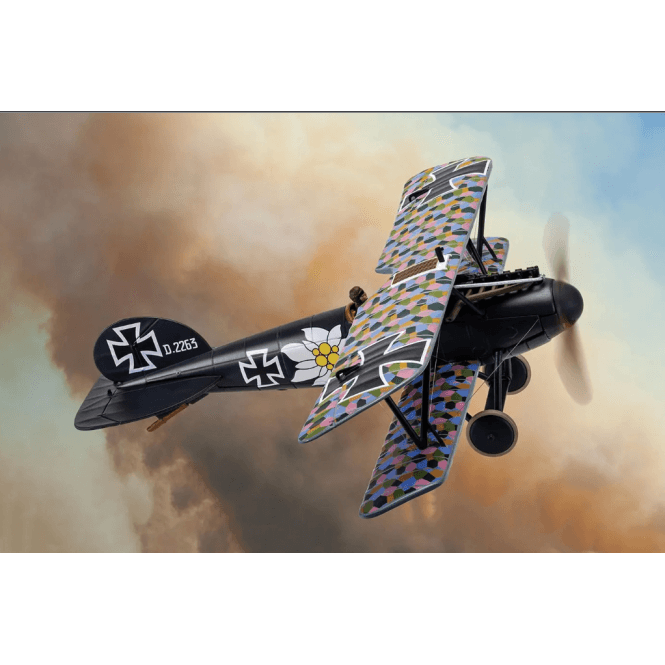
Great War German fighter ace Otto Kissenberth has been described as being something of a character, brave and tenacious in the air, but a fighter pilot with a rather unusual trait – he flew combat missions whilst wearing his spectacles, something only two other Luftstreitkräfte fighter aces were known to have done. Given command of Royal Bavarian Jasta 23 at the beginning of August 1917, Kissenberth would continue his association with the Albatros D series of fighters and in particular, aircraft serial number D2263/17, a machine in which it is thought he would go on to score the majority of his 20 aerial victories. As his personal aircraft, it was distinctive by virtue of its smart black fuselage and the large yellow and white Edelweiss emblem it sported on either side of the fuselage, just behind the cockpit. Further adding to the fascinating story of this particular Great War Albatros ace, Kissenberth would claim a British RNAS Sopwith Camel for himself, an aircraft which had been forced down intact by another one of his unit’s pilots. Overpainting the aircraft’s British insignia with new, highly visible German markings (for obvious reasons), he apparently flew the aircraft on many occasions and incredibly, used this captured aircraft to score the last of his 20 victories on 16th May 1918, when he used it to bring down a British SE5a fighter near the town of Tilly-Neuville.
That is all for this week.
Thank you for reading this week’s Newsletter.
Richard.
Flying Tigers.