Panavia Tornado F3 in No.11 Squadron markings, seen at RAF Waddington in 1992.
No. 11 or XI Squadron (sometimes featuring an ‘F’ to represent its historic fighter role (No. 11(F) or XI(F) Squadron)), is “the world’s oldest, dedicated fighter unit” and contines the traditions established by the similarly numbered Royal Flying Corps squadron, established in 1915. After a history of equipment with numerous different aircraft types, the squadron most recently operated the Tornado F3 until 2005 when it was disbanded. It was reactivated in 2006 to operate the Typhoon F2, receiving its first aircraft (serial number ZJ931) on 9th October 2006.
History
World War I
No. 11 Squadron of the Royal Flying Corps was formed at Netheravon in Wiltshire on 14th February 1915 for “fighting duties”, receiving two seat pusher Vickers Gunbus fighters in June, and deploying to France on 25th July 1915.
The squadron’s Gunbusses were soon pressed into service, with Second Lieutenant G. S. M. Insall being awarded a Victoria Cross for an action on 7th November 1915 in which he forced down and destroyed a German Aviatik observation aircraft. The Gunbus was already obsolete however, and was initially supplemented by a mixture of Bristol Scouts and Nieuport 16s until replaced by the Royal Aircraft Factory F.E.2b of similar layout, but slightly higher performance, in June 1916. These in turn were replaced by Bristol Fighters in August 1917, these being used both for offensive patrols over German-held territory and for ground attack for the remainder of the war. The Squadron was disbanded at the end of 1919.

Aircraft at St. Omer, France, 19 December 1917. The aircraft on the right is a Bristol Fighter (thought to belong to No. 11 Squadron) and on the left is a Royal Aircraft Factory S.E.5.
No. 11 Squadron numbered 19 flying aces in its ranks during the war. Among them were Victoria Cross winner Lionel Rees, as well as Andrew Edward McKeever, future Air Commodore John Stanley Chick, Eugene Coler, Albert Ball VC, Frederick Libby, Ronald Maudit, John Quested, Herbert Sellars, Donald Beard, Stephen Price and Hugh Hay Thomas Frederick Stephenson.
The twin Eagles on the Squadron’s crest, awarded in May 1937, represent the two-seated fighters operated in the First World War.
Between the Wars
The Squadron reformed at RAF Andover in January 1923 as a day bomber squadron equipped with Airco DH.9As, soon moving to RAF Bircham Newton in Norfolk. In April 1924, these were replaced by the Fairey Fawn despite the fact that they offered little improvement in performance over the DH.9A, moving with them to RAF Netheravon in May that year. The unpopular Fawns were replaced by Hawker Horsleys in November 1926, in use until December 1928, when the squadron handed the Horsleys to 100 Squadron and was posted to Risalpur in India (now in Pakistan), flying Westland Wapitis in Army co-operation and carrying out punitive air raids against rebelling tribal forces.

Hawker Horsley Bomber
It replaced its Wapitis with Hawker Harts in February 1932, operations continuing as before. On 31st May 1935, the 1935 Quetta earthquake devastated the city of Quetta and the surrounding area. No. 11 Squadron, along with other RAF squadrons in the region, were used to aid the relief effort following the disaster. The squadron received Blenheim I monoplane bombers in July 1939, moving to Singapore the next month, just before the outbreak of World War II in Europe.
World War II
In April 1940 the squadron moved to India, and was briefly based at Karachi before was ordered to transfer to Aden due to the increasing likelihood of war with Italy. The first of the squadron’s Blenheims reached Aden on 19 June 1940, nine days after Italy declared war on Britain, and flew its first combat mission of the war on 19th June. The squadron was heavily engaged in the early months of the Eastern Africa campaign, attacking Italian targets in Italian East Africa.
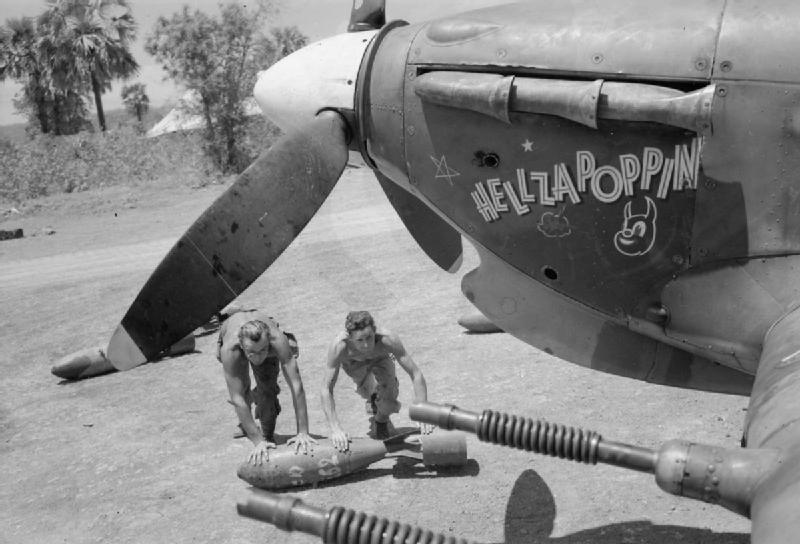
RAF personnel rolling a 250lb bomb for loading onto Hawker Hurricane Mk II.C Hellzapoppin of No. 11 Squadron, at Sinthe, Burma in the early 1940s.
In early 1941 the squadron was sent to reinforce the Royal Air Force squadrons in Greece, fighting in the Greek Campaign first against the Italians and then the Germans. The few surviving aircraft and crews were evacuated to Crete and then on to Palestine. After reforming, the squadron served in the Syrian Campaign against the Vichy French and later took part in the Anglo-Soviet operation to secure the Persian oilfields for the Allies. After returning to Egypt the squadron took part in Operation Crusader.
Redeployed to Colombo, Ceylon in early 1942, the squadron was involved in attacks on Japanese shipping. During 1943, the Squadron re-equipped with Hurricanes and moved to Burma in the ground attack role, supporting the Fourteenth Army.

A Bristol Blenheim of No. 11 Squadron takes off from Colombo’s racecourse in Ceylon during the war.
By January 1943, Royal Australian Air Force (RAAF) personnel, or Australians serving in the RAF, made up almost 90% of the aircrews in the squadron (even though it was not officially an RAAF “Article XV squadron”). At the time, the Australian personnel included the commanding officer, Wing Commander Harley Stumm.
11 Squadron was one of the few RAF squadrons to fight against Italian, German, Vichy French and Japanese forces.
Since 1945
The Squadron formed part of the occupation forces in Japan from August 1945 to February 1948, when it disbanded. Reforming in Germany during October 1949, they flew Mosquitos, Vampires and Venoms. The Squadron again disbanded in 1957, but reformed in January 1959 with Meteor night fighters. Javelins replaced the Meteors one year later and the Squadron was based at RAF Geilenkirchen West Germany equipped with this type until another disbandment in 1966.

Gloster Javelin FAW.9 of No. 11 Squadron in 1965.
Reforming in early 1967, No. 11 Squadron spent the next 21 years flying Lightnings, until May 1988. By that time it was one of the last two squadrons equipped with this aircraft and was based at RAF Binbrook in Lincolnshire.
From August 1988 the squadron operated the twin seat Panavia Tornado F3 from RAF Leeming. In February 2003 it was announced that some of No. 11 Squadron’s Tornado F3s had been modified to carry the ALARM missile (as EF3s) to widen their capabilities to include suppression of enemy air defences (SEAD). Following the publication of the Future Capabilities study on 21st July 2004, XI(F) squadron disbanded in October 2005.
The RAF announced that 11 Squadron would be the second front line squadron to re-equip with the Typhoon but would now be based at RAF Coningsby. The Squadron stood up at Coningsby on 29th March 2007, dropping the (F) designation in recognition of its new tasking as the Royal Air Force’s lead Typhoon multi-role squadron. In March 2011, 11 Squadron (assisted by some 29(R) Squadron personnel and additional aircraft supplied by 29(R) and 3(F) Squadrons) deployed to Gioia Del Colle, Bari, Italy, to help police the no-fly zone imposed by Resolution 1973 over Libya as part of Operation Ellamy.

Eurofighter Typhoon F2 of 11 Squadron leads a Tornado F3, formerly of the Squadron, in 2007
In 2013 the squadron deployed to the Mediterranean again, this time RAF Akrotiri in Cyprus, as part of 121 EAW providing air defence of Cyprus under the auspices of Operation Luminous.
XI(F) Squadron resumed the use of its ‘(F)’ Fighter status during its centenary year, with celebrations taking place on 7th and 8th May 2015 in the form of a formal dinner with the Squadron Association, and a parade complete with flypast.
During February 2018, the squadron participated in Exercise Red Flag 18-1, the world’s largest and most complex air combat exercise run by the US Air Force. For the duration of the exercise the squadron’s Typhoons operated from Nellis Air Force Base in Nevada.
Aircraft operated
List of aircraft operated by No. 11 Squadron:
- Vickers E.S.1 (1915–1915)

Vickers E.S.1 at the Central Flying School.
- Vickers FB.5/FB.9 (1915–1916)
- Bristol Scout (1915–1916)
- Nieuport 16/17 (1915–1916)
- Royal Aircraft Factory F.E.2b (1916–1917)
- Bristol F.2b (1917–1919)
- Airco DH.9A (1923–1924)
- Fairey Fawn (1924–1926)
- Hawker Horsley (1926–1928)

Westland Wapiti IIA 55 Sqdn Royal Air Force
- Westland Wapiti (1928–1932)
- Hawker Hart (1932–1939)Bristol Blenheim Mk I/Mk IV (1939–1943)
- Hawker Hurricane Mk II (1943–1945)
- Supermarine Spitfire Mk XIV/Mk XVIII (1945–1948)
- de Havilland Mosquito FB.VI (1948–1950)
- de Havilland Vampire FB.5 (1950–1952)

A preserved de Havilland Venom in No. 11 Squadron colours, seen at RAF Cosford in June 2011.
- de Havilland Venom FB.1/FB.4 (1952–1957)
- Gloster Meteor NF.11 (1959–1962)
- Gloster Javelin FAW.4/FAW.5/FAW.9 (1959–1966)
- English Electric Lightning F.3/F.6 (1967–1988)
- Panavia Tornado F3 (1988–2005)
- Eurofighter Typhoon (2007 – present)

A No. 11 Squadron English Electric Lightning F.3 on display at the 1976 International Air Tattoo at RAF Greenham Common.
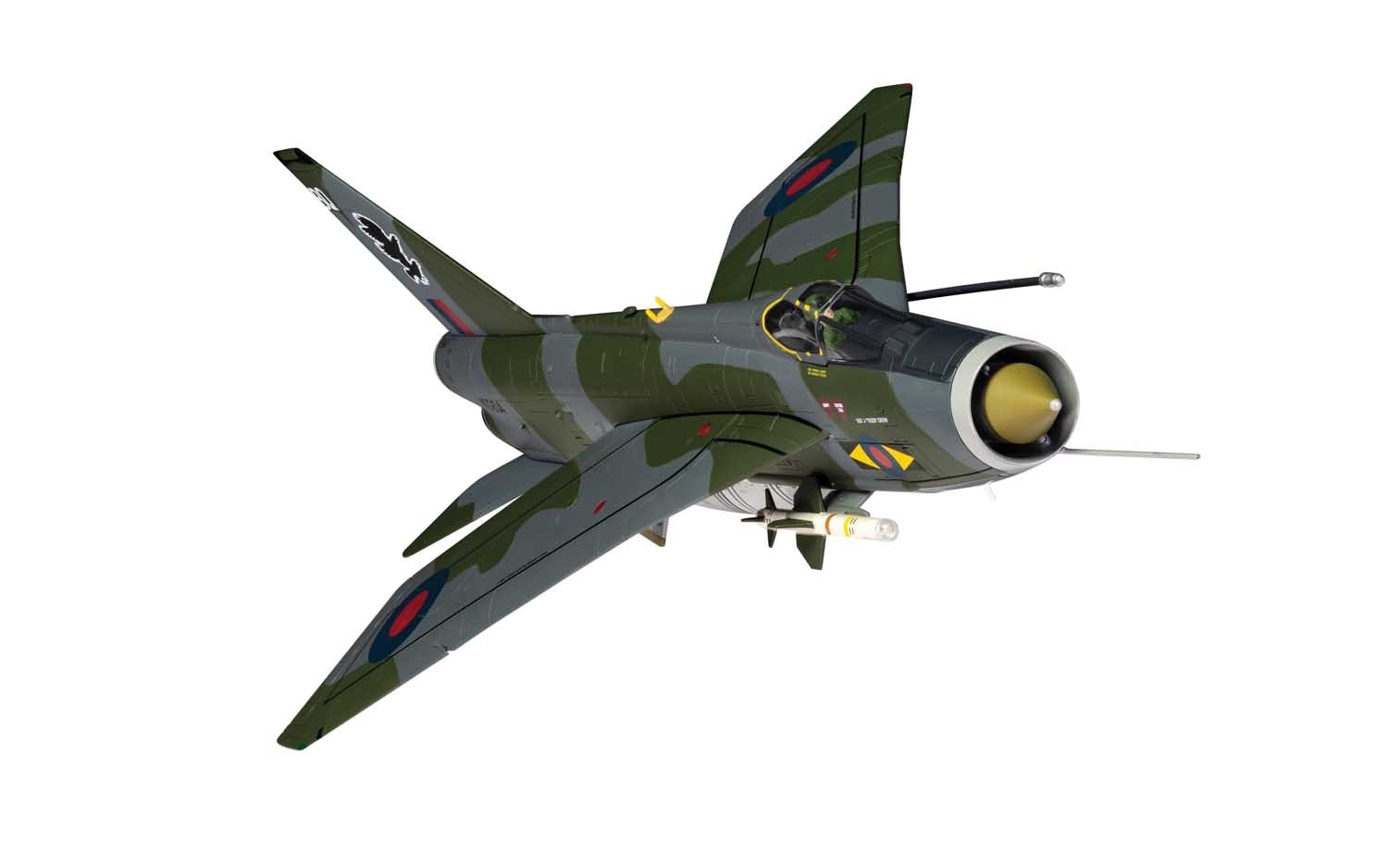
Corgi Aviation Archive 1/48th scale English Electric Lightning F6 XS904 / BQ, RAF No.11 Squadron, Binbrook, August 1987, ‘The Last Lightning Show’
Aircraft now preserved by the Lightning Preservation Group, Bruntingthorpe Airfield, Leicestershire, England For an aircraft which instilled immense national pride in so many people over such a long period, it is no wonder that the English Electric Lightning still commands a significant position in the hearts of the UK aviation enthusiast, with two very special aeroplanes being singled out for special attention. Until recently, two of the aircraft lovingly maintained by the Lightning Preservation Group regularly blasted down the runway at Bruntingthorpe airfield, in scenes reminiscent of a Cold War RAF fighter station and always drawing large crowds for these events. Lightning F.6 XS904 has been in the care of the LPG since she was delivered to the airfield on 21st January 1993, a historic occasion which witnessed the final military flight of an English Electric Lightning fighter.
Flying from the British Aerospace factory airfield site at Warton in formation with a Panavia Tornado F.3 fighter, the pair made a spirited high speed pass along the length of the runway at Bruntingthorpe on their arrival, before the Deputy Chief Test Pilot at BAe Warton, Peter Orme, brought this magnificent supersonic aircraft in for her final landing at her new home. During a 20 year RAF career, XS904 served with Nos 5 and 11 Squadrons and also has the distinction of being one of the nine Lightnings which took part in a spectacular 9 ship formation during the ‘Last Lightning show’ at RAF Binbrook on 22nd August 1987.
Corgi Aviation Archive arrivals soon at Flying Tigers !
Check out the Corgi Aviation Archive models that will arrive soon at Flying Tigers. Get in quick with your order, as stocks will be limited and once they have gone… they have gone. Click on the model photo of your choice below to go straight to the model page.
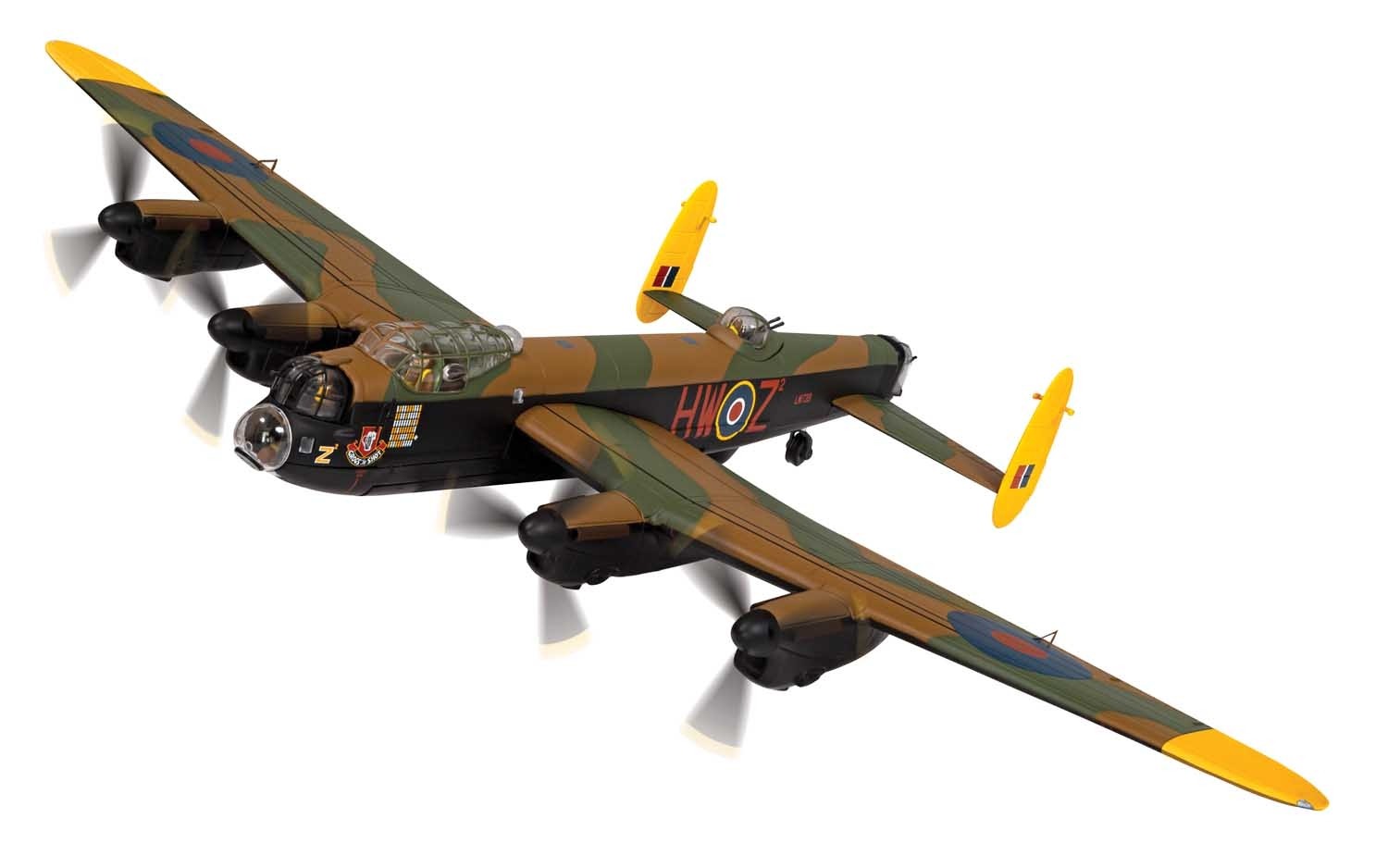
Avro Lancaster B Mk.III LM739/HW-Z(2) ‘Grog’s the Shot’, RAF No.100 Sqn, Elsham Wolds, Berchtesgaden Raid lead aircraft, 25th April 1945 During the closing stages of the war in Europe, the men of Bomber Command were given one final opportunity to strike at the very heart of the hated Nazi regime and potentially bring about an early cessation of hostilities. Mounting a major raid against Hitler’s famous Berchtesgaden Alpine retreat would mean a long and dangerous daylight mission for the bomber crews, however, they would be targeting chalets and lodges belonging to the Nazi party elite and at briefing, they were told that intelligence reports suggested the Fuhrer may be seeking refuge there, awaiting the end of the war. In fact, senior Allied planners knew Hitler was in Berlin, but did not want Berchtesgaden to become a Nazi shrine, or a rallying point for continued resistance.
At the head of the raid, the experienced crew of Avro Lancaster LM739 ‘Grog’s the Shot’ would be leading a joint force of more than 300 Lancasters, 16 Mosquitos and 270 USAAF Liberators, with the formation covered by 90 Mustang fighters. As well as firing Verey flares during the mission and trailing yellow pyrotechnic stars from the rear turret to assist with formation and navigation, the aircraft was also distinctively painted with yellow wing tips and rudder/vertical stabilisers, signifying its position.
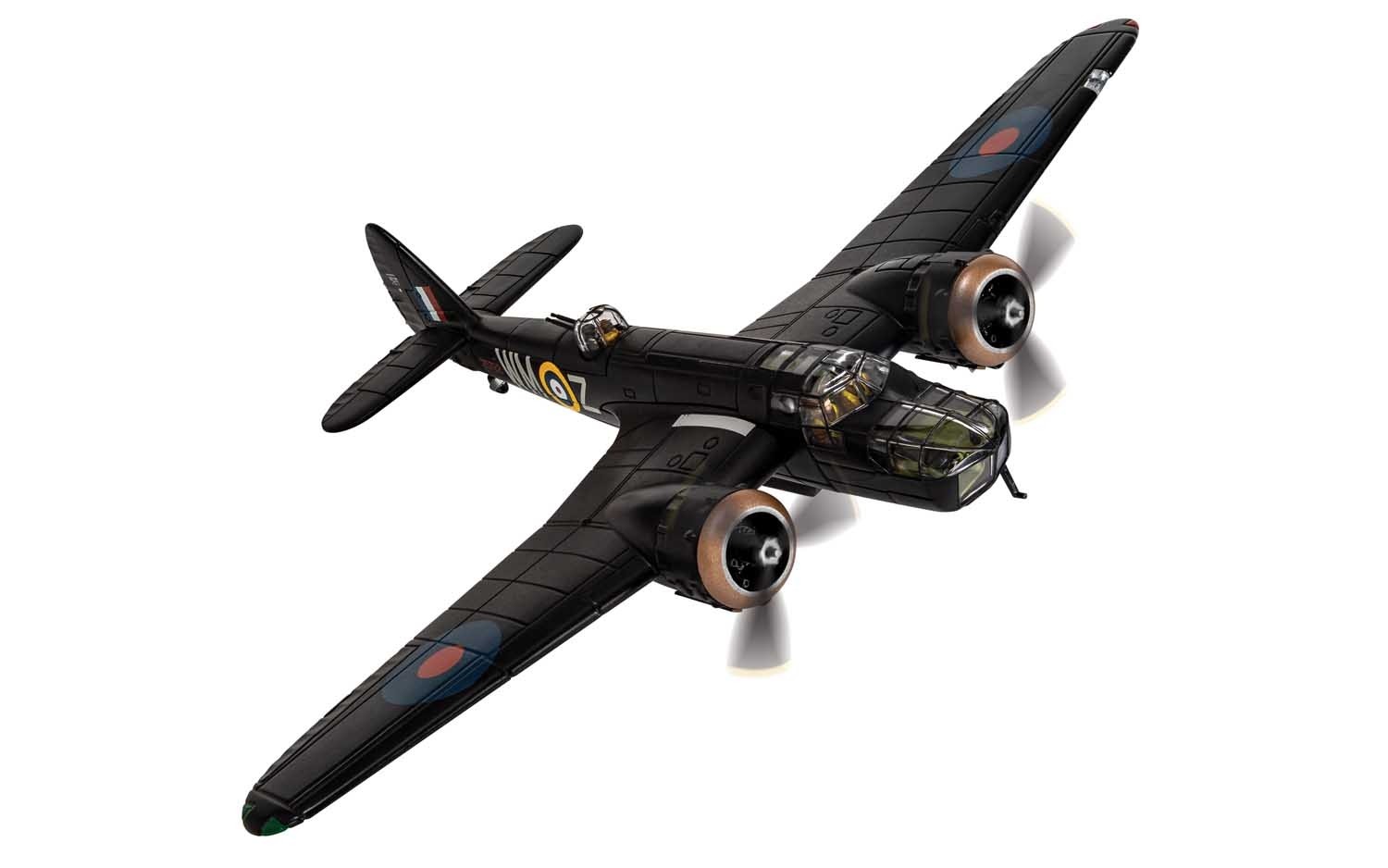
Bristol Blenheim Mk.IVF G-BPIV, Z5722 / WM-Z Spirit of ‘Britain First’, Duxford Airfield, 28th May 1993, restored as a Mk.IVF Nightfighter, the personal aircraft of the Commanding Officer, RAF No.68 Squadron, Wing Commander Max Aitken DSO, DFC, CZMC With the restoration team behind the world’s only airworthy Bristol Blenheim having to suffer the devastation of seeing their magnificent aircraft crashing at an Airshow in June 1987, only four weeks after making its first flight, you might think they would have struggled to find the resolve to start all over again. Thankfully, they were in no mood to accept defeat and almost immediately started a campaign to fund a second restoration, whilst at the same time scouring the world for the parts they would need. Using the wealth of experience they had gained during the initial restoration, this second project would be completed in around half the time and see a beautiful new Blenheim ready to make its first post restoration flight at Duxford in May 1993.
Looking very different to the first aircraft, Blenheim G-BPIV was built as an all-black Mk.IVF nightfighter, with the serial Z5722 and wearing the codes WM-Z. This scheme was selected in honour of Wing Commander the Hon Max Aitken DSO, DFC, CZMC, as his personal aircraft during his time as the Commanding Officer of No.68 Squadron at RAF High Ercall during 1941. The aircraft also carried the name Spirit of ‘Britain First’ on its port side fuselage, in direct reference to the name carried by the first Blenheim ever to fly.
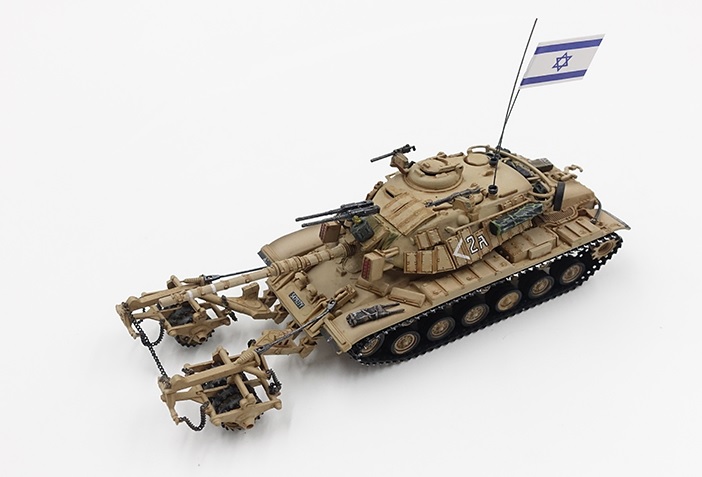
Precision Model Art New Model Announcements.
Check out the latest Precision Model Art new model announcements. Please click on the image of your choice to go straight to the model page.

Model dispatches and shipping delays.
Covid-19 has caused lots of delays to model deliveries.
- Lack of containers and delays from China into the U.K. and Europe
- Delays at the ports due to staff shortages
- Delays due to a lack of lorry drivers
- Air cargo delays due to fewer aircraft movements
- Royal Mail and Parcelforce depots full to capacity and suspension of guaranteed next day deliveries
Then there are…
- Brexit delays in Northern Ireland
- Brexit delays / Covid-19 delays into Europe
and to cap it all…
my fibre-optic internet connection outside the building has been disrupted by a “nibbling” rodent, so I am forced to use my back up, very slow BT broadband connection until it is fixed, to process your order.
In short , when I finally get delivery of your model at Sywell, I will get it to you ASAP.
Richard.
Flying Tigers.