SPAD XIII 040510-F-1234P-019
The SPAD S.XIII was a French biplane fighter aircraft of the First World War, developed by Société Pour L’Aviation et ses Dérivés (SPAD) from the earlier and highly successful SPAD S.VII.
During early 1917, the French designer Louis Béchereau, spurred by the approaching obsolescence of the S.VII, decided to develop two new fighter aircraft, the S.XII and the S.XIII, both using a powerful new geared version of the successful Hispano-Suiza 8A engine. The cannon armament of the S.XII was unpopular with most pilots, but the S.XIII proved to be one of the most capable fighters of the war, as well as one of the most-produced, with 8,472 built and orders for around 10,000 more cancelled at the Armistice.
By the end of the First World War, the S.XIII had equipped virtually every fighter squadron of the Aéronautique Militaire. In addition, the United States Army Air Service also procured the type in bulk during the conflict, and some replaced or supplemented S.VIIs in the Royal Flying Corps (RFC), pending the arrival of Sopwith Dolphins. It proved popular with its pilots; numerous aces from various nations flew the S.XIII during their flying careers. Following the signing of the Armistice of 11th November 1918, which effectively marked the end of the First World War, surplus S.XIIIs were sold in great numbers to both civil and military operators throughout the world.
Development
Background
The origins of the SPAD S.XIII lies in the performance of its predecessor, the SPAD S.VII, a single-seat fighter aircraft powered by a 150-horsepower (110 kW) direct drive Hispano-Suiza 8A water-cooled V-8 engine and armed with a single synchronised Vickers machine gun. The type demonstrated excellent performance for the time, entering operational service with the French Aéronautique Militaire during August 1916. By early 1917, however, the S.VII had been surpassed by the latest German fighters such as the Albatros D.I. The emergence of increasingly capable German fighters, which soon resulted in a shift in aerial supremacy towards the Central Powers, led to calls for superior aircraft to be developed and procured. French flying ace Georges Guynemer personally lobbied for an improved version of the S.VII, telling the SPAD designer Louis Béchereau that “The 150 hp SPAD is not a match for the Halberstadt … More speed is needed.” An initial and quick solution to the problem was to increase the compression ratio of the Hispano-Suiza engine, which increased its power to 180 hp (130 kW) to provide for significantly improved performance, allowing the SPAD S.VII to remain competitive for the time being.
Spanish manufacturer Hispano-Suiza were already in the process of developing a more powerful geared version of the 8A engine, and this engine was unsurprisingly chosen by Béchereau to power two developed versions of the S.VII. The British S.E.5a and Sopwith Dolphin fighters would also be powered by the same engine.

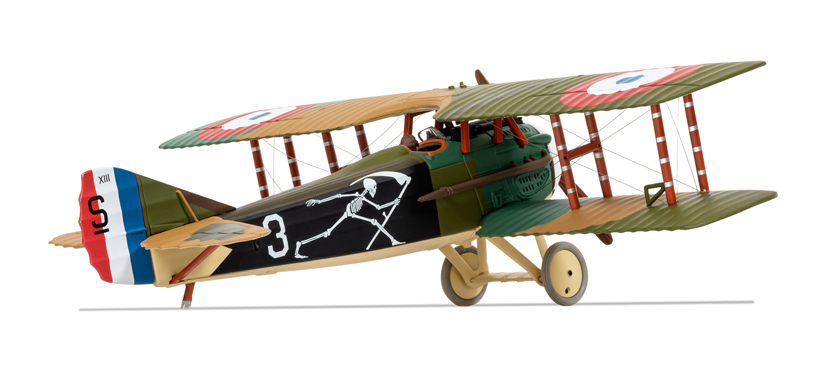
The grim reaper, the insignia of the SPA 94
Into flight
The first of Béchereau’s designs to fly with the new, gear-reduction HS.8B engine design series was the S.XII in its HS.8BeC (or “HS-38”) version, which was armed with an unusual 37 mm (1.457 in) cannon that fired through the propeller shaft. However, this aircraft only saw limited use, having been rapidly followed into production by the more conventionally armed S.XIII, which was deemed to be a preferable configuration by several French pilots and officials. Aviation author C.F. Andrews has claimed that a large portion of the credit for the S.XIII lies with Marc Birkigt, the designer of the engine, who had chosen to introduce various innovative features upon it, such as monobloc aluminium cylinders, which were furnished with screwed-in steel liners, which improved its performance.
On 4th April 1917, the SPAD S.XIII performed its maiden flight. An early distinguishing feature of the S.XIII – as with the SPAD S.XII – was that its similarly-“geared” HS.8Be V8 engine mandated a “left-hand”-ed propeller rotating in the opposite rotation to the earlier, “direct-drive” HS.8A-powered S.VII. Early on, similarly to the British Sopwith Dolphin also powered with HS.8B-series geared V8s, problems were encountered with the HS.8B engine’s gearing; however, Béchereau opted to persist with the engine, which was soon refined and became fairly reliable. Efforts to ramp up production of the type commenced almost immediately after the first flight was conducted. Within months of its first flight, the S.XIII had not only entered service with the Aéronautique Militaire but had quickly proven itself to be a successful fighter.
Design
The SPAD S.XIII was a single-engine biplane fighter aircraft. In terms of its construction, it shared a similar configuration and layout to the earlier S.VII, featuring a mainly wooden structure complete with a fabric covering; however, it was generally larger and heavier than its predecessor. Other changes included the tapered chord of its ailerons, the rounded tips of the tailplanes, bulkier cowling accommodating the gear-drive Hispano-Suiza 8B engine choice, and enlarged fin and rudder. The S.XIII was armed with a pair of forward-mounted Vickers machine guns with 400 rounds per gun, which took the place of the single gun that had been used on the earlier aircraft.

Japanese Spad S.XIII C.1
The S.XIII featured relatively conventional construction, that being a wire-braced biplane with a box-shaped fuselage and a front-mounted engine, except for its interposed wing struts located half-way along the wing span, which gave the fighter the deceptive appearance of being a double-bay aircraft instead of a single bay. This change prevented the landing brace wires from whipping and chafing during flight, and was attributed by Andrews as a key factor for the aircraft’s high rate of climb. Otherwise, it had an orthodox structure, comprising wooden members attached to metal joint fixtures. The fuselage consisted of four square-section longerons, complete with wooden struts and cross-members while braced with heavy-gauge piano wire; wire cable was instead used for the flying and landing wires.
To facilitate its two-hour endurance, the S.XIII was furnished with an assortment of underbelly fuel tanks were held within the forward fuselage area; these were fed into the main service tank located in the center of the upper wing by an engine-driven pump. Similar pumps were used for supplying pressurised oil and water circulation between the engine’s radiator and a header tank in housed within the upper wing. The circular nose radiator incorporated vertical Venetian-style blinds as a means of regulating the temperature of the engine.
The upper wing was a single-piece structure, featuring hollow box-section short spars which connected with linen-bandaged scarf joints, Andrews claims that long runs of spruce were difficult to obtain. The ribs consisted of plywood webs and spruce capping strips, which were internally braced with piano wire. The upper wing was provisioned with ailerons, which were actuated by the pilot via a series of tubular pushrods which ran vertical directly beneath the ailerons, with external, 90º bellcranks exposed above the lower wing panels’ top fabric covering. The lower wing consisted of spruce leading edges and wire-cable trailing edges, while the surfaces were fabric-covered and treated with aircraft dope to produce a scalloped effect, much as with the contemporary German Fokker D.VII that also used a wire trailing-edge component, along the trailing edges.
While the forward Vickers machine guns were installed as standard, they were not always present upon all aircraft. As a result of fears of a shortage of Vickers guns during the last few months of the war, several American squadrons equipped with the S.XIII decided to replace their existing Vickers .303 machine guns with the lighter-weight (25 lbs/11.34 kg apiece) .30/06-calibre Marlin Rockwell M1917 and M1918 aircraft machine guns, saving some sixteen pounds (7.3 kg) in weight over the twin-mount Vickers’ total weight of 66 lbs (29.94 kg) for the guns alone. Reportedly, by the end of the war, roughly one half of the aircraft in American service had been converted in this fashion.

Air-Ace Captain Reid Chambers with 94th Aero Sqn Us Signal Corps Aviation Section Spad S-XIII
The powerplant of the S.XIII was a geared Hispano-Suiza engine, at first a 8Ba providing 200 hp (150 kW), but in later aircraft a high-compression 8Bc or 8Be delivering 220 hp (160 kW) was often used. The sum of these improvements was a notable improvement in flight and combat performance. It was faster than its main contemporaries, the British Sopwith Camel and the German Fokker D.VII and its relatively higher power-to-weight ratio gave it a good rate of climb. The SPAD was renowned for its speed and strength in a dive, although the maneuverability of the type was relatively poor and the aircraft was difficult to control at low speeds: needing to be landed with power on, unlike contemporary fighters like the Royal Aircraft Factory SE.5 which could be landed with power off.
While giving the Spad XIII outstanding performance, the geared engines proved to be unreliable, suffering from poor lubrication and vibration. This significantly and severely affected serviceability, with it being stated in November 1917 that the Spad S.XIII was “incapable of giving dependable service”. Even in April 1918, an official report stated that two-thirds of the 200 hp SPADs were out of use at any one time due to engine problems. At least one American observer believed at the time that the French were giving the US SPAD XIII squadrons lower-quality engines from their least favored manufacturers while keeping the best for themselves. Allegedly, the reliability issues encountered with the engine were considered an acceptable price to pay for the improved performance, however, as time went by, a combination of improved build quality and changes to the engine design led to increased levels of serviceability.
At the beginning of 1918 the Aviation Militaire issued a requirement for a more powerful fighter, in a C1 (Chasseur single-seat) specification. SPAD responded by fitting the 300 hp (220 kW) Hispano-Suiza 8Fb in the SPAD XIII airframe. The structure was strengthened and improved aero-dynamically, retaining the dimensions of the SPAD XIII. Twenty SPAD XVII fighters were built and issued to units with GC 12 (Les Cigones).

A SPAD S.XIII at Air Service Production Center No. 2, Romorantin Aerodrome, France, 1918
Operational history
A SPAD XIII painted to represent the aircraft flown by Arizona native Frank Luke, Jr., the first aviator awarded the Medal of Honor, the highest military decoration in the United States, in World War I.
During May 1917, only one month following the type’s maiden flight, deliveries to the Armée de l’Air commenced. The new aircraft quickly became an important element in the French plans for its fighter force, being expected to replace the SPAD S.VII as well as the few remaining Nieuport fighters in front line service. However, these plans were disrupted by deliveries occurring at a much slower rate than had been initially forecast; by the end of March 1918, 764 fighters had been delivered compared with a planned force of 2,230.

94th Aero Sqn Us Signal Corps Aviation Section Spad S-Xiii Flown by Air-Ace Captain Eddie Rickenbacker 1910s
Eventually, the S.XIII equipped virtually every French fighter squadron, comprising 74 Escadrilles, during the First World War. At the end of the war, plans were underway to replace the S.XIII with several fighter types powered by the 300 hp (220 kW) Hispano-Suiza 8F, such as the Nieuport-Delage NiD 29, the SPAD S.XX and the Sopwith Dolphin II. These plans lapsed following the signing of the Armistice of 11th November 1918, which ended the First World War and the SPAD S.XIII remained in French service as a fighter aircraft until 1923.
The S.XIII was flown by numerous famous French fighter pilots such as Rene Fonck (the highest scoring Allied ace, credited with 75 victories), Georges Guynemer (54 victories), and Charles Nungesser (45 victories), and also by the leading Italian ace Francesco Baracca (34 victories). Aces of the United States Army Air Service who flew the S.XIII include Eddie Rickenbacker (America’s leading First World War ace with 26 confirmed victories) and Frank Luke (18 victories). Andrews attributes the S.XIII’s natural stability, which lent itself to being a steady gun platform, as having been a key attribute for its success.

SPAD S.XIII with the famous Captain Edward Rickenbacker.
USAAS
Other Allied forces were quick to adopt the new fighter as well; the SPAD XIII equipped 15 of the 16 operational American pursuit squadrons of the USAAS by the signing of the Armistice. Even prior to America’s entry into the conflict, American volunteers flying with the Allies had been piloting the type. Nearly half of the 893 purchased by the United States were still in service by 1920. In the United States, some S.XIIIs were re-engined with 180 hp Wright-Hispano engines to improve reliability and to prepare pilots for the new Thomas-Morse MB-3 fighter (which used SPAD-type wings in its construction) in 1922; according to Andrews, the Wright-Hispano engine was incapable of matching the performance of the original powerplant.

A SPAD S.XIII of the American 103rd Aero Squadron – note exposed aileron bellcrank protruding from lower wing, also used for the A.2 “pulpit fighter” and S.VII.
RFC
During December 1917, No 23 Squadron of the Royal Flying Corps (RFC) equipped with the SPAD S.XIII, retaining them until April 1918 when it re-equipped with the Dolphin, while No. 19 Squadron (officially equipped with the earlier S.VII) also operated at least a single S.XIII for a time. It was alleged by Andrews that the type was sometimes used as an interim fighter while awaiting the delivery of British-built aircraft.
In his memoir Sagittarius Rising, Cecil Lewis described an aerial competition between himself and a SPAD flown by Guynemer, while Lewis was flying an SE5, “Their speeds were almost identical, but the high-compression Spad climbed quicker. After the race was over, Guynemeyer and I held a demonstration combat over the aerodrome. Again I was badly worsted. Guynemeyer was all over me. In his hands the Spad was a marvel of flexibility. In the first minute I should have been shot down a dozen times”.
Corpo Aeronautico Militare
The S.XIII was also acquired by Italy for the Corpo Aeronautico Militare. Andrews has claimed that Italian pilots expressed an overall preference for another French-built fighter, the Hanriot HD.1, which was more maneuverable but considerably less powerful in comparison. Belgium also operated the S.XIII; one Belgian ace, Edmond Thieffry, came to prominence while piloting the type. After the end of the war, the S.XIII was also exported to further nations, including Japan, Poland and Czechoslovakia.
Surviving aircraft
Belgium
SP49 – on static display at the Royal Museum of the Armed Forces and Military History in Brussels.
France
S4377 – airworthy with the Memorial Flight Association in La Ferté-Alais, Île-de-France.
S5295/S15295 – on static display at the Musée de l’air et de l’espace in Paris, Île-de-France.
United States
S7689 Smith IV – on static display at the National Air and Space Museum in Washington, D.C.

A SPAD XIII painted to represent the aircraft flown by Arizona native Frank Luke, Jr., the first aviator awarded the Medal of Honor, the highest military decoration in the United States, in World War I.
S16594 – on static display at the National Museum of the United States Air Force in Dayton, Ohio. It is painted to represent Eddie Rickenbacker’s aircraft.
S15155 – on static display at Phoenix Sky Harbor International Airport in Phoenix, Arizona. Includes parts from three different aircraft and is painted to represent a SPAD XIII flown by Frank Luke.
Spad XIII 1/48th scale Corgi Aviation Archive models available from Flying Tigers.
Check out the latest SPAD to arrive this week at Flying Tigers. Simply click on the images below to chose yours !
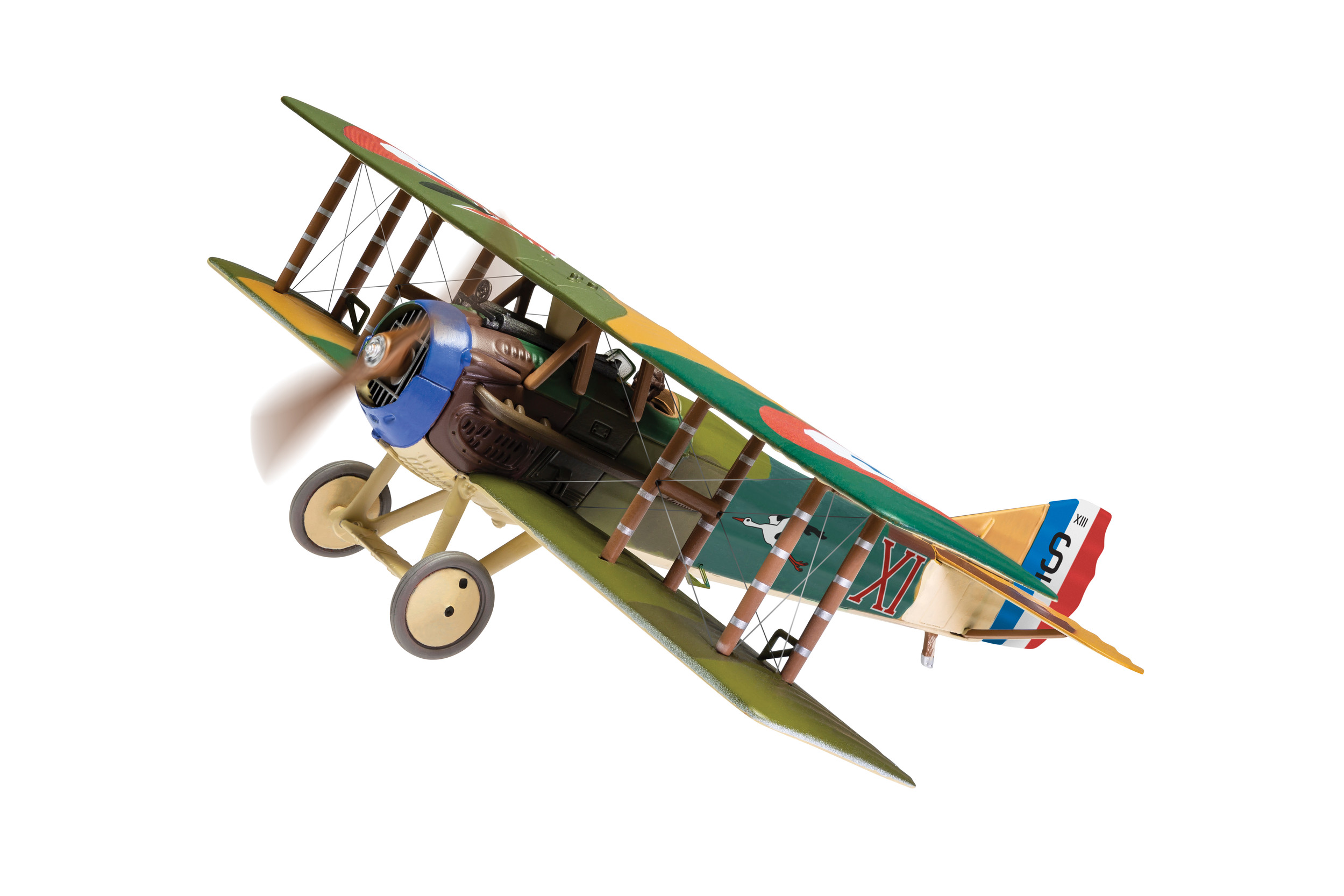
Corgi Aviation Archive arrival next week.
Always very quick to sell out, if you haven’t ordered yours yet I would get your order in ASAP. Simply click on the images below to go straight to the model page to order your now.
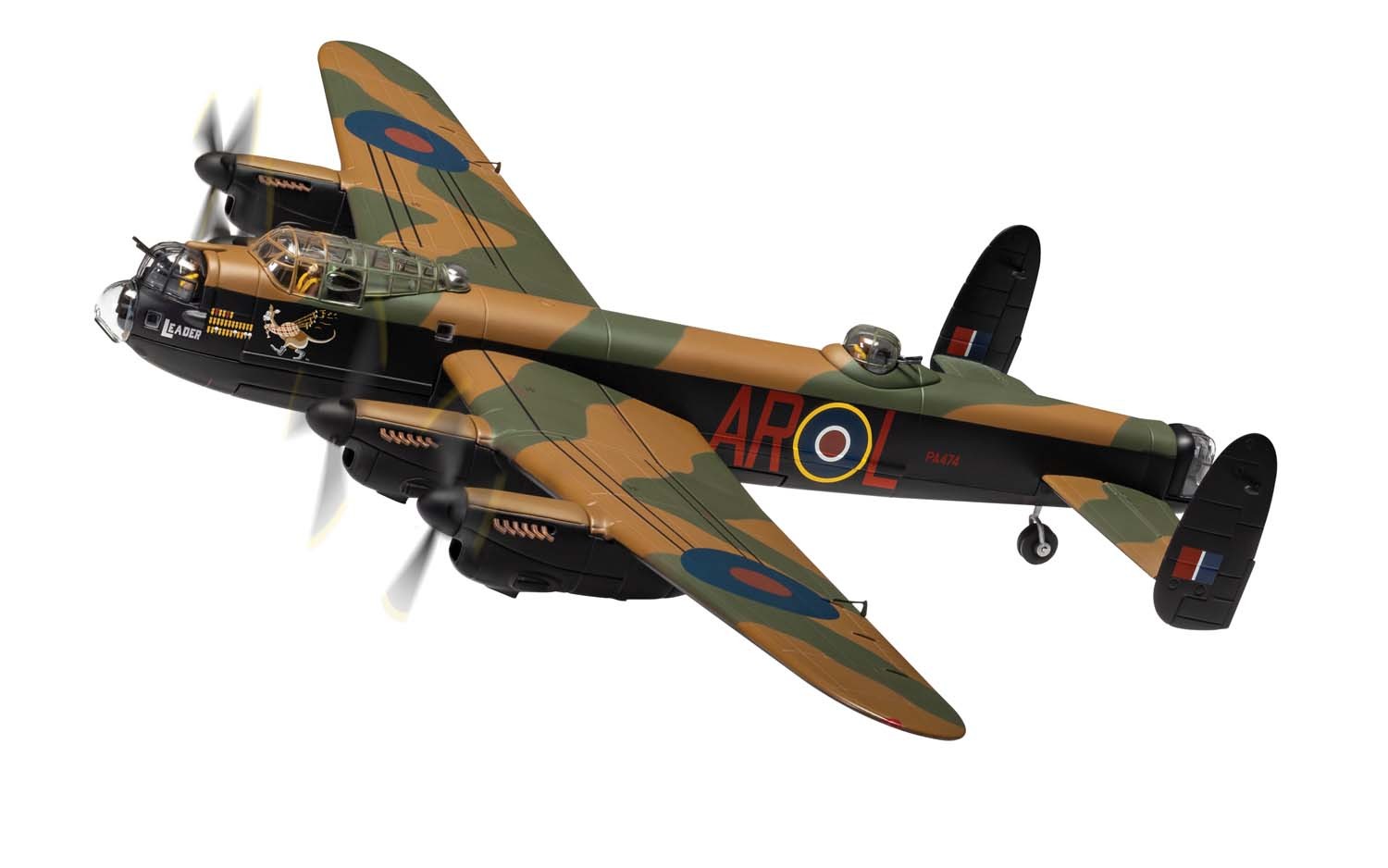

As arguably the best loved historic aircraft in Britain today, Avro Lancaster B.I PA474 is one of only two airworthy Lancasters in the world and the only one flying in Europe. Operated by the Coningsby based Battle of Britain Memorial Flight, the aircraft serves as a flying memorial to almost 64,000 men of RAF Bomber Command who were either killed or injured during the Second World War and is a highlight act at any event which it displays.
Over the years, the aircraft has been presented in several different wartime schemes, marking the achievements of particular aircraft, aircrews or squadrons and following the completion of its 2016 winter maintenance schedule, it emerged in this attractive scheme which features the markings of two different Lancasters.
The port side wears the markings of W5005 AR-L ‘Leader’ of No.460 RAAF Squadron, including attractive nose artwork featuring a kangaroo playing the bagpipes, highlighting the international nature of the aircraft’s crew. The starboard side carries the codes VN-T, representing a Lancaster of RAF No.50 Squadron, one which was flown by F/O Douglas Millikin DFC on 27 missions of his first tour of operations – F/O Millikin was the grandfather of the Commanding Officer of the Battle of Britain Memorial Flight at the time of the Lancaster’s repaint. PA474 was still wearing these popular markings at the end of the 2019 Airshow season.
The original idea of forming a Historic Aircraft Flight of wartime piston engined aircraft began to take shape during 1957 at RAF Biggin Hill, as Wing Commander Peter Thompson DFC had access to one of the last Hawker Hurricanes in RAF service and wanted to preserve the aircraft for the benefit of the nation. Within weeks, the new Flight benefitted from the addition of three former Temperature and Humidity Flight Spitfires from RAF Woodvale and the nucleus of the Battle of Britain Flight was born.
To more accurately reflect the growing commemorative role the Flight was being asked to perform, the name was changed to its current Battle of Britain Memorial Flight and whilst the aircraft it has operated since inception may have changed, the affection in which they are held has increased with each passing year.
In November 1973, the Flight received a huge boost with the arrival of Avro Lancaster B.I PA474, an aircraft which since that date has been continually upgraded to as near wartime configuration as possible.
The aircraft of the Battle of Britain Memorial Flight are regarded as a highlight act at any Airshow at which they display and are in high demand throughout the year, performing a multitude of ceremonial and commemorative duties alongside their many Airshow commitments. Receiving numerous requests to perform flypasts each year, it is not uncommon for the BBMF to undertake several hundred flying appearances during a season, thrilling many millions of spectators and aviation enthusiasts in the process.
New Calibre Wings model announcements!
New Calibre Wings models have just been announced and are available to pre-order at Flying Tigers today. If you want any of these models it is always safer to pre-order as quantities are limited.
Don’t forget NO DEPOSIT necessary with Flying Tigers and if you order with your debit or credit card your payment is not taken until your model is available to dispatch.
Flying Tigers will also consolidate your orders to save on postage costs across all brands !
Please click on the images / links below to go to the model of your choice, or CLICK HERE to see them all.
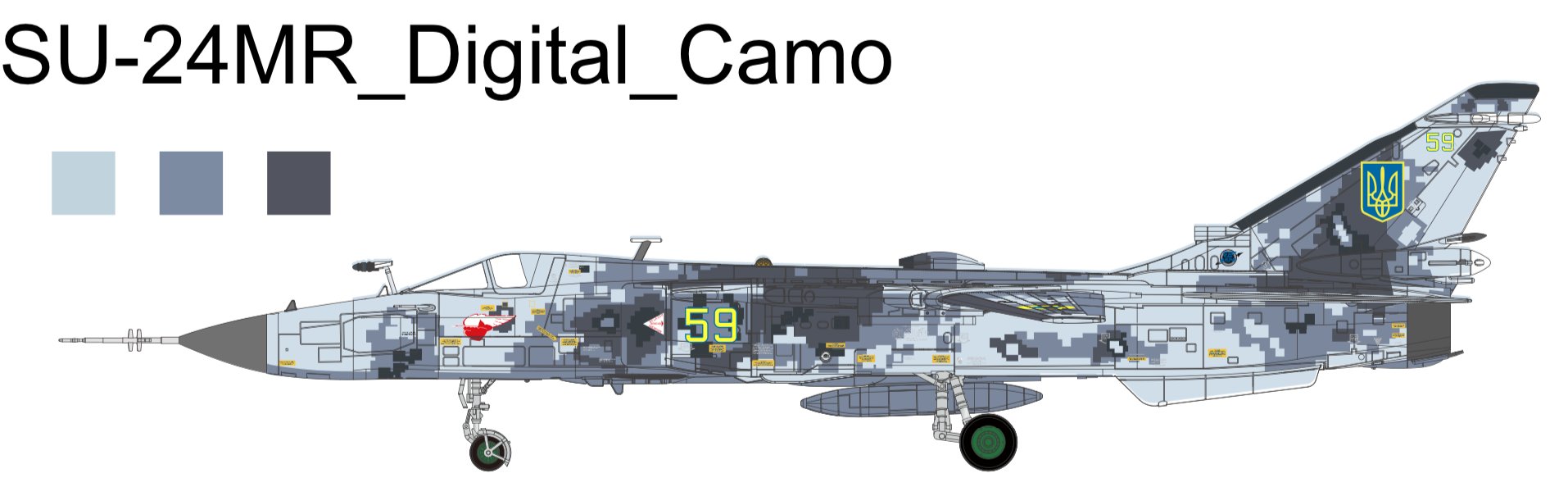
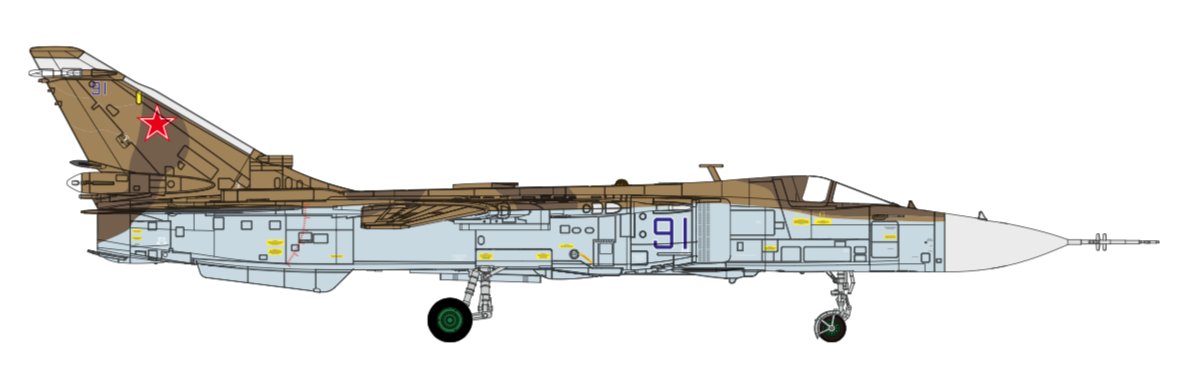
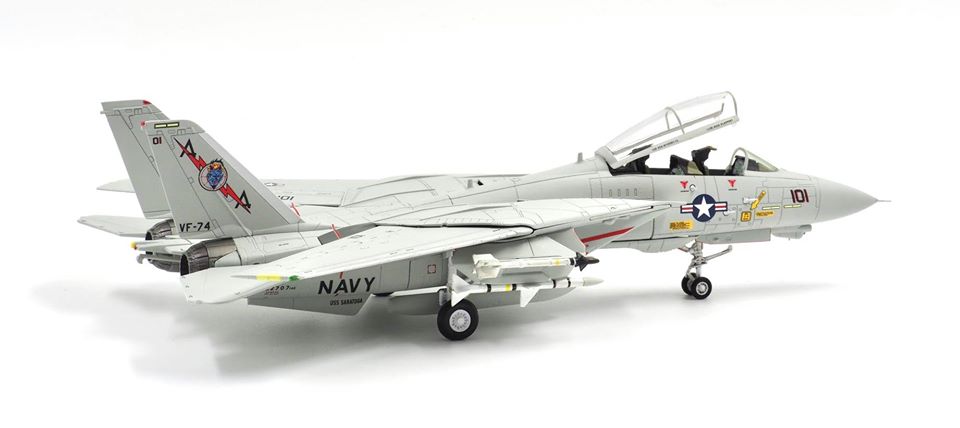
Calibre Wings new model arrivals.
Calibre Wings new models arrived yesterday at Flying Tigers. If you have already pre-ordered yours , your model will be dispatched to you shortly. Please click on the image below to go straight to the model of your choice or CLICK HERE to see them all.


Coronovirus: Flying Tigers Dispatch Information.
Customers may now collect their models from Flying Tigers at the Sywell Office and warehouse. Please call in advance to make an appointment (approx. time will do), and we will have your models ready for you.
Flying Tigers will strictly adhere to the social distancing rules. In good, dry weather customers may collect their already boxed models from the front door and outside the office. Pre-payment will be necessary. In inclement weather, collections may be made from inside the lobby.
There will still be no access to the stock room or office.
Due to Covid-19 there is still some disruption to service times from Parcelforce and the Royal Mail who have now suspended their service delivery time guarantees. The situation is patchy with some customers getting models next day whilst others are waiting 10 days or so. Please be patient … all carriers and postal services are working round the clock to catch up, and so are Flying Tigers.
At Flying Tigers, family and friends have always been the most important thing to us. During these unprecedented times we want to reassure you that the health and safety of our customers, employees and their families continues to be our number one priority. Now is the time for us to come together and support one another more than ever.
We will continue to follow all World Health Organisation, Government and Public Health England advice and act accordingly. Currently, our small showroom is closed to the public and we will continue to monitor the rapidly changing situation closely and respond as advised by those experts.
Whilst we’ve always been a clean and tidy bunch, we are doing everything to ensure even higher standards of hygiene and cleanliness.
We’d like to say a huge thank you to all our customers, for continuing to support us. It’s not been easy for anyone and we’re lucky to have fellow collectors that understand that in these difficult times, small family businesses such as Flying Tigers need your business and support to stay alive.
If you have supplied Flying Tigers with your mobile number and/ or your email address, Parcelforce will notify you by way of text message or email on anticipated delivery day/time.
For Royal Mail delivered parcels these can be tracked through the Royal Mail parcel tracking service. The tracking number will be emailed to you on the “Your order is completed” notification upon dispatch of your order.
If you had requested a delivery to your place of work or to a neighbour, and you would now like your Parcel delivered to your home/billing address please email us and we will make the change. If we do not receive this instruction we will continue to dispatch to your original delivery address.
We are still working hard processing and despatching orders on a daily basis.
You, our loyal customers will be the first to know in the event of any changes or updates in the coming weeks.
For more information on COVID-19 and current Government stance please follow these links below:
Coronovirus: Royal Mail and Parcelforce Update
Royal Mail have issued an update with regards to the Coronavirus…
Public Health England (PHE) has advised that people receiving parcels are not at risk of contracting the coronavirus. From experience with other coronaviruses, we know that these types of viruses don’t survive long on objects, such as letters or parcels. This complements the highly publicised guidance from PHE for people to wash their hands more often than usual using soap and hot water.
We are actively monitoring this rapidly evolving situation. We take the health and safety of our people very seriously. We have provided guidance to our people, our customers and the communities in which we operate, to help prevent the spread of any infection. We are doing so in line with preventative guidance from Public Health England.
Signing for and receiving items
In order to protect both our people and customers as much as possible, we will not be handing over our hand-held devices to customers to capture signatures. Postmen and women will instead log the name of the person accepting the item. This will apply to all deliveries that require a signature.
Additionally, for all customers (including those who are self-isolating) where we need to deliver any parcel that won’t fit through your letterbox, we will place your item at your door. Having knocked on your door, we will then step aside to a safe distance while you retrieve your item. This will ensure your item is delivered securely rather than being left outside.
In order to protect both our people and customers as much as possible, we will not be handing over our hand-held devices to customers to capture electronic signatures. Our drivers will instead log the first and last name of the person accepting the item then put ‘XP1’ in the signature field, and we will record the geolocation of the delivery. This will apply to all deliveries that normally require a signature.
If you are unable to come to the door at all we will issue a ‘Something for You’ card, advising of other ways you can arrange to get your item. For example, by getting a friend or family member to collect the parcel from our local Customer Service Point on your behalf. In this situation, and to keep your mail as secure as possible, they will need to bring along the card we left you and a form of ID in the name of the person to which the item is addressed.
For full information on our response to this global situation, please visit parcelforce.com/coronavirus
Contingency plans
In the event we need to close one of our units, this decision would be made in line with Public Health England guidance. Royal Mail has many years’ experience of contingency planning for a number of different scenarios. We will follow the Government’s advice and work closely with the relevant authorities.
We have extensive experience in being able to quickly deploy business contingency plans so we continue to provide customers with access to our services and their mail.
Coronovirus International Shipment Updates
As you may know from the media recently, a number of countries are cancelling flights between Europe and themselves, and countries within the EU are shutting borders and some are or have gone on lockdown.
Unfortunately, this means that almost all international mail and parcels will be delayed wherever they go as many pass-through EU countries etc onto other destinations. Some freight also piggybacks onto commercial flights, like Royal Mail use BA to inject into the USA. These flights have recently been cancelled.
We will do our utmost to work with our carrier partners to ensure mail/parcels are stored safely in periods they are held and we will move the freight as quickly, safely and as smooth as possible.
Please note this may cause big breaks within the tracking where parcels haven’t been scanned and we expect we will see delays of up to 4/6 weeks to some destinations. This prediction is based on today’s activities.
Governments are making decisions on a daily basis so it is difficult to pinpoint exactly where or when delays will occur.
I would ask our customers to be mindful of this when contacting our customer services team.
We will try to keep you informed wherever possible.
Service and Parcels to USA
Parcelforce are pleased to tell you that we have been able to secure capacity to allow us to continue to operate the service to USA.
Over the last few days the number of flights to USA has reduced dramatically. This has resulted in a significant reduction in airline capacity for parcels and freight from UK to USA. We have been working very closely with our airline partners to maintain service.
You can continue to receive parcels in these countries via our globalexpress service, however there is a suspension of delivery time guarantee in place.
Services and Parcels to New Zealand and Kuwait
Due to the ongoing situation and attempts to limit the spreading of COVID-19, which has impacted airline capacity into the New Zealand and Kuwait, Parcelforce have suspended our globalpriority service to these countries with immediate effect, until further notice.
You can continue to receive parcels in these countries via our globalexpress service, however there is a suspension of delivery time guarantee in place.
Parcel deliveries in France
Our European parcel delivery partner GLS has informed us that they will not be making deliveries on Fridays in France, until further notice, due to operational issues. The services affected by this are europprioritybusiness and europriorityimport only. GLS hubs, depots and customer services will therefore be closed on Fridays, Saturdays and Sundays in France.
Services and Parcel deliveries to Australia, China and Canada
In the rapidly evolving situation regarding Coronavirus (COVID-19), we are continuing to work very closely with our airline partners to maintain our overseas delivery services.
We are pleased to tell you that we are able to secure capacity to operate the service to Australia, China and Canada. However, as passenger numbers reduce, the number of available flights to these destinations has also reduced significantly, impacting capacity for parcels and freight.
You can continue to receive parcels in these countries via our globalexpress service, however there is a suspension of delivery time guarantee in place.
Thank you for reading this week’s Newsletter.
Stay safe, well, and look after each other.
Richard.
Flying Tigers.