North Korean MiG 29
The Korean People’s Army Air and Anti-Air Force is the unified military aviation force of North Korea. It is the second largest branch of the Korean People’s Army comprising an estimated 110,000 members. It possesses 940 aircraft of different types, mostly of decades old Soviet and Chinese origin. Its primary task is to defend North Korean airspace.
History
The Korean People’s Army Air and Anti-Air Force began as the “Korean Aviation Society” in 1945. It was organized along the lines of flying clubs in the Soviet Union. In 1946, the society became a military organization and became an aviation division of the Korean People’s Army (KPA). It became a branch of the army in its own right in November 1948. The KPAF incorporates much of the original Soviet air tactics, as well as North Korean experience from the UN bombings during the Korean War.
The KPAF has on occasion deployed abroad. It deployed a fighter squadron to North Vietnam during the Vietnam war. Kim Il-sung reportedly told the North Korean pilots “to fight in the war as if the Vietnamese sky were their own.”
On April 15th, 1969, MiG-21s of the KPAF shot down a Lockheed EC-121 Warning Star in international waters, in the Sea of Japan.
In 1973, a North Korean flight of MiG-21s deployed to Bir Arida to help defend southern Egypt during the Yom Kippur War.
In 1990-91, North Korea activated four forward air bases near the Korean Demilitarized Zone (DMZ).

North Korean MiG-21
Aerial warfare Korean War 25th June 1950 – 27th July 1953
The war was the first in which jet aircraft played the central role in air combat. Once-formidable fighters such as the P-51 Mustang, F4U Corsair, and Hawker Sea Fury—all piston-engined, propeller-driven, and designed during World War II—relinquished their air-superiority roles to a new generation of faster, jet-powered fighters arriving in the theater. For the initial months of the war, the P-80 Shooting Star, F9F Panther, Gloster Meteor and other jets under the UN flag dominated the Korean People’s Air Force (KPAF) propeller-driven Soviet Yakovlev Yak-9 and Lavochkin La-9s. By early August 1950, the KPAF was reduced to only about 20 planes.
The Chinese intervention in late October 1950 bolstered the KPAF with the MiG-15, one of the world’s most advanced jet fighters. The heavily armed MiGs were faster than first-generation UN jets and therefore could reach and destroy US B-29 Superfortress bomber flights despite their fighter escorts. With increasing B-29 losses, the USAF was forced to switch from a daylight bombing campaign to the safer but less accurate nighttime bombing of targets.

MiG-15’s in Chongjin Airport North Korea
The USAF countered the MiG-15 by sending over three squadrons of its most capable fighter, the F-86 Sabre. These arrived in December 1950. The MiG was designed as a bomber interceptor. It had a very high service ceiling—15,000 m (50,000 ft) and carried very heavy weaponry: one 37 mm cannon and two 23 mm cannons. The F-86 had a ceiling of 13,000 m (42,000 ft) and were armed with six .50 caliber (12.7 mm) machine guns, which were range adjusted by radar gunsights. If coming in at higher altitude the advantage of engaging or not went to the MiG. Once in a level flight dogfight, both swept-wing designs attained comparable maximum speeds of around 1,100 km/h (660 mph). The MiG climbed faster, but the Sabre turned and dived better.
In the summer and autumn of 1951, the outnumbered Sabres of the USAF’s 4th Fighter Interceptor Wing—only 44 at one point—continued seeking battle in MiG Alley, where the Yalu River marks the Chinese border, against Chinese and North Korean air forces capable of deploying some 500 aircraft. Following Colonel Harrison Thyng’s communication with the Pentagon, the 51st Fighter-Interceptor Wing finally reinforced the beleaguered 4th Wing in December 1951; for the next year-and-a-half stretch of the war, aerial warfare continued.
Unlike the Vietnam War, in which the Soviet Union only officially sent “advisers”, the 64th Fighter Aviation Corps saw action in the Korean air war. Fearful of confronting the US directly, the Soviet Union denied involvement of their personnel in anything other than an advisory role, but air combat quickly resulted in Soviet pilots dropping their code signals and speaking over the wireless in Russian. This known direct Soviet participation was a casus belli that the UN Command deliberately overlooked, lest the war expand to include the Soviet Union, and potentially escalate into atomic warfare.
After the war, and to the present day, the USAF reports an F-86 Sabre kill ratio in excess of 10:1, with 792 MiG-15s and 108 other aircraft shot down by Sabres, and 78 Sabres lost to enemy fire. The Soviet Air Force reported some 1,100 air-to-air victories and 335 MiG combat losses, while China’s PLAAF reported 231 combat losses, mostly MiG-15s, and 168 other aircraft lost. The KPAF reported no data, but the UN Command estimates some 200 KPAF aircraft lost in the war’s first stage, and 70 additional aircraft after the Chinese intervention. The USAF disputes Soviet and Chinese claims of 650 and 211 downed F-86s, respectively. However, one source claims that the USAF has more recently cited 224 losses (c.100 to air combat) out of 674 F-86s deployed to Korea.

The MiG-15 surprised United Nations air forces during the Korean War, being a match for the best American and British jet fighters and better than most of the types in their inventory.
Regardless of the actual ratio, American Sabres were very effective at controlling the skies over Korea; since no other UN fighter could contend with the MiG-15, F-86s largely took over air combat once they arrived, relegating other aircraft to performing air-to-ground duties. Despite being outnumbered (the number of Sabres in theater never exceeded 150 while MiG-15s reached 900 at their peak), North Korean and Chinese aircraft were seldom encountered south of Pyongyang. UN ground forces, supply lines, and infrastructure were not attacked from the air and although North Korea had 75 airfields capable of supporting MiGs, after 1951 any serious effort to operate from them was abandoned, keeping them based across the Yalu River in the safety of China. This confined most air-to-air engagements to MiG Alley, giving UN aircraft free rein to conduct strike missions over enemy territory with little fear of interception. Although jet dogfights are remembered as a prominent part of the Korean War, counter-air missions comprised just 12% of Far East Air Forces sorties, and four times as many sorties were performed for close air support and interdiction.
The war marked a major milestone not only for fixed-wing aircraft, but also for rotorcraft, featuring the first large-scale deployment of helicopters for medical evacuation (medevac). In 1944–1945, during the Second World War, the YR-4 helicopter saw limited ambulance duty, but in Korea, where rough terrain trumped the jeep as a speedy medevac vehicle, helicopters like the Sikorsky H-19 helped reduce fatal casualties to a dramatic degree when combined with complementary medical innovations such as Mobile Army Surgical Hospitals. The limitations of jet aircraft for close air support highlighted the helicopter’s potential in the role, leading to development of the helicopter gunships used in the Vietnam War (1965–75).
Organization
Capabilities
The KPAF operates a wide range of fighter and attack aircraft. North Korea is one of the few nations still operating the obsolete MiG-17, MiG-19, MiG-21 and MiG-23 fighters, yet it operates more modern and fairly capable MiG-29 fighters. The KPAF’s most numerous fighter is the MiG-21, which is somewhat obsolete, but still a worthy foe in air-to-air combat, if maintained properly and crewed by experienced pilots. An assessment by US analysts GlobalSecurity.org reported that the air force “has a marginal capability for defending North Korean airspace and a limited ability to conduct air operations against South Korea.”

North Korean MiG-17
North Korea operates a wide variety of air defense equipment, from short-range MANPADS such as 9K34 Strela-3, 9K38 Igla and ZPU-4 heavy machine guns, to long-range SA-5 Gammon and Pon’gae-5 SAM systems and large-calibre AA artillery guns. North Korea has one of the densest air defence networks in the world. Ilyushin Il-28 Beagle bombers provide a medium-range attack platform, despite being generally obsolete. A large part of the ground attack aircraft are kept in heavily fortified hangars, some of which are capable of withstanding a nearby nuclear blast. Stealth capacity is known in the KPAF through researching in radar-absorbing paint and inventory deception.
It has been noted that the North Korean Air Force operates a few MD-500 helicopters that were exported to the DPRK by German merchants through Soviet vessels. Several were seen equipped with Soviet AT-3 anti-tank missiles during a military parade commemorating 60 years since Korean War armistice. They later made another public appearance at the Wonsan Air Festival in which they were seen sporting the new green camouflage paint scheme that has also been incorporated on An-2s and Mi-17s that have also been displayed at the air show.
KPAF possesses precision guided munitions such as Kh-25 and Kh-29 air to ground missiles along jamming pods such as SPS-141 for SAM suppression.
Personnel
From 1978 to 1995, General Jo Myong-rok was the commander of the air force. In October 1995, he was promoted to vice-marshal and appointed Chief of the KPA General Political Bureau and a member of the Korean Workers’ Party Central Military Committee. His place as commander of the Air Force was taken by Colonel General Oh Gum-chol.

North Korean MiG-23
Annual flying hours
The number of annual flying hours (AFH) per pilot is, like almost every other aspect of the KPAF, very hard to estimate. Most sources on the subject abstain from giving hard numbers, but all of them estimate the average annual flying hours per pilot as being ‘low’ to ‘very low’. The number of annual flying hours is very important in estimating the individual skill and experience of the pilots of an air force: more annual flying hours suggests better trained pilots. Most estimates present a rather grim picture: AFH per pilot for the KPAF are said to be only 15 or 25 hours per pilot each year – comparable to the flying hours of air forces in ex-Soviet countries in the early 1990s. In comparison, most NATO fighter pilots fly at least 150 hours a year. Ground training, both in classrooms, on instructional airframes or in a flight simulator can only substitute for ‘the real thing’ to a certain degree, and the low number of modern jet trainers in the KPAF arsenal points to a very modest amount of flying time for the formation of new pilots.
There are a number of possible explanations for the low AFH: concern over the aging of equipment, scarcity of spare parts – especially for the older aircraft – difficulties with worn airframes, fear of defection and the scarcity of fuel are all contributing factors. It is very likely however that some ‘elite’ pilots and regiments receive considerably more flying hours. Especially those equipped with modern aircraft and tasked with homeland defence – like the 57th regiment flying MiG-29s and the 60th regiment flying MiG-23s – are receiving multiple times the average AFH per pilot; however, aging equipment, the scarcity of fuel and the general economic crisis in North Korea will affect these regiments as well, and keep their AFH low compared to NATO AFH.
Agence France-Presse reported on January 23rd, 2012, that the KPAF had conducted more flight training than average in 2011.
The Chosun Ilbo reported on March 29th, 2012, that the KPAF had dramatically increased the number of flights to 650 per day.
Tongil News reported on July 20th, 2013, that KPAF’s fighter jets and helicopters had conducted 700 sorties a day for 11 days as reported by a source in South Korean government on March 13th after Key Resolve military exercise started on March 11th. 700 hours of sorties is considered by the United States military as the capability to wage all-out war.

A North Korean Shenyang J-6
Aircraft
Combat Aircraft
MiG-29 18
MiG-21 30
MiG-23ML 56
Sukhoi Su-7B 18
Sukhoi Su-25 34
Ilyushin Il-28 (H-5) 80
Shenyang F-5 107
Shenyang J-6 (F-6) 100
Chengdu J-7 F-7) 120
North Korean MiG-21
Transport
PAC P-750 3 (illegally obtained)
Antonov An-24 1
Helicopters
MD 500 84 (illegally obtained)
PZL Mi-2 47
Mil Mi-8 41
Mil Mi-14 8
Mil Mi-24 (Mi-35) 20
Mil Mi-26 4
Trainer Aircraft
Shenyang F-5 (FT-5) 135
Shenyang FT-2 30
MiG-15 4
Defections
Due to the political condition of North Korea, several North Korean pilots from the KPAF defected with their jets. These incidents include:
On September 21st, 1953, 21-year-old No Kum-sok, a senior lieutenant, flew his MiG-15 across to the South and landed at Kimpo Air Base near Seoul. Considered an intelligence bonanza, since this fighter plane was then the best the Communist bloc had. No was awarded the sum of $100,000 ($963,325.84 in 2019 dollars) and the right to reside in the United States. He is now a U.S. citizen.
On August 5th, 1960, a Shenyang J-5 landed at Kimpo, the second time a J-5 appeared in South Korea. This aircraft was kept by South Korea and was briefly flown in South Korean markings before being scrapped.
In February 1983, Lee Ung-pyong used a training exercise to defect and landed his Shenyang J-6 at an airfield in Seoul. According to the then common practice, he received a commission in the South Korean Air Force (ROKAF), eventually becoming a colonel and teaching at the South Korean academy until his death in 2002. He received a reward of 1.2 billion South Korean won.
On May 23rd, 1996, Captain Lee Chul-su defected with another Shenyang J-6, number 529, to Suwon Air Base, South Korea. He reportedly left behind his wife and two children. Lee was rewarded 480 million South Korean Won (approx. 400 thousand US dollars). He is now a colonel in the ROKAF and is an academic instructor.

Kim Jong Un posing with some soldiers and one pilot of the Korean People’s Army Air Force, with a shiny Mig-29 in the background.
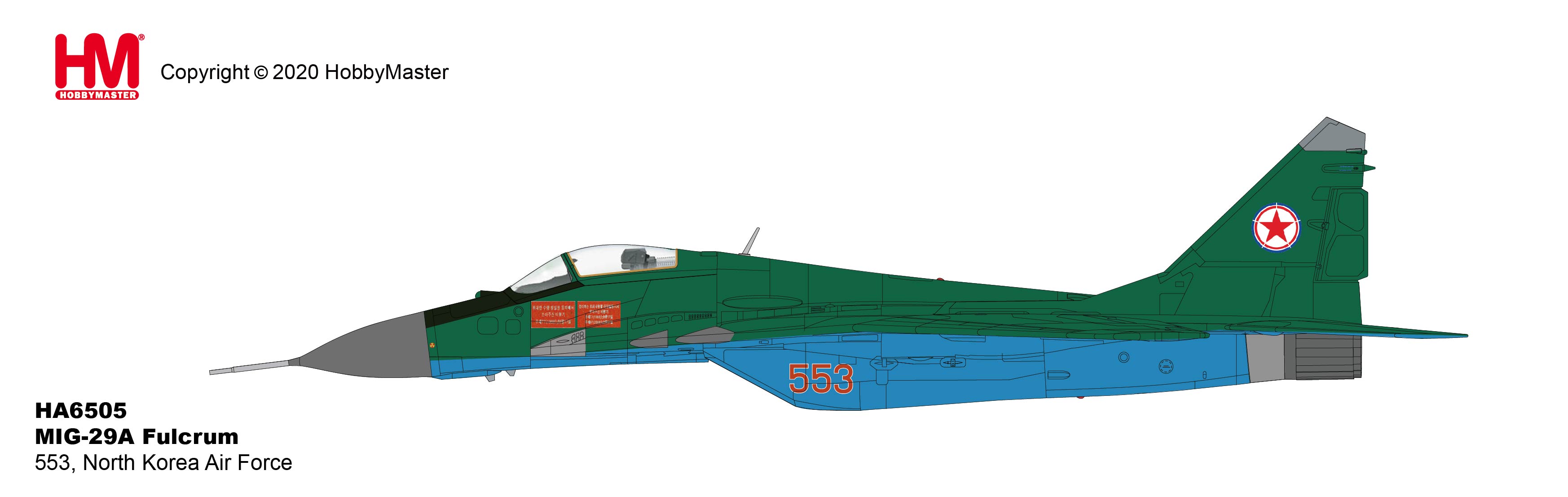
MiG-29A Fulcrum 553, North Korea Air Force, 2015
HA6505 Hobbymaster MiG-29A Fulcrum 553, North Korea Air Force, 2015 is available to pre-order from Flying Tigers. Please click on the image below to go straight to the model page.
Century Wings Latest Model Announcement!
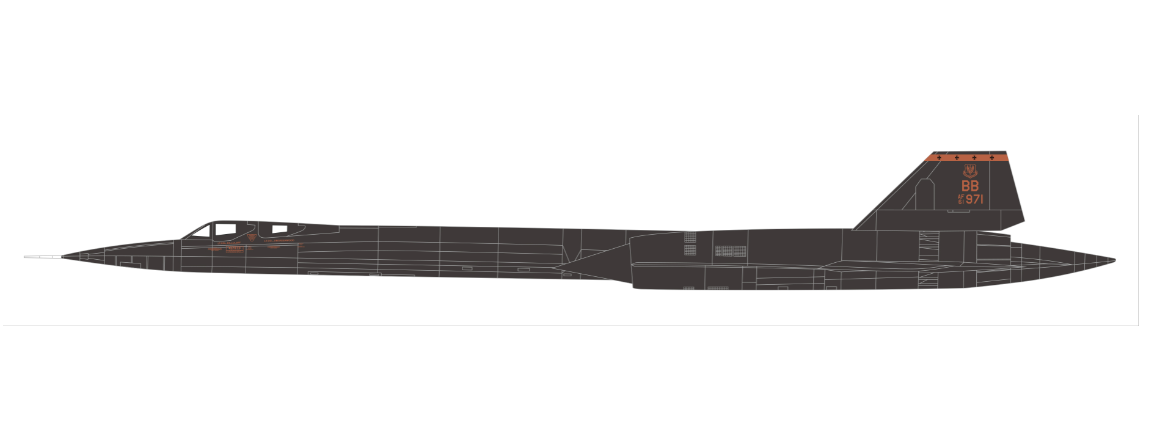
Century Wings have just announced their latest model which is now available to pre-order at Flying Tigers today.
Don’t forget NO DEPOSIT necessary with Flying Tigers and if you order with your debit or credit card your payment is not taken until your model is available to dispatch.
Flying Tigers will also consolidate your orders to save on postage costs across all brands !
Please click on the images / links below to go to the model page.
Herpa Latest Model Announcements!
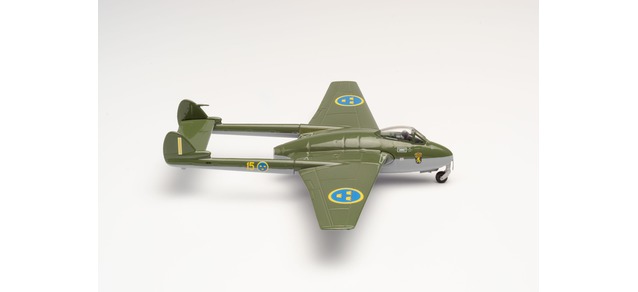
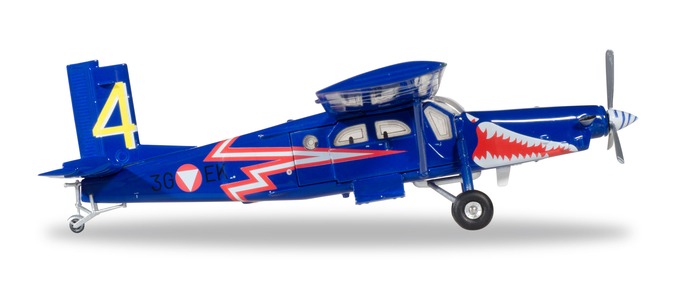
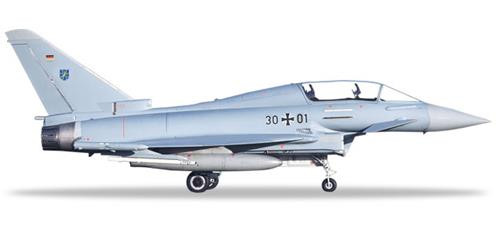
Herpa have just announced their latest models which are now available to pre-order at Flying Tigers today.
Don’t forget NO DEPOSIT necessary with Flying Tigers and if you order with your debit or credit card your payment is not taken until your model is available to dispatch.
Flying Tigers will also consolidate your orders to save on postage costs across all brands !
Please click on the images / links below to go to the model of your choice, or CLICK HERE to see them all.



Hobbymaster Updated Photo Gallery
Check out the latest photos from Hobbymaster that have now been added to the Flying Tigers website. Please click on the images / links below to go to the model page.

That is all for this week.
Thank you for reading this week’s Newsletter.
Richard.
Flying Tigers.