A U.S. Air Force Northrop T-38A-65-NO Talon aircraft from 560th Flying Training Squadron, Randolph AFB, Texas (USA), flying over the Texas countryside on 13 November 2001. This aircraft is either s/n 66-4389 or 66-8389
The Northrop T-38 Talon is a two-seat, twin-engined supersonic jet trainer. It was the world’s first supersonic trainer and is also the most produced. The T-38 remains in service as of 2017 in several air forces. The United States Air Force (USAF) operates the most T-38s. In addition to training USAF pilots, the T-38 is used by NASA. The U.S. Naval Test Pilot School is the principal US Navy operator (other T-38s were previously used as USN aggressor aircraft until replaced by the similar Northrop F-5 Tiger II, ( see Flying Tigers Newsletter on Northrop F-5 Tiger). Pilots of other NATO nations fly the T-38 in joint training programs with USAF pilots. As of 2015, the T-38 has been in service for over 50 years with its original operator, the United States Air Force.

First N-156F
In 1952 Northrop began work on a fighter project, the Fang, with shoulder-mounted delta wing and a single engine. The proposed General Electric J79 engine, weighing nearly two tons, meant the resulting aircraft would be large and expensive. Then in 1953, representatives from General Electric Aviation’s newly created Small Aircraft Engine Department showed Northrop a relatively tiny engine (around 400 lb installed wt) capable of 2,500 lb of thrust, and Northrop VP-Engineering Edgar Schmued saw the possibility of reversing the trend toward the large fighters. Schmued and chief engineer Welko Gasich decided on a small twin-engine “hot-rod” fighter, the N-156. Northrop began its N-156 project in 1954, aiming for a small supersonic fighter jet capable of operating from the US Navy’s escort carriers. However, when the Navy chose not to pursue equipping its fleets in that fashion, Northrop continued the N-156 design using in-house funding, recasting it as a lightweight fighter (dubbed N-156F) and aimed at the export market.

Northrop YT-38-5-NO 58-1191 in flight over Edwards AFB
In the mid-1950s the USAF issued a General Operating Requirement for a supersonic trainer, planning to retire its 1940s-era Lockheed T-33s. Northrop officials decided to adapt the N-156 to this competition. The only other candidate was the two-seat version of the North American F-100 Super Sabre. Although the F-100 was not considered the ideal candidate for a training aircraft (it is not capable of recovering from a spin), NAA was still considered the favorite in the competition due to that company’s favored-contractor status with the Air Force. However, Northrop officials convincingly presented life-cycle cost comparisons which could not be ignored, and they were awarded the contract, receiving an order for three prototypes. The first (designated YT-38) flew on 10 March 1959. The type was quickly adopted and the first production examples were delivered in 1961, officially entering service on 17th March that year, complementing the T-37 primary jet trainer. When production ended in 1972, 1,187 T-38s had been built (plus two N-156T prototypes). Since its introduction, it is estimated that some 50,000 military pilots have trained on this aircraft. The USAF remains one of the few armed flying forces using dedicated supersonic final trainers, as most, such as the US Navy, use high subsonic trainers.
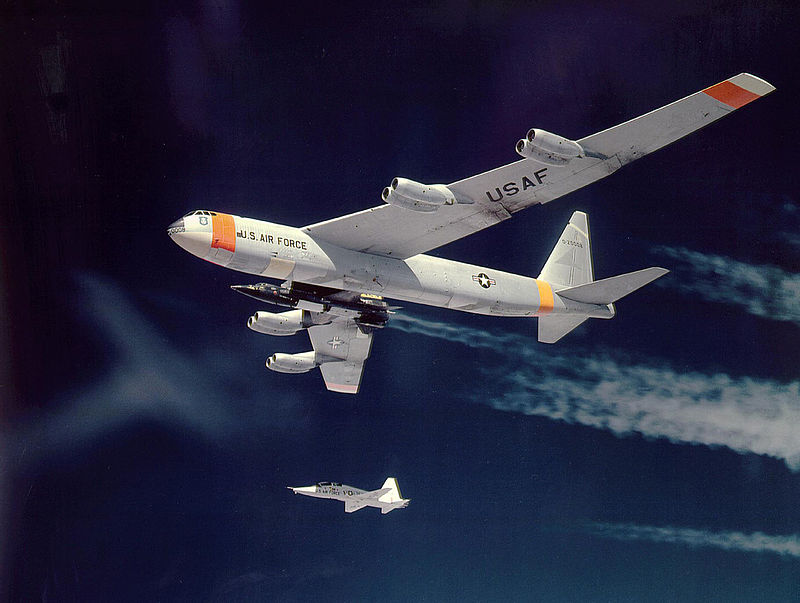
X-15 in flight attached to B-52 mother ship, with T-38 chase plane (1961)
The T-38 is of conventional configuration, with a small, low, long-chord wing, a single vertical stabilizer, and tricycle undercarriage. The aircraft seats a student pilot and instructor in tandem, and has intakes for its two turbojet engines at the wing roots. Its nimble performance has earned it the nickname white rocket. In 1962 the T-38 set absolute time-to-climb records for 3,000, 6,000, 9,000 and 12,000 meters, beating the records for those altitudes set by the F-104 in December 1958. (The F-4 beat the T-38’s records less than a month later.)
The F-5B and F (which also derive from the N-156) can be distinguished from the T-38 by the wings; the wing of the T-38 meets the fuselage straight and ends square, while the F-5 has leading edge extensions near the wing roots and wingtip launch rails for air-to-air missiles. The wings of both the T-38 and the F-5 family use conventional skin over spar-rib structure.

Formation leader, taken from the backseat of a T38C, of the 479th Fighter Training Group, Moody AFB, Georgia, 2006.
Most T-38s built were of the T-38A variant, but the USAF also had a small number of aircraft converted for weapons training (designated AT-38B), which were fitted with a gunsight and could carry a gunpod, rockets, or bombs on a centerline pylon. In 2015, 504 T-38s were still operational with the USAF, with many more in operation around the world. Most of the USAF variant aircraft (T-38A and AT-38B) have been converted to the T-38C through an avionics upgrade program. Improvements include the addition of a HUD, GPS, INS (Inertial Navigation System), and TCAS. Most jets have also received PMP (a propulsion modification to improve low-altitude engine thrust). Approximately a third of the fleet (those that experience more severe usage) are currently undergoing structural replacements and upgrades, as well as receiving new wings, to extend their service life to 2029.
The fighter version of the N-156 was eventually selected for the US Military Assistance Program and produced as the F-5 Freedom Fighter. Many of these have since reverted to a weapons training role as various air forces have introduced newer types into service. The F-5G was an advanced single-engined variant later renamed the F-20 Tigershark.
The USAF Strategic Air Command (SAC) had T-38s in service from 1978 until SAC’s 1991 inactivation. These aircraft were used to enhance the career development of bomber copilots through the “Accelerated Copilot Enrichment Program.” They were later used as proficiency aircraft for all B-52, B-1, Lockheed SR-71, U-2, Boeing KC-135, and KC-10 pilots. SAC’s successors, the Air Combat Command (ACC) and the Air Force Global Strike Command (AFGSC), continue to retain T-38s as proficiency aircraft for U-2 pilots and B-2 pilots, respectively.
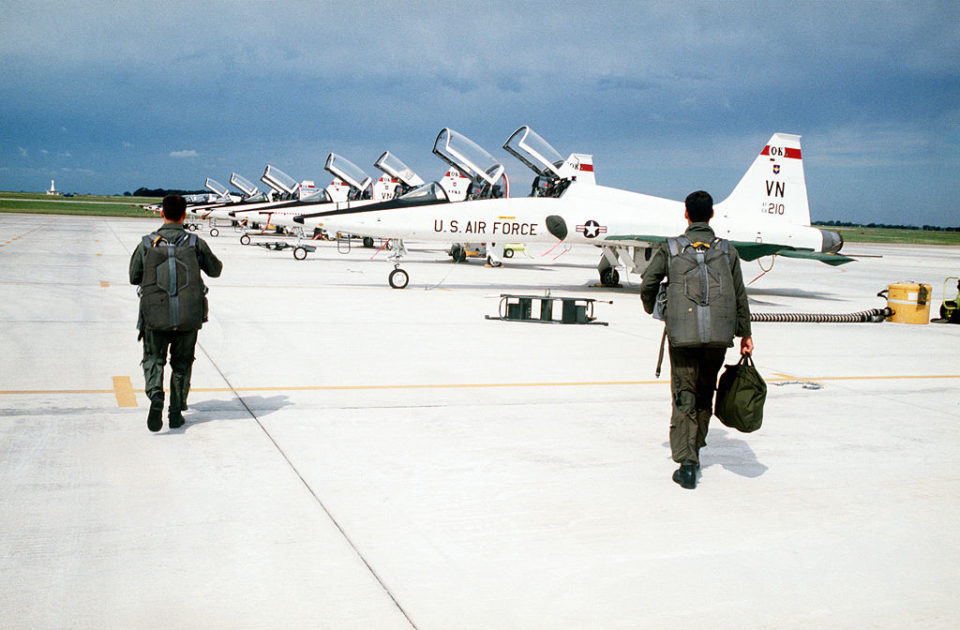
A U.S. Air Force 25th Flying Training Squadron instructor pilot and his student walk to a T-38A to begin flight training at Vance Air Force Base, Oklahoma, on 23rd November 1997
The Air Training Command’s (ATC) successor, the Air Education and Training Command (AETC), uses the T-38C to prepare pilots for the F-15C Eagle and F-15E Strike Eagle, the F-16 Fighting Falcon, B-52 Stratofortress, B-1B Lancer, B-2 Spirit, A-10 Thunderbolt, F-22 Raptor and F-35 Lightning II. The AETC received T-38Cs in 2001 as part of the Avionics Upgrade Program. The T-38Cs owned by the AETC have undergone propulsion modernization which replaces major engine components to enhance reliability and maintainability, and an engine inlet/injector modification to increase available takeoff thrust. These upgrades and modifications, with the Pacer Classic program, should extend the service life of T-38s past 2020. The T-38 has an availability goal of 75% which it maintained in 2011, however in 2015 availability is 60%.
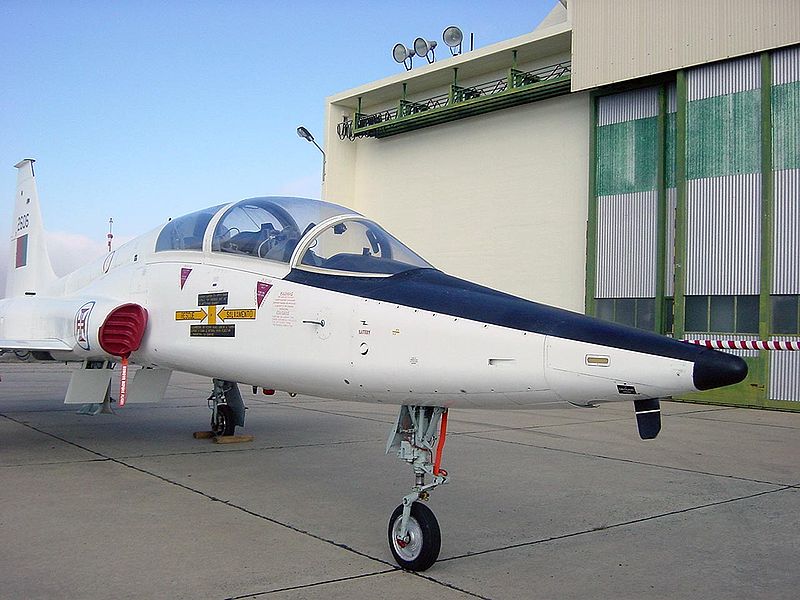
T-38 in Portuguese Air Force colours at Air Base No. 11 (BA11 – Beja)
Besides the USAF, USN and NASA, other T-38 operators included the German Air Force (Luftwaffe), the Portuguese Air Force, the Republic of China Air Force, and the Turkish Air Force.
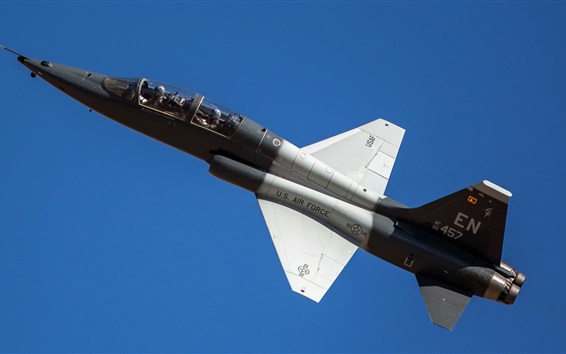
US-Luftwaffe T-38 Kämpfer
NASA operates a fleet of thirty-two T-38 aircraft and uses the aircraft as a jet trainer for its astronauts, as well as a chase plane. Its fleet is housed primarily at Ellington Field in Houston, Texas. NASA’s internal projections show the number of operational jet trainers falling to 16 by 2015. The agency spends $25–30 million annually to fly and maintain the T-38s.

Two T-38 chase planes follow Space Shuttle Columbia as it lands at Northrop Strip in White Sands, New Mexico, ending its mission STS-3.
During the Space Shuttle era it was established NASA tradition for astronauts to arrive at the Kennedy Space Center in T-38 Talons.
More than 210 aircraft losses and ejections have been documented over the lifetime of the T-38. NASA’s T-38s were involved in four separate fatal accidents in the 1960s and 1970s, and several non-fatal incidents:-
1964 Oct 31st : Astronaut Theodore Freeman was killed as a result of a bird strike.
1966 February 28th (1966 NASA T-38 crash): Astronauts Elliot See and Charles Bassett were killed when they struck a building in fog.
1967 October 5th: Astronaut Clifton “C.C.” Williams was killed in a crash due to an aileron jam.
1972 Jan 20th: NASA pilots Stuart M. Present and Mark C. Heath were killed when they crashed during an instrument approach in fog.

USAF Air Force Thunderbirds T-38 Talon
In response to the 1973 OPEC oil embargo, from 1974 to 1983, the U.S. Air Force Thunderbirds aerobatic display team adopted the T-38 Talon, which used far less fuel than the F-4 Phantom. The Blue Angels downsized to the Douglas A-4 Skyhawk at roughly the same time. After the infamous 1982 “Diamond Crash” incident that killed four of the Thunderbirds’ six demonstration pilots, the T-38 was replaced in this role by the front line F-16A Fighting Falcon.
Two fatal crashes in 2008, on 23rd April at Columbus Air Force Base in Mississippi and on 1st May at Sheppard Air Force Base in Wichita Falls, Texas, resulted in four fatalities, causing the Air Force to temporarily ground the aircraft. On 21st May 2009, a T-38 crashed just north of Edwards Air Force Base in the Mojave Desert.
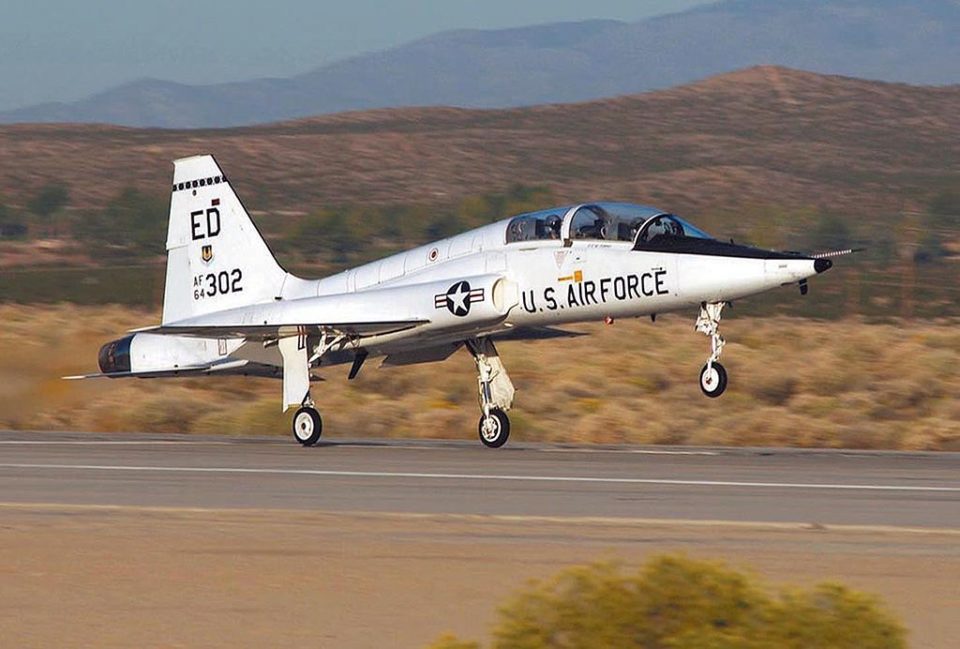
A T-38 takes off from Edwards Air Force Base with only one engine during single-engine takeoff testing, to evaluate recommended speeds for takeoff if an engine fails
The USAF has launched the T-X Program, to replace the T-38. Aviation Week & Space Technology reporters wrote in 2010 “there appears to be no rush to purchase T-38 replacements”; “the service is conducting an analysis of alternatives” with results “not expected to be ready until the Fiscal 2013 budget”. In subsequent years, the Air Force indicated it would launch a competition for the T-38’s replacement. Likely bidders include: A partnership of BAE Systems and Rolls Royce, offering the Hawk trainer, equipped with Rolls’ Adour Mk951 engine offering 6,500 lb of thrust and FADEC; Lockheed Martin and Korea Aerospace Industries, offering the T-50; and Raytheon and Alenia Aermacchi offering the T-100, an aircraft whose design originated with the M-346.
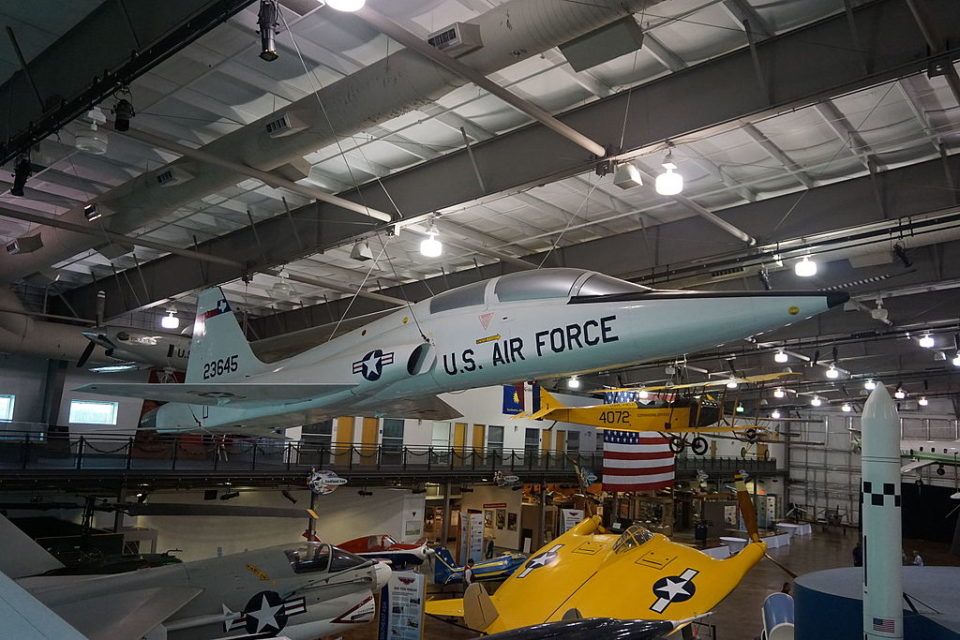
A T-38 Talon on display at the Frontiers of Flight Museum
There are seven privately owned T-38s in the U.S. Boeing owns two T-38s, which it uses as chase planes. Thornton Corporation owns two T-38s and three F-5s and the National Test Pilot School owns one T-38. In addition, ILOAJP HOLDING and Wayne L. Siltanen own one each.
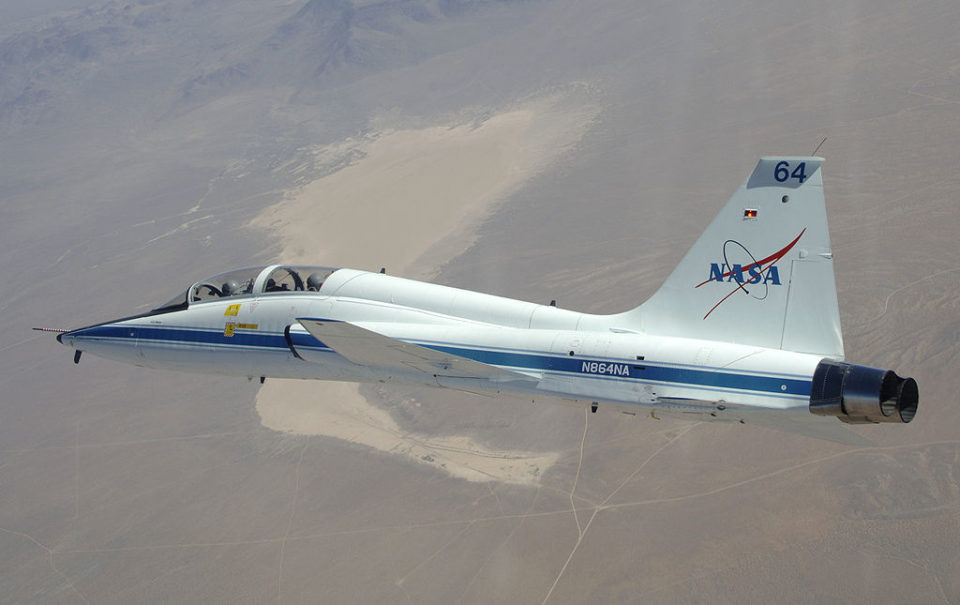
NASA Dryden’s T-38 in flight over Cuddeback Dry Lake in Southern California
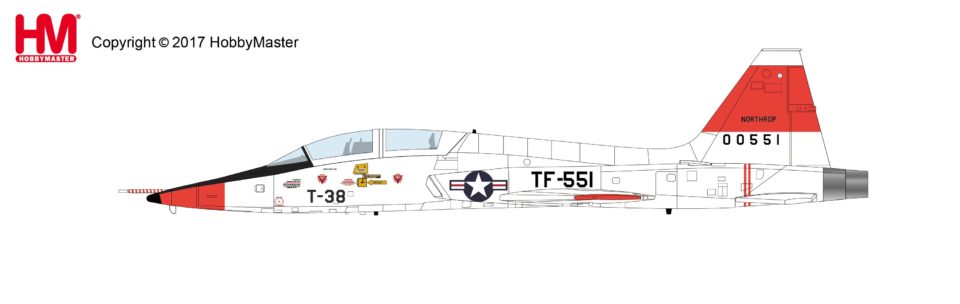
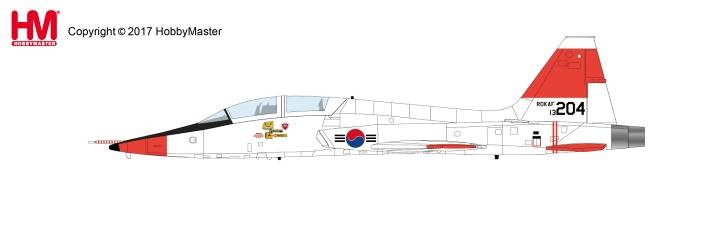
Hobbymaster T-38 Talons available to buy at Flying Tigers.
Hobbymaster’s NEW Tooling T-38 Talon is available to pre-order at Flying Tigers, with three aircraft in the pipeline. Please click on the model of your choice to go straight to the model to pre-order your now, or CLICK HERE to see them all.

Hobbymaster Latest Announcement.
The latest Hobbymaster new model announcement is HA3848 Hobbymaster Lockheed F-16A Block 20 ROCAF, 21st FS “Gamblers” “20th Anniversary Scheme”, 2016.
Unfortunately not many of these models are being allocated to the U.K. so first come fisrt served. If you want one please place your order ASAP to be sure to get one. I have placed my order with Hobbymaster and a large chunk of my allocation has been snapped up this week. There are a few remaining so be quick if you want one.
Remember no deposit necessary when you pay by Debit or Credit card payment. You will not be charged until your model is available to dispatch which should be around June / July this year.
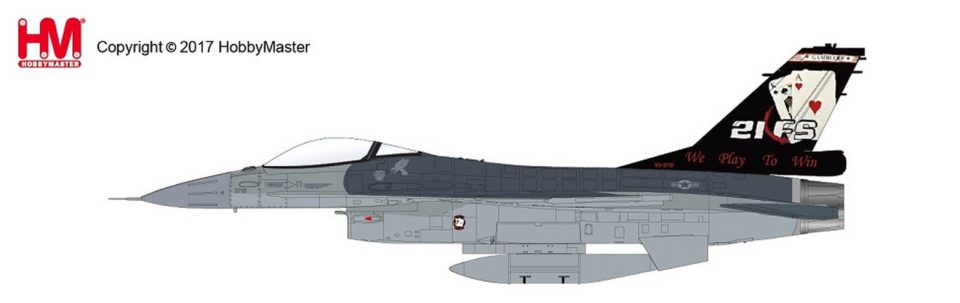
As part of the 56th Operations Group presently based at Luke AFB the 21st Fighter Squadron (FS) “Gamblers” is tasked with training ROCAF pilots to fly the F-16 as well as developing ROCAF instructors. There are fourteen F-16A/Bs located at Luke AFB and officially belong to Taiwan but wear USAF markings and 21st tail flashing “Gamblers”. This training agreement began in 1996 so in 2016 F-16A 93-0721 was given a “20th Anniversary” paint scheme with the port side of the tail wearing black while the starboard side wears red.
Hobbymaster New Arrivals at Sywell this week
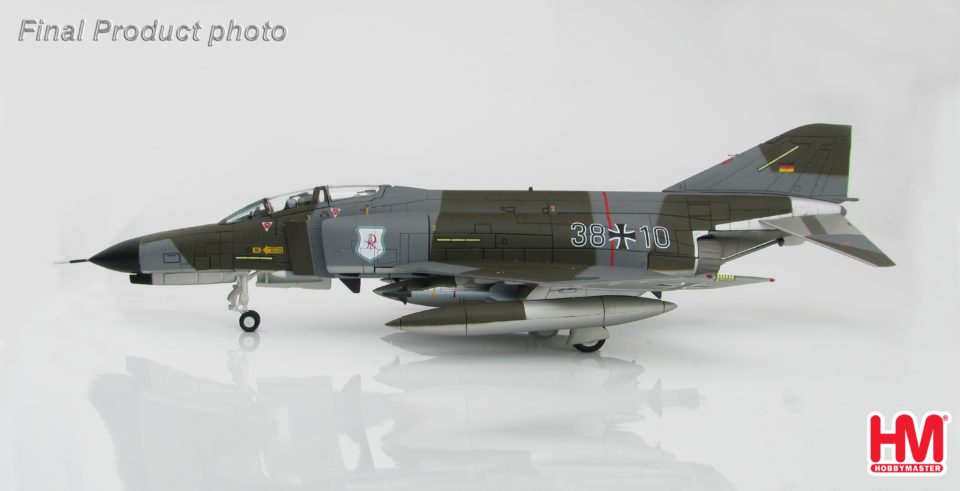
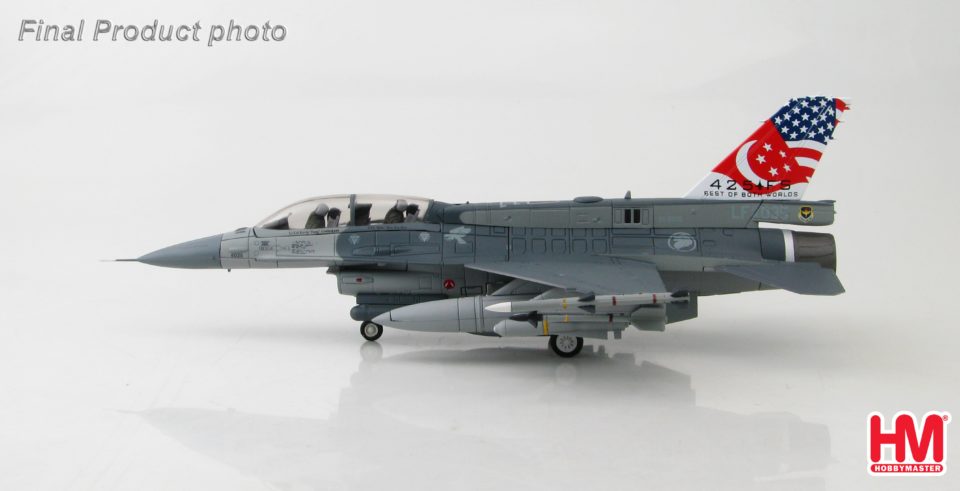
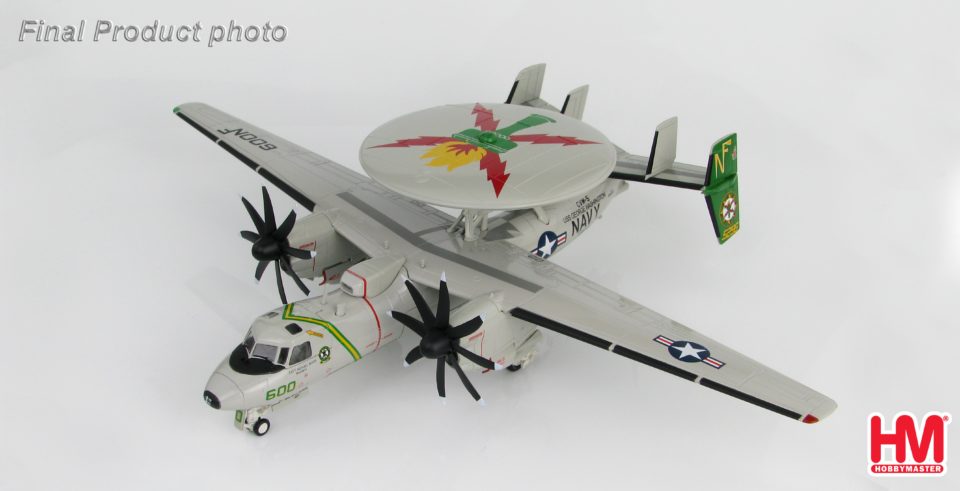
Flying Tigers has received a large delivery from Hobbymaster this week. Eighteen new models are now in stock. All pre-orders will be dispatched today and early next week. Some are close to sell out and are only available in limited quantities. I have shown a few of them below. Please click on the image or link of the model you would like to orderor CLICK HERE to see them all.
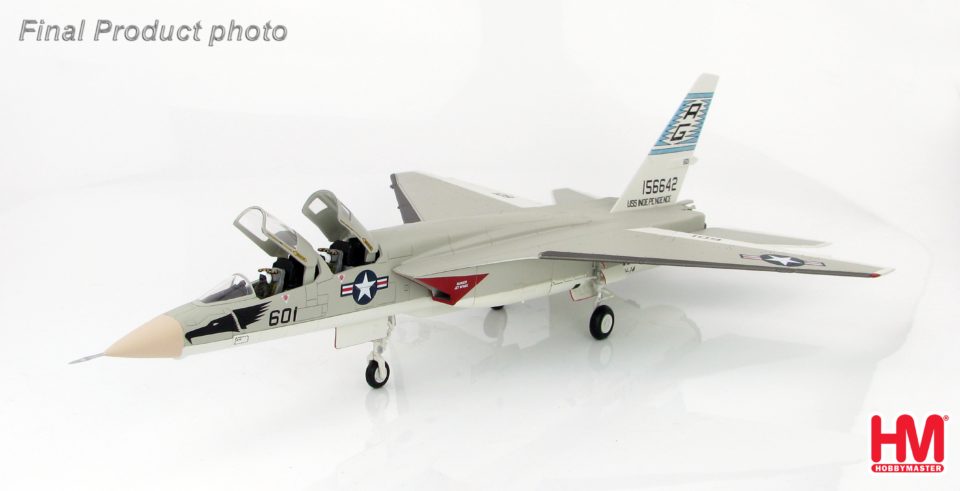

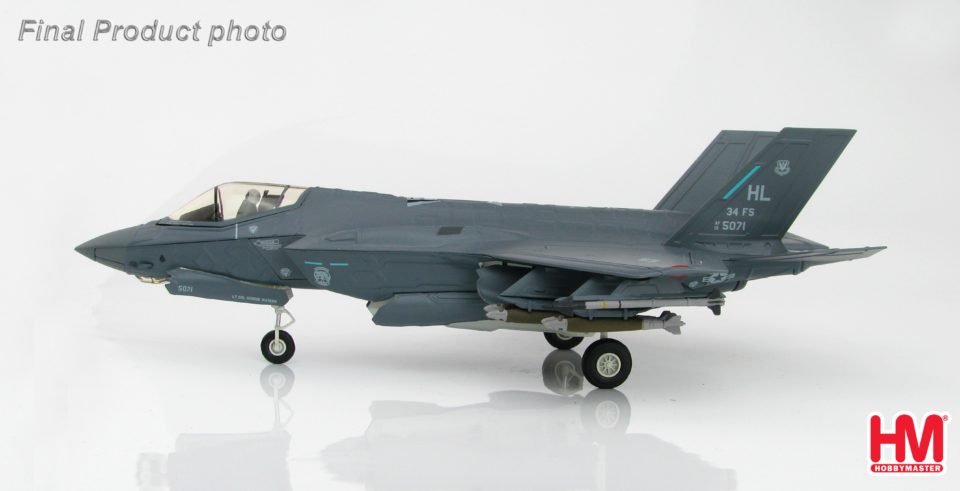
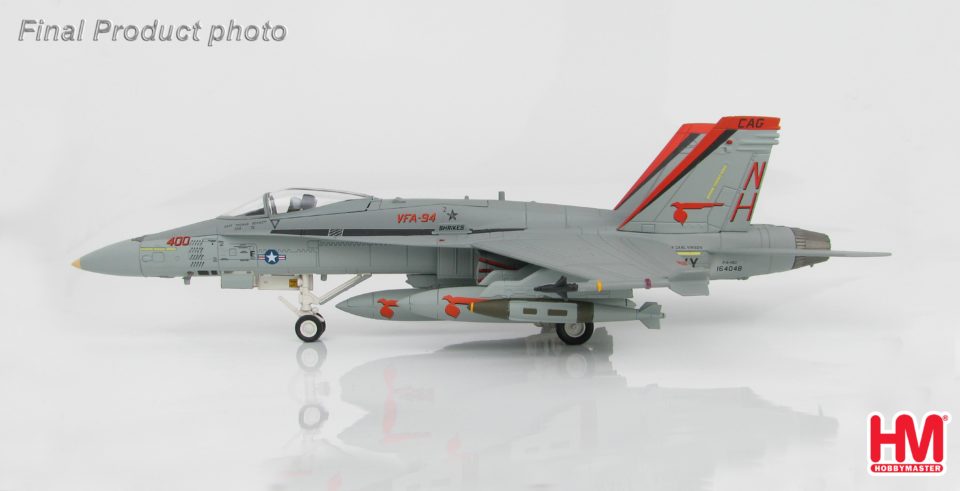


That is all for this week. Thanks for reading this week’s Newsletter.
Richard.
Flying Tigers.