Corgi Aviation Archive New Catalogue Out Now !

The 2nd half 2017 Corgi Aviation Archive catalogue is now out and has been well received judging by the pre-orders already placed. Thank you very much for your support. I have listed all the new models below to view, together with the editorial from Corgi’s catalogue. Please take a look and if you wish to place an order, simply click on any of the photos / links below and it will take you straight through to the model of your choice. Alternatively you can CLICK HERE to see them all.
Please remember, Flying Tigers will not charge your credit card / debit card until your model has arrived with us and is available to dispatch. In addition there is NO DEPOSIT necessary to pre-order your models through Flying Tigers ! We also offer a consolidation service , where we combine your orders at your request in order to save postage costs.

The pace of aviation development throughout the First World War was nothing short of astonishing and saw the aeroplane become a critical component of any future military planning. Initially required to allow accurate observation of enemy positions and troop movements, it quickly became apparent that denying the enemy the ability to obtain this type of reconnaissance information would be vital and the first aerial duels began to take place. Early exchanges were nothing more than pilots shooting at their adversaries using their service revolvers, but specially designed fighter aircraft soon began to appear, determined to gain superiority of the air. Perhaps the most famous German fighter of the First World War was the Fokker Dr.1 Triplane, or Dreidecker, which was produced to counter the British Sopwith Triplane introduced so successfully during the Battle of Arras in April 1917. Produced in relatively small numbers, the DR.1 was operated by elite units and in the hands of such ace pilots as Manfred von Richthofen, earned the aircraft a fearsome reputation.

The astonishing pace of aviation development during the First World War saw the aeroplane develop from a reconnaissance spotter, to a deadly air superiority fighter. Arguably, the most important German fighting scout aircraft of WWI was the Albatros series of aircraft, which saw almost constant use between 1916 and 1918 and were used by many of the great German aces to score large numbers of aerial victories.The German Air Service had enjoyed a period of dominance following the introduction of the Fokker Eindecker, but more capable Allied fighters soon began to challenge this superiority. In August 1916, the new Albatros D.1 began to arrive on the Western Front and proved to be an instant success. With a powerful 160hp Mercedes engine and twin 7.92mm Spandau machine-guns, the Albatros had an exceptional climb rate and could cruise at high speeds. Over the next two years, Albatros Flugzeugwerke continuously developed the aircraft, culminating in the excellent D.Va version of the original design, which proved to be the workhorse of the Luftstreitkrafte. Unfortunately for the German pilots, by this time the British and French had introduced much more capable fighters of their own.

The agile and highly manoeuvrable Sopwith Camel was without doubt one of the most successful fighter aircraft of the First World War and accounted for more enemy aircraft destroyed than any other British type. Named Camel as a result of the hump shaped fairing that housed the two 0.303 in Vickers machine guns, this supreme fighter aircraft was a real handful to operate effectively, with the torque from its powerful rotary engine constantly trying to flip the Camel into a potentially life threatening spin. If tamed, the Camel was the finest fighting aircraft yet produced and was superior to all contemporary German fighters. During the 17 months of its operational service at the end of WWI, Sopwith Camel pilots would claim an average of 76 aerial victories each month, helping the Allied air forces wrestle air supremacy from the Luftstreitkrafte.
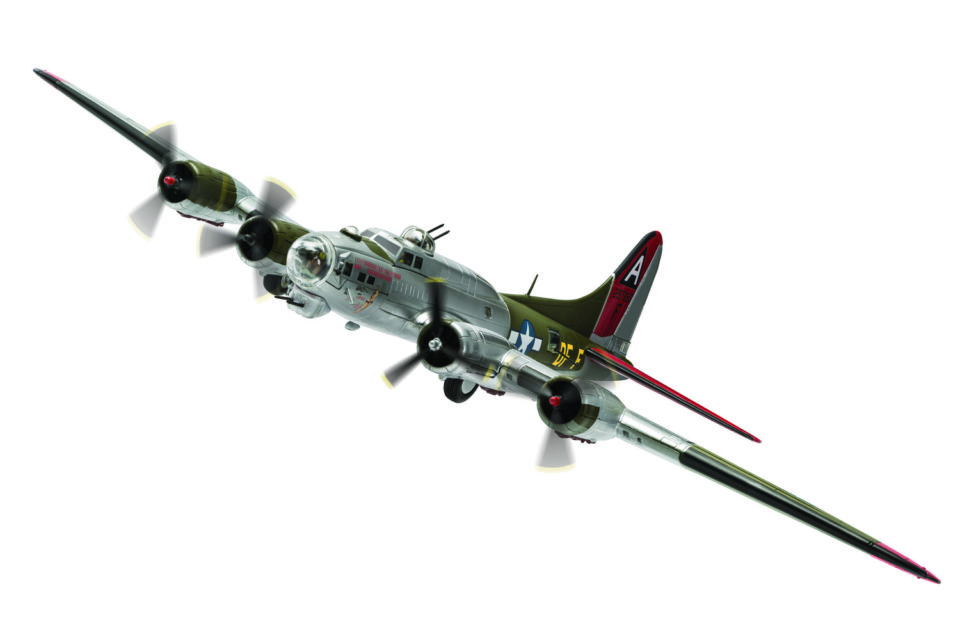
Perhaps more than any other aircraft of the Second World War, the four engined Boeing B-17 Flying Fortress embodied the awesome might of America’s military and industrial prowess and her determination to fight for total victory. Operating in massed formations over enemy occupied Europe, these distinctive aircraft were designed to conduct daylight precision bombing missions against strategic enemy targets, with the aim of literally pounding them into submission. As its name suggests, the Flying Fortress was bristling with defensive armament and it was intended that tight formations of B-17s would be able to throw so much lead into the air, that any attacking enemy aircraft would either be shot down before they could press home their attack, or see less committed pilots simply fly away from what would surely be their certain demise. Although things didn’t quite turn out this way during the savage aerial combat in the skies above Europe, it did help to earn the B-17 a fearsome reputation amongst Luftwaffe pilots.
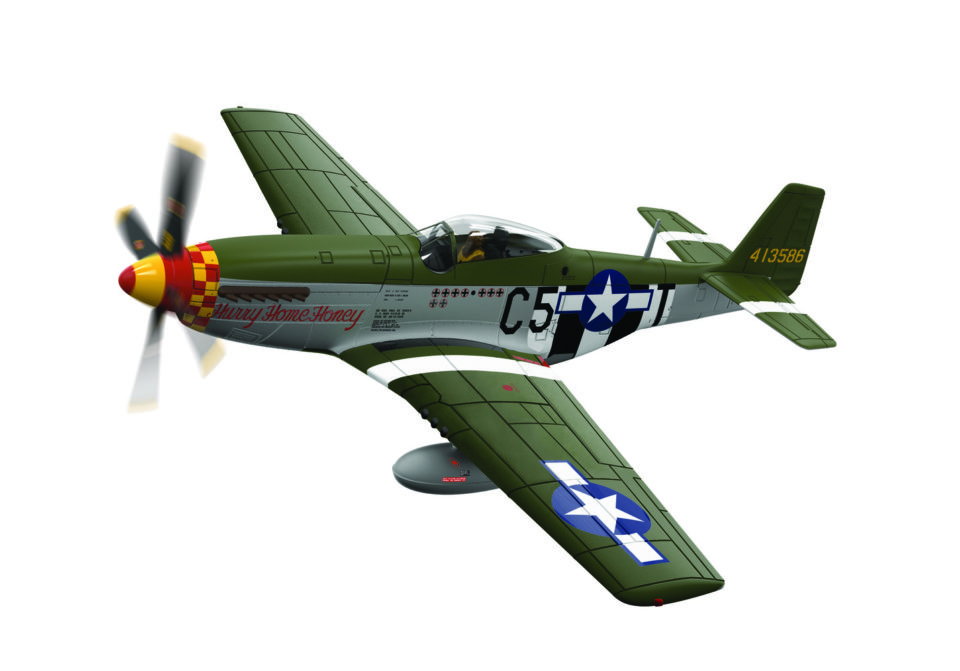
The red and yellow checked noses of the USAAF 357th Fighter Group became a familiar sight in the skies above enemy occupied Europe in the final months of WWII and served both to reassure US Bomber crews that their ‘Little Friends’ were in attendance and to warn attacking Luftwaffe fighters that they were facing an elite fighting unit. The 357th were the first Eighth Air Force Fighter Group to receive the new North American P-51 Mustang towards the end of 1943 and immediately began their conversion training at Raydon airfield in East Anglia. Transferring to nearby Leiston, the unit became operational in February 1944 and were famously christened ‘The Yoxford Boys’ by British traitor and German propagandist Lord Haw-Haw, who greeted the arrival of these newly trained pilots with a forewarning of death and devastation at the hands of the Luftwaffe – how wrong he was. The Mustangs of the Yoxford Boys took a withering toll of Axis aircraft in the coming months, becoming the most successful P-51 air-to-air combat Unit in the Eighth Air Force by the end of WWII.
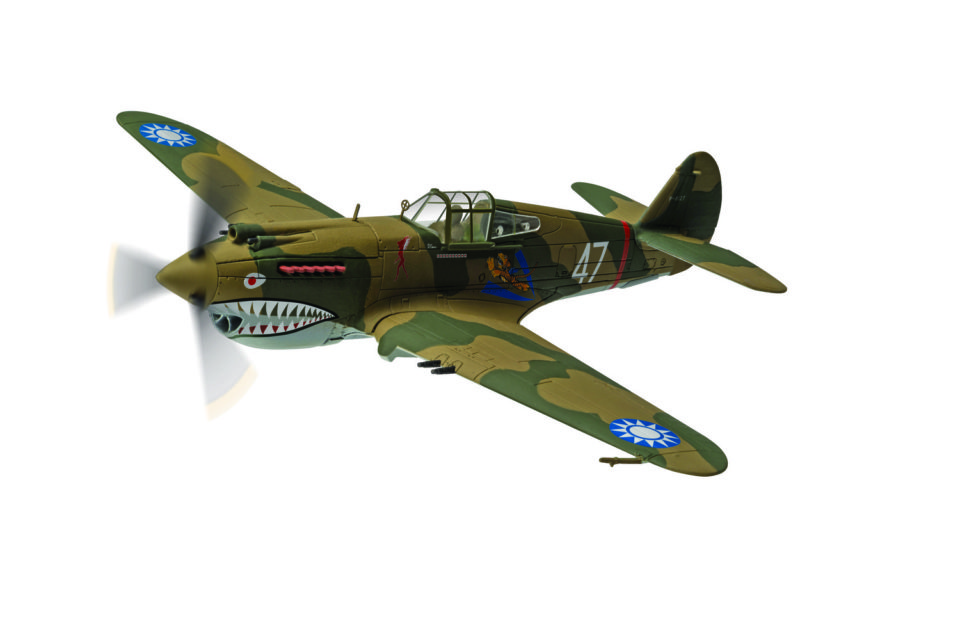
As some of the most celebrated pilots in the history of air warfare, the Flying Tigers of the 1st American Volunteer Group achieved incredible success against overwhelming odds in their robust but ageing Curtiss fighters, at a time when Japanese forces were advancing across vast areas of the Pacific region. A volunteer force of just 100 pilots, equipped with aircraft originally destined for the RAF Desert Air Force, the Flying Tigers are often misconceived as an ill-disciplined group of journeymen flyers, who were simply in it for the money. In fact, they were highly trained fighter pilots who had all volunteered to fight in some of the most inhospitable conditions endured by any pilots during WWII and as they entered combat in the days following the infamous Pearl Harbor attack, they were determined to destroy as many Japanese aircraft as they could. In this aim, they were spectacularly successful, posting some of the most impressive combat kill ratios of the entire war.
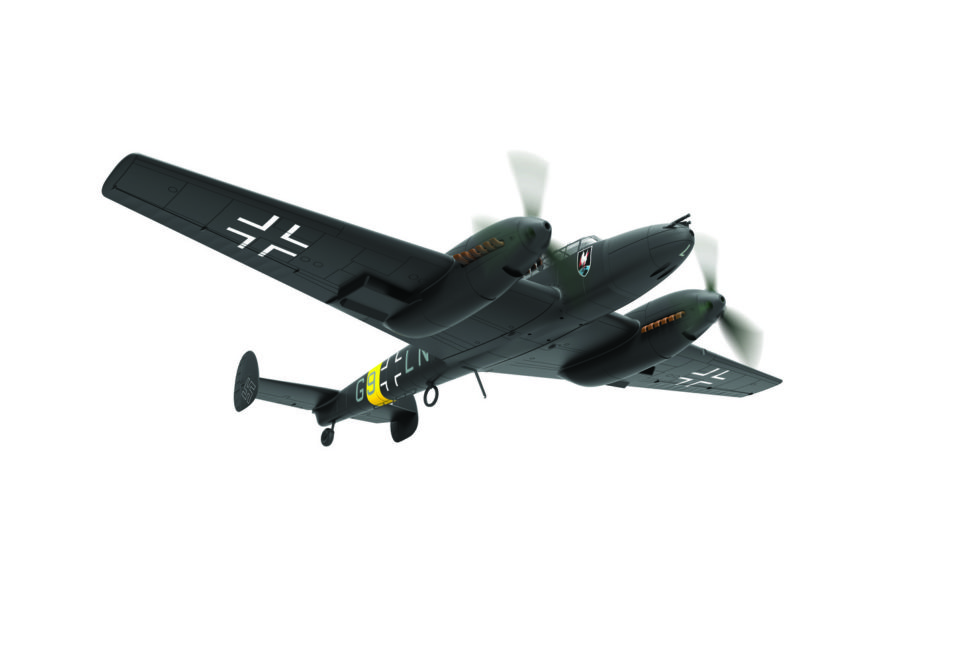
Although the Messerschmitt Bf 110 heavy fighter proved to be something of a disappointment during the dogfights of the Battle of Britain, it did continue to serve successfully in a number of roles throughout WWII and developed into a particularly formidable Nightfighter. With many of the world’s most successful Nightfighter aces flying the Bf 110 during their operational careers, this night hunter took a heavy toll of Bomber Command aircraft, as they patrolled the skies of Northern Europe. As the most successful Nightfighter ace of WWII Heinz-Wolfgang Schnaufer flew the Messerschmitt Bf 110 exclusively and claimed an incredible 121 aerial victories from just 164 combat missions flown. The 21st February 1945 proved to be Schnaufer’s most formidable day, when he managed to bring down no fewer than nine RAF four-engined bombers in one day – two in the early hours of the morning and a further seven in just nineteen minutes that same evening. Messerschmitt Bf 110 G9+LN was the aircraft in which this supreme nocturnal predator claimed his first victory in June 1942.
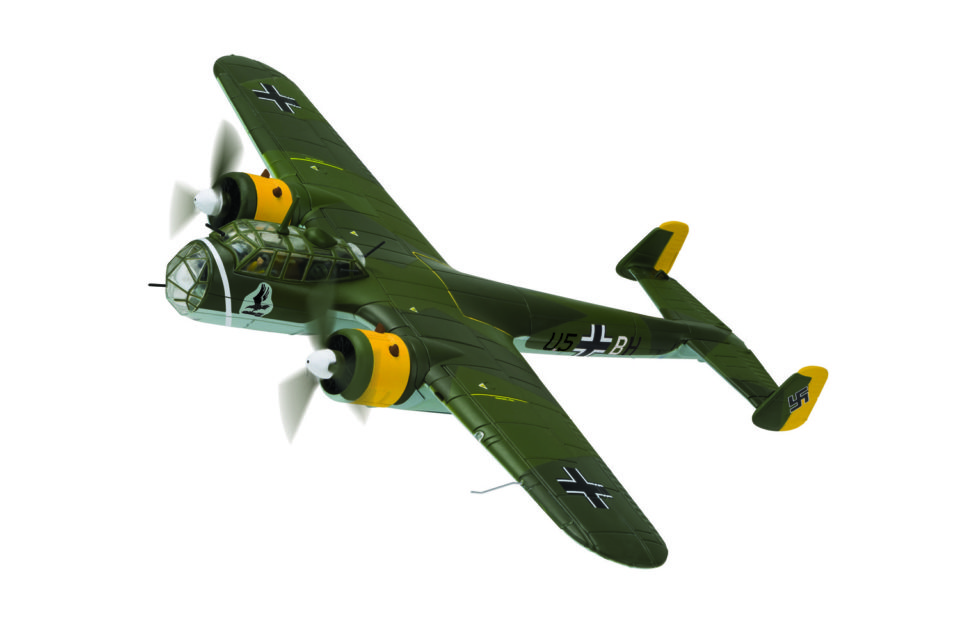
Developed during the early 1930s under the restrictions of the Treaty of Versailles, the Dornier Do17 was originally described as a freight aircraft for the German State Railway and a high-speed mail aircraft for Lufthansa. The aircraft was in fact a new breed of fast attack aircraft, or Schnellbomber, which was intended to carry out lightning bombing attacks, at speeds making it almost impervious to enemy fighter attack. With its sleek tapering fuselage, the Do17 was nicknamed ‘The Flying Pencil’ and whilst this design certainly prevented the aircraft from carrying anything other than a modest bomb load, its profile made it more difficult to target in the melee of a dogfight. Seeing extensive service in the early part of WWII, the Do17s of KG.2 would support Luftwaffe operations during ‘Operation Marita’ as the Wehrmacht attempted to invade Allied occupied Greece, following a failed Italian offensive. Attacking ground and coastal targets, the Dorniers also took a heavy toll of Allied shipping in the Mediterranean theatre.

The Junkers Ju-88 proved to be one of the most versatile and effective German aircraft of the Second World War. Designed initially as a high speed bomber, able to outpace fighter aircraft sent to challenge it, early Ju88 units endured a difficult introduction to combat, especially during the Battle of Britain. Despite the Ju-88 being the latest bomber to enter service, pilots had not had time to familiarise themselves with this advanced aircraft and it suffered loss rates higher than the older Heinkel He-III and Dornier Do-17. Many were lost in training accidents or attributed to pilot unfamiliarity with the advanced aircraft, but constant development soon turned the Schnellbomber into a fine aircraft, with the basic airframe capable of supporting numerous modifications. Indeed, the Ju-88 was in constant production throughout WWII and was produced in greater numbers than any other twin engined aircraft of the Second World War.

By the early stages of the Battle of Britain, Luftwaffe pilot Gerhard Schopfel had already achieved the status of fighter ace, but during August 1940, he was to increase his victory tally significantly. His most successful day came on the 18th August, whilst leading an independent hunting patrol of Messerschmitt Bf 109E fighters across southern England. Whilst over the Folkestone area, he spotted the Hurricanes of No.510 Squadron climbing out of Hawkinge, but rather than immediately attacking the RAF fighters, Schopfel and his wingman dived underneath the aircraft to approach from their blind spot. Unnoticed by the Hurricanes, Schopfel shot down the two tail-end-Charlies, expecting to see the remaining aircraft immediately breaking for cover, but they carried on their course. He managed to shoot down a further two Hurricanes, including the aircraft of RAF aces Donald McKay and Kenneth Lee, who both managed to successfully bale out of their stricken fighters.

The majestic Sunderland flying boats of RAF Coastal Command were some of the most impressive aircraft of the Second World War and performed vital duties in protecting Britain’s sea lanes from enemy attack. With crews having to endure long and arduous patrols, they would often be sent to rescue downed airmen in perilous situations, with little thought for their own safety. Such an incident occurred on 21st June 1942, when the crew of Sunderland W3999 took off from RAF Mount Batten to try and locate a dinghy containing the crew of a ditched Coastal Command No.172 Squadron Vickers Wellington. On reaching the search area, the Sunderland, along with an accompanying Whitley patrol aircraft, were attacked by a German Arado Ar196 float plane, with the Sunderland taking a number of hits. Losing height immediately, the flying boat effected a landing on the open sea, but at the end of its landing run was seen to explode and sink beneath the waves. Coming under further attack, the Whitley took evasive action, before setting course for home, with the crew having the unpleasant task of confirming that there were no survivors from this tragic incident.

As far as names painted on the side of aircraft used during the Second World War are concerned, there can hardly be a more appropriate one than the name given to Hawker Typhoon RB389, flown by Canadian pilot Flt. Lt. Harry Hardy. Known as ‘Pulverizer IV’, the Typhoon was something of an airborne battering ram, providing close air support to advancing ground units and pounding German strongpoints, armour and troop concentrations with a combination of bombs, rockets and cannon fire. These missions, often flown at low level were particularly hazardous for Typhoon pilots, which were not only vulnerable to attack by Luftwaffe fighters, but also from ground fire and ground hazards. The dangerous nature of these operations is highlighted by the fact that there were three previous Typhoons flown by Flt. Lt. Hardy bearing the name Pulverizer, all three of which were damaged or destroyed whilst on operations.

Responsible for destroying more enemy aircraft during the Battle of Britain than the combined total of the rest of Britain’s defences, the Hawker Hurricane was the workhorse aircraft of Fighter Command’s defiant resistance against the Luftwaffe. A stable gun platform, the Hurricane was relatively simple to fly and even easier to maintain and could be produced much quicker than the all-metal Spitfire, which was crucial as replacement aircraft would be needed in large numbers. Pilot Officer Leonard Walter Stevens of No.17 Squadron received Hurricane N2359 as a replacement for an earlier aircraft damaged in combat with the Luftwaffe on 11th August 1940 and applied some rather elaborate artwork to the port side of his Hurricane. It was extremely unusual for RAF fighters to carry any form of unauthorised artwork during the Battle of Britain, so the sight of a ‘Winged Popeye’ must have caused quite a stir around Debden airfield, although they would have had more important matters at hand. Pilot Officer Leonard W Stevens served with No.17 Squadron throughout the Battle of Britain, only to be killed in a mid-air collision between two Spitfires in May 1941.
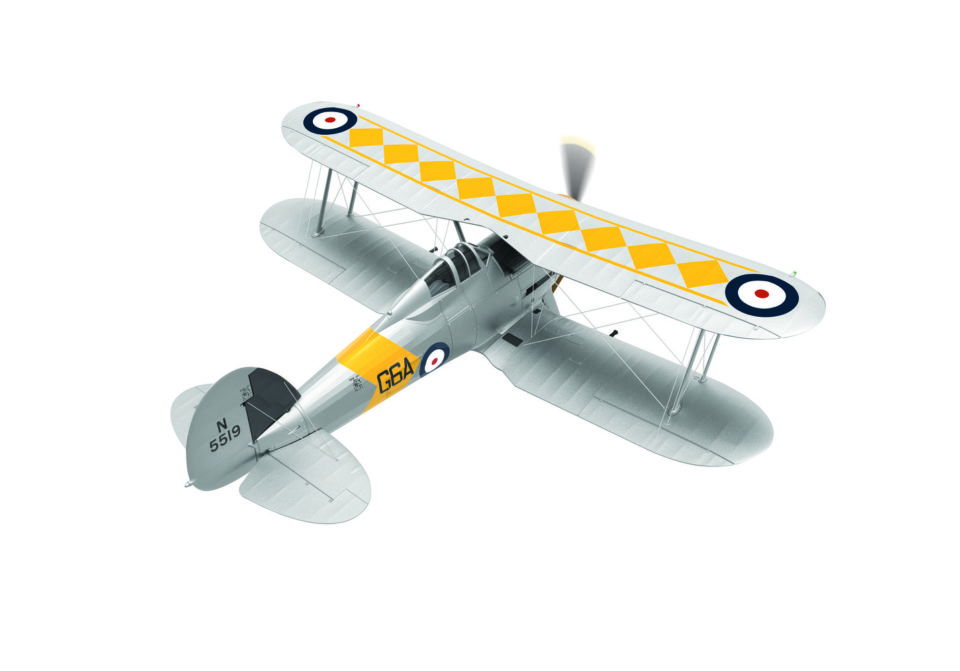
The beautiful Gloster Gladiator represented the absolute pinnacle of biplane fighter design, but entered service just as the first of the fast monoplane fighters were already dictating the future of aerial warfare. A thoroughbred aircraft in every sense of the word, the Gladiator was the last biplane fighter to enter RAF service and the first to feature a fully enclosed cockpit. Highly manoeuvrable and extremely fast by biplane standards, the Gladiator also served with the Royal Navy, with aircraft modified for operations at sea by the inclusion of a strengthened fuselage, arrester hook and catapult spools, as well as provision for the stowage of an inflatable dinghy. Sea Gladiator N5519 wears the attractive pre-war colours of No.802 NAS, serving on board HMS Glorious, with the black fin marking this aircraft as the Squadron Commander’s mount. All twelve of 802 Squadrons Gladiators were lost in June 1940 when HMS Glorious was sunk by the German Battleship Scharnhorst, during operations in the defence of Norway.

As one of the world’s most successful modern battlefield helicopters, the Westland Puma HC.1 entered service with the Royal Air Force in 1971 and represented a huge technological advance over the Belvedere and Whirlwind aircraft it replaced. An incredibly flexible aviation asset, the Puma is tasked with the tactical movement of troops, weapons, ammunition and general support supplies and is capable of operating in all weather conditions, by day or night. With room to carry 16 fully equipped troops, or up to two tonnes of freight either internally, or slung from a hard point under the aircraft’s fuselage, the Puma can also operate in search and rescue and casualty evacuation roles, making this one of the most useful and flexible aircraft in the RAF. This flexibility has seen the Puma required to operate in areas of conflict all over the world, most noticeably during both Gulf Wars, where the aircraft continued to build on its excellent reputation. With the original RAF Pumas serving for over forty years, an upgrade programme will see this superb machine remain in service for many years to come.
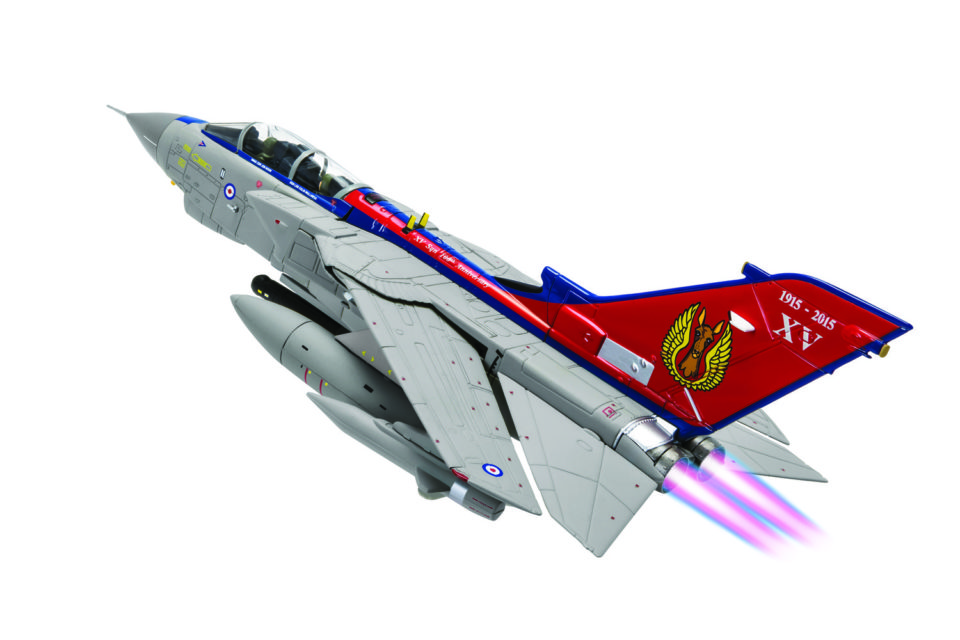
As we fast approach the Centenary year of the Royal Air Force in 2018, we can expect this significant occasion to attract plenty of media attention and form the basis of a spectacular Airshow year. In advance of these commemorations, a number of individual RAF Squadrons have already marked their Centenary years and delighted aviation enthusiasts by presenting one of their aircraft in a special commemorative scheme. Without doubt, one of the most attractive schemes seen so far is the one applied to Panavia Tornado GR.4 ZA461 of No.15(R) Squadron, based at Lossiemouth in Northern Scotland and with the impending drawdown of the remaining Tornado force looming, this aircraft has become something of a talismanic airframe for the ‘Mighty Fin’. Formed at Farnborough as a training unit in March 1915, the unit had transferred to the Western Front flying reconnaissance missions in the BE2c by the end of the year. Serving through both world wars, the Squadron has operated such aircraft as the Fairey Battle, Avro Lancaster and Blackburn Buccaneer, during its service history, but are currently one of only four Squadrons still equipped with the Tornado GR.4.

As one of the most capable low-level strike aircraft of the Cold War period, the Blackburn Buccaneer originally entered service with the Royal Navy to counter the threat of a massive Soviet Naval expansion programme. Rather than build new ships of their own, the thinking at the time was to use their new strike jet to destroy the new Soviet ships with a combination of conventional and nuclear weapons. Following the cancellation of the TSR.2 project and a decision not to purchase the US F-111 jet, the RAF rather reluctantly accepted the Buccaneer into Squadron service some seven years after it entered service with the Navy, but quickly learned to appreciate the qualities of this exceptional aircraft. Capable of extremely high speeds at low level, the Buccaneer proved to be the ideal aircraft to keep the Warsaw Pact countries on their toes, with RAF crews regularly demonstrating their bombing prowess at exercises in the US and Canada. As the Royal Navy retired their larger carriers, their Buccaneers were transferred to the Royal Air Force and at its peak strength in the early 1970s, the Buccaneer equipped no fewer than six RAF Squadrons.
Latest Hobbymaster New Model Announcements !
There were some great new models announced by Hobbymaster yesterday. The first two listed below are BRAND NEW TOOLINGS for Hobbymaster and are sure to be very popular. There are no prices yet on the F-117A Stealth Fighter or the MiG 17 but if you would like to pre-order your model you can still do so. You can pre-order by simply sending me an email to [email protected]. Alternatively , please call and you can order your model over the phone… 01604 499034.

Pricing still to be announced. If you wish to register your interest in this model , you can pre-order by simply sending me an email to [email protected]. Alternatively , please call and you can order your model over the phone… 01604 499034.
In the 1970’s Soviet air defence systems improved and the U.S. realized they had to develop aircraft to counter this. Lockheed Skunk Works was tasked with the job and two aircraft were built under the code name “Have Blue” that proved stealth aircraft could be produced. As a result the F-117 Nighthawk was developed and first flew in 1981 with the first production F-117 80-10785 making its maiden flight on April 20, 1982 but it wasn’t until 1988 that the Pentagon confirmed its existence.
Formerly known as the 4450th Tactical Squadron it was re-designated the 415th TFS on October 5, 1989 and equipped with the Lockheed F-114A. F-117A 81-10796 c/n A4021 “Fatal Attraction” was the 12th production aircraft and was accepted by the USAF August 4, 1983. In August 1990 “Fatal Attraction” was one of 22 F-117As sent to Saudi Arabia as part of Operation Desert Shield. As part of the 415th TFS/37th TFW(P) during Operation Desert Storm Captain Dan DeCamp flew 81-10796 on 29 missions. On January 25, 2008 “Fatal Attraction” was retired.
Pricing still to be announced. If you wish to register your interest in this model , you can pre-order by simply sending me an email to [email protected]. Alternatively , please call and you can order your model over the phone… 01604 499034.
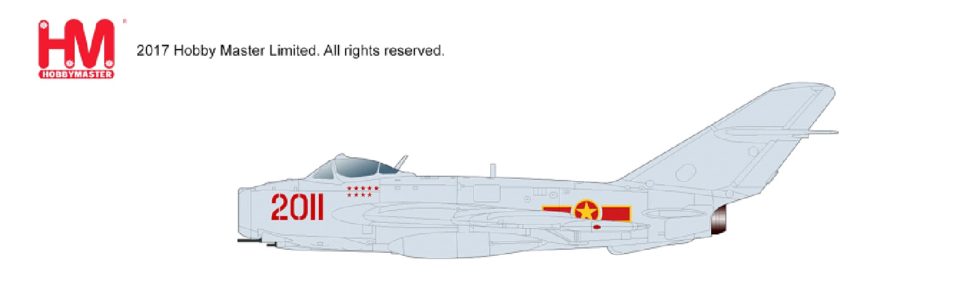
The Shenyang J-5 and also Type 56 before being designated J-5 in 1964, is a Chinese-built single-seat jet interceptor and fighter aircraft derived from the Soviet Mikoyan-Gurevich MiG-17. The J-5 was exported as the F-5. The aircraft’s NATO reporting name is “Fresco”.
The MiG-17 was license-built in China, Poland and East Germany into the 1960s. The People’s Liberation Army Air Force (PLAAF) obtained a number of Soviet-built MiG-17 Fresco-A day fighters, designated J-5 in the early 1950s. To introduce modern production methods to Chinese industry the PLAAF obtained plans for the MiG-17F Fresco-C day fighter in 1955, along with two completed pattern aircraft, 15 knockdown kits, and parts for ten aircraft. The first Chinese-built MiG-17F, (serialed Zhong 0101), produced by the Shenyang factory, performed its initial flight on 19th July 1956 with test pilot Wu Keming at the controls.
Plans were obtained in 1961 for the MiG-17PF interceptor and production began, as the J-5A (F-5A), shortly afterwards. At this time the Sino-Soviet split occurred, causing much disruption to industrial and technical projects, so the first J-5A did not fly until 1964, when the type was already obsolete. A total of 767 J-5s and J-5As had been built when production ended in 1969.
The Chinese also built a two-seat trainer version of the MiG-17, designated the Chengdu JJ-5 from 1968, by combining the two-seat cockpit of the MiG-15UTI, the VK-1A engine of the J-5, and the fuselage of the J-5A. All internal armament was deleted and a single Nudelman-Richter NR-23 23 mm cannon was carried in a ventral pack. Production of the JJ-5 reached 1,061 when production ceased in 1986, with the type exported to a number of countries.
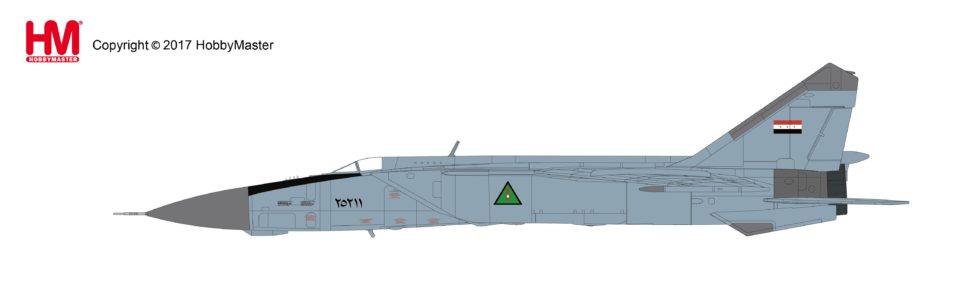
The MiG-25 “Foxbat” is a supersonic interceptor and reconnaissance aircraft. The prototype flew in 1964 and entered service in 1970 with an operational speed of Mach 2.83 but if needed Mach 3.2 possibly damaging the engines. The MiG-25 caused concern for the U.S. who demanded increases in the performance of the F-15 Eagle under development. The MiG-25s large wings gave the impression of a highly weight of the stainless steel used to manufacture the MiG-25.weight of the stainless steel used to manufacture the MiG-25.
The first American casualty of Operation Desert Storm came on the night of January 17, 1991. LCDR Scott “Spike” Speicher was piloting an F/A-18C Hornet from VFA-81 “Sunliners” when his aircraft crashed. According to a fellow pilot on the same mission the F/A-18C was at 28,000 feet and hit by an R-40 missile fired from an Iraqi MiG-25PDS believed to be flown by Lt. Zuhair Dawood of the IrAF 84th squadron. LCDR Speicher was listed as MIA but later changed to KIA.
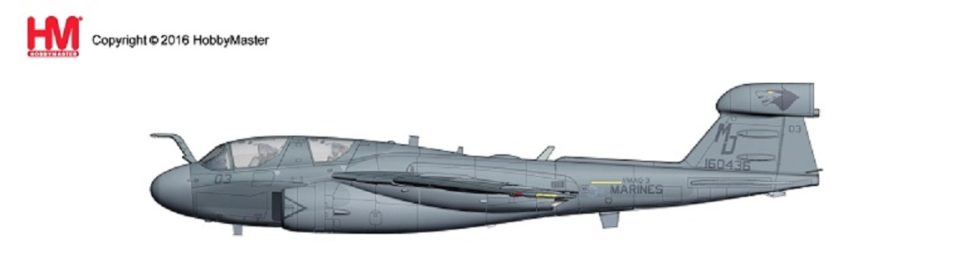
Based on the A-6 Intruder the Northrop Grumman (formerly Grumman) EA-6B Prowler primary mission is to support strike aircraft and ground forces by interrupting enemy electronics and gathering tactical intelligence. The aircraft carries 4-crew and is in service with the USN and USMC. The first USN EA-6B was retired on June 10, 2011 and the last carrier deployment by an EA-6B took place on November 14, 2014. The USN will replace the EA-6B with the Boeing EA-18G Growler. The USMC will continue using the EA-6B until 2019.
MAQ-3 (Marine Tactical Electronic Warfare Squadron 3) “Moon Dogs” is one of four such USMC units. Based at MCAS Cherry Point, North Carolina they conduct airborne electronic warfare and in late 2004 were deployed to Bagram, Afghanistan. VMAQ-3 was assigned to the
455th Expeditionary Operations Group as part of Operation Enduring Freedom from January 2005 until August 2005 and was awarded a Meritorious Unit Commendation. After Afghanistan EA-6B 160436 was re-assigned a few times before being retired to Castle Air Museum in Atwater, California.
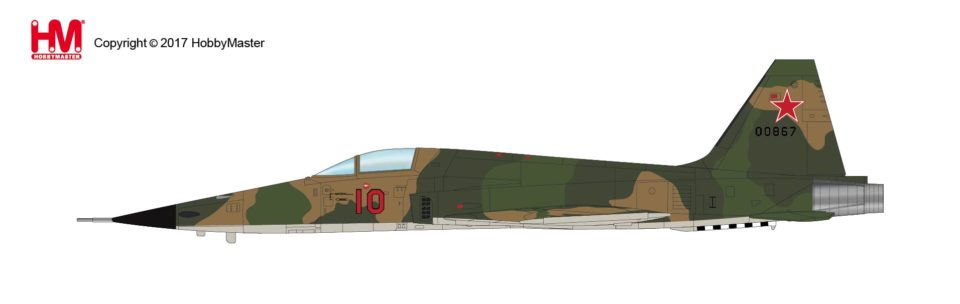
The Northrop F-5 tactical fighter was designed as an extremely maneuverable, supersonic fighter with a high rate of reliability at a low operating cost. The F-5 first flew on July 30, 1959 with the first customer delivery in 1964. The last of more than 2,600 F-5’s was produced in 1989 and about two-thirds of these are still in service with 26 countries more than 4 decades later. The F-5 was manufactured by Northrop Grumman and under license in Canada, Taiwan, South Korea, Spain and Switzerland.
In 1972 South Vietnam began to receive the first of 52 Northrop F-5E Tiger II aircraft. With the collapse of the South Vietnamese Government 877 aircraft of various types were captured by North Vietnam forces. Of the 877 captured aircraft 41 were F-5s. In November
1975 the VPAF offered the Soviets the opportunity to select aircraft, spare engines and parts to take back to the Soviet Union. The chosen F-5E aircraft was Northrop F-5E 73-00867 c/n R.1048. The F-5E was used in flight evaluations against their MiG-21.
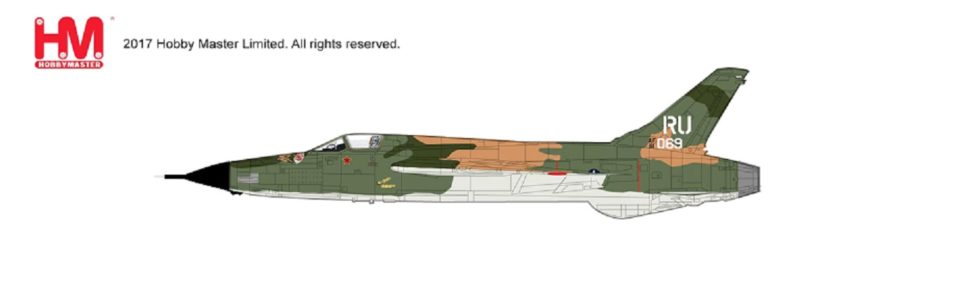
The F-105D was first accepted on September 28 1960 and became the major variant with 610 aircraft being built. Intended for a nuclear strike role but since the nuclear threat became less likely the role became a high-speed bomber. The Pitot tube was moved to the nose that had been extended approximately 15 inches more than the “B”. The “D” received strengthened landing gear and an arrestor hook in case it over shot the runway. During 1966 and 1967 F-105Ds managed to down 25 MiGs using the 20-mm cannon and 2 other using Side-Winder missiles.
Republic F-105D was built in 1961 with serial 61-0069 and c/n D264. The aircraft spent the next 3 years as a test aircraft. On March 23, 1967 F-105D joined the 469th TFS/388th TFW at Korat RTAFB, Thailand. On June 3, 1967 Captain Larry Wiggins with “Cherry Girl” painted on top of the nose damaged a MiG-17 with an AIM-9 missile and finished the job with his 20mm gun. Soon after the aircraft returned to the U.S.A. and ended its active service on a pedestal at the SAC Museum in Nebraska.
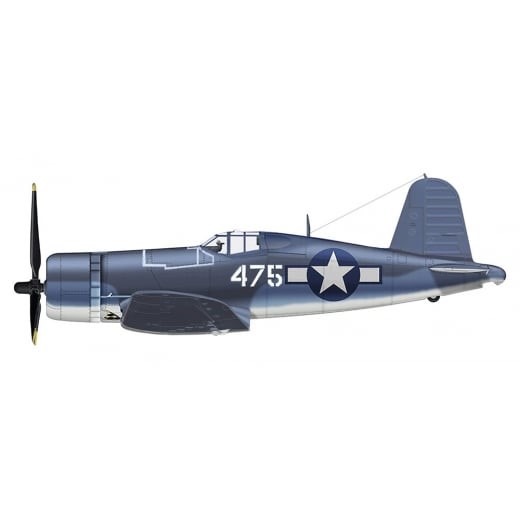
The Vought F4U Corsair was literally built around the Pratt & Whitney 2,000 HP radial engine. The engine was so massive and produced so much energy that a Hamilton Standard 13 feet 4 inch propeller, the largest of WWII, was required. The F4U was the first American fighter aircraft to exceed 400 MPH. The Corsair was referred to by the Japanese as “Whispering Death” and became a legend in its own time. This aircraft was one of the most distinctive designs with it bent wings making it an icon.
John F. Bolt Jr. arrived at Espiritu Santo in 1943 and was placed in a pool of officer meant to replace injured or killed pilots. In August 1943 a decision was made to revive the VMF-214 Squadron “Black Sheep” led by Major Gregory Boyington. Bolt was one of 27 men assigned to
VMF-214 and in September 1943 they moved to Russell Islands where Bolt was promoted to 1st Lieutenant. Bolt scored six victories in WWII and six more in Korea flying jets and is the only Marine to do so.
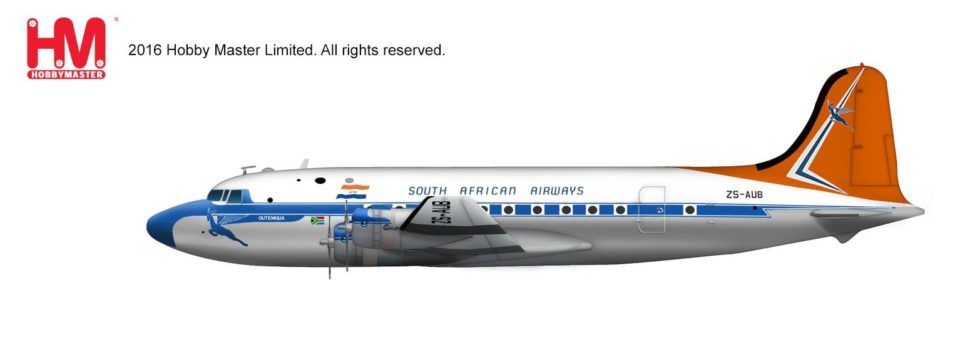
WWII in Europe had only ended a few months earlier when Overseas Airlines introduced the first commercial North Atlantic DC-4 service. Another first took place on March 7, 1946 when American Airlines introduced U.S. DC-4 domestic service between New York and Los Angeles. During the late 1940s and early 1950s the DC-4 Amazingly many of these aircraft are still operating more than 60 years after they were first manufactured.
In 1946 DC-4 c/n 42984 was constructed and delivered to South African Airways on May 10, 1946 registered as ZS-AUB “Outeniqua” (Bearer of Honey”). In 1966 the aircraft was used by the South African Air Force and given s/n 6905. In 1967 Trek Airways leased it for a few months and returned it to the SAAF in September. The aircraft remained with the SAAF until around 1995 when South African Airways purchased the aircraft and leased it to Swissair. After several moves the aircraft is now operated by Skyclass Aviation for tours.
That is all for this week, which has been a very busy one.
Thank you for your business and support.
Richard.
Flying Tigers.