Four Royal Australian Air Force F-111 strike aircraft head out to the ranges on Nellis Air Force Base, Nev., Feb. 14, 2005, during Operation Red Flag
The General Dynamics F-111 Aardvark was a supersonic, medium-range interdictor and tactical attack aircraft that also filled the roles of strategic bomber, aerial reconnaissance, and electronic-warfare aircraft in its various versions. Developed in the 1960s by General Dynamics, it first entered service in 1967 with the United States Air Force. The Royal Australian Air Force (RAAF) also ordered the type and began operating F-111Cs in 1973.
The F-111 pioneered several technologies for production aircraft, including variable-sweep wings, afterburning turbofan engines, and automated terrain-following radar for low-level, high-speed flight. Its design influenced later variable-sweep wing aircraft, and some of its advanced features have since become commonplace. The F-111 suffered a variety of problems during initial development. Several of its intended roles, such as an aircraft carrier-based naval interceptor with the F-111B, failed to materialize.

The F-111F was equipped to carry the GBU-15 electro-optically guided glide bomb, and later the powered AGM-130 stand-off weapon
USAF F-111 variants were retired in the 1990s, with the F-111Fs in 1996 and EF-111s in 1998. The F-111 was replaced in USAF service by the F-15E Strike Eagle for medium-range precision strike missions, while the supersonic bomber role has been assumed by the B-1B Lancer. The RAAF was the last operator of the F-111, with its aircraft serving until December 2010.
The U-2 incident of May 1960, in which an American CIA U-2 spy plane was shot down over the USSR, stunned the United States government. Besides greatly damaging US-Soviet relations, the incident showed that the Soviet Union had developed a surface-to-air missile that could reach aircraft above 60,000 feet. The United States Air Force Strategic Air Command (SAC) and the RAF Bomber Command’s plans to send subsonic, high-altitude B-47 and V bomber formations into the USSR were now much less viable.
By 1960, SAC had begun moving to low-level penetration which greatly reduced radar detection distances. At the time, SAMs were ineffective against low-flying aircraft, and interceptor aircraft had less of a speed advantage at low-level altitudes. The Air Force’s Tactical Air Command (TAC) was largely concerned with the fighter-bomber and deep strike/interdiction roles. TAC was in the process of receiving its latest design, the Republic F-105 Thunderchief, which was designed to deliver nuclear weapons fast and far, but required long runways. A simpler variable geometry wing configuration with the pivot points further out from the aircraft’s centre line was reported by NASA in 1958, which made swing-wings viable.[6] This led Air Force leaders to encourage its use. In June 1960, the USAF issued specification SOR 183 for a long-range interdiction/strike aircraft able to penetrate Soviet air defences at very low altitudes and high speeds. The specification also called for the aircraft to operate from short, unprepared airstrips.
In the 1950s, the United States Navy sought a long-range, high-endurance interceptor aircraft to protect its carrier battle groups against long-range anti-ship missiles launched from Soviet jet bombers and submarines. The Navy needed a fleet air defence (FAD) fighter with a more powerful radar, and longer range missiles than the F-4 Phantom II to intercept both enemy bombers and missiles. Seeking a FAD fighter, the Navy started with the subsonic, straight-winged aircraft, the Douglas F6D Missileer in the late 1950s. The Missileer was designed to carry six long-range missiles and loiter for five hours, but would be defenceless after firing its missiles. The program was formally cancelled in 1961. The Navy had tried variable geometry wings with the XF10F Jaguar, but abandoned it in the early 1950s. It was NASA’s simplification which made the variable geometry wings practical. By 1960, increases in aircraft weights required improved high-lift devices, such as variable geometry wings. Variable geometry offered high speeds, and manoeuvrability with heavier payloads, long range, and the ability to take-off and land in shorter distances.
The U.S. Air Force and Navy were both seeking new aircraft when Robert McNamara was appointed U.S. Secretary of Defence in January 1961. The aircraft sought by the two armed services shared the need to carry heavy armament and fuel loads, feature high supersonic speed, twin engines and two seats, and probably use variable geometry wings. On 14 February 1961, McNamara formally directed the services to study the development of a single aircraft that would satisfy both requirements. Early studies indicated that the best option was to base the design on the Air Force requirement, and use a modified version for the Navy. In June 1961, Secretary McNamara ordered the go ahead of Tactical Fighter Experimental (TFX) despite Air Force and Navy efforts to keep their programs separate.
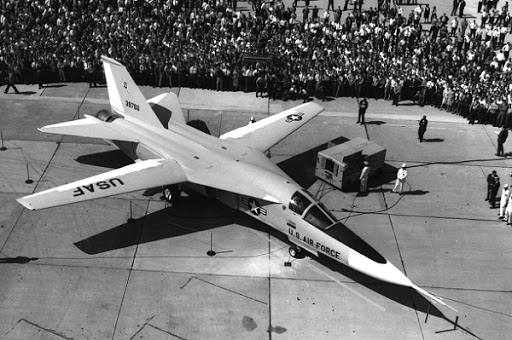
The F-111A prototype at its unveiling in 1964
The Air Force and the Navy could agree only on swing-wing, two-seat, twin-engine design features. The Air Force wanted a tandem-seat aircraft for low-level penetration ground-attack, while the Navy wanted a shorter, high altitude interceptor with side-by-side seating to allow the pilot and radar operator to share the radar display. Also, the Air Force wanted the aircraft designed for 7.33 g with Mach 2.5 speed at altitude and Mach 1.2 speed at low level with an approximate length of 70 ft (21.3 m). The Navy had less strenuous requirements of 6 g with Mach 2 speed at altitude and high subsonic speed (approx. Mach 0.9) at low level with a length of 56 ft (17.1 m). The Navy also wanted the aircraft with a nose large enough for a 48 in (1.2 m) diameter radar dish.

F-111A (sometimes referred to as the YF-111A) and the F-111B which was jointly built with Grumman for the USN.
McNamara developed a basic set of requirements for TFX based largely on the Air Force’s requirements and, on 1 September 1961, ordered the Air Force to develop it .A request for proposals (RFP) for the TFX was provided to industry in October 1961. In December, proposals were received from Boeing, General Dynamics, Lockheed, McDonnell, North American and Republic. The evaluation group found all the proposals lacking, but Boeing and General Dynamics were selected to submit enhanced designs. Boeing’s proposal was recommended by the selection board in January 1962, with the exception of the engine, which was not considered acceptable. Switching to a crew escape capsule, instead of ejection seats and alterations to radar and missile storage were also needed. Both companies provided updated proposals in April 1962. Air Force reviewers favoured Boeing’s offering, while the Navy found both submissions unacceptable for its operations. Two more rounds of updates to the proposals were conducted, with Boeing being picked by the selection board.
In November 1962, McNamara selected General Dynamics’ proposal due to its greater commonality between Air Force and Navy versions. The Boeing aircraft shared less than half of the major structural components. General Dynamics signed the TFX contract in December 1962. A Congressional investigation followed, but could not change the selection.

General Dynamics F-111A Aardvark
The F-111A and B variants used the same air frame structural components and Pratt & Whitney TF30-P-1 turbofan engines. They featured side-by-side crew seating in an escape capsule as required by the Navy. The F-111B’s nose was 8.5 feet (2.59 m) shorter so as to fit on existing carrier elevator decks, and had 3.5 feet (1.07 m) longer wingtips to improve on-station endurance time. The Navy version would carry an AN/AWG-9 Pulse-Doppler radar and AIM-54 Phoenix missiles. The Air Force version would carry the AN/APQ-113 attack radar and the AN/APQ-110 terrain-following radar and air-to-ground armament.
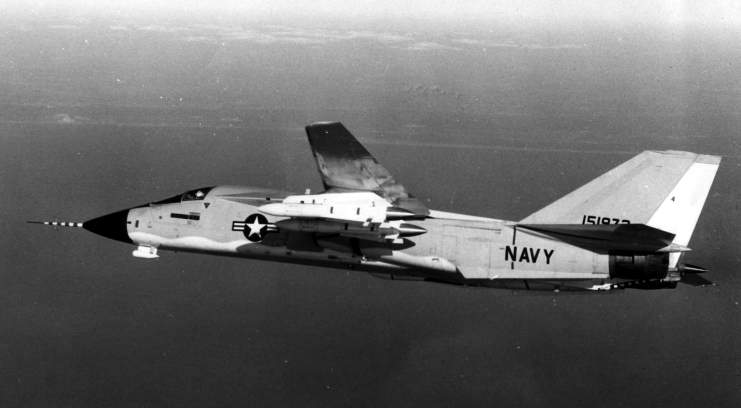
Grumman F-111 B
Lacking experience with carrier-based fighters, General Dynamics teamed with Grumman for the assembly and testing of the F-111B aircraft. In addition, Grumman would also build the F-111A’s aft fuselage and the landing gear. The General Dynamics and Grumman team faced ambitious requirements for range, weapons load, and aircraft weight. The F-111 design also included new features on a production military aircraft, such as variable-geometry wings and afterburning turbofan engines.
The F-111A mock-up was inspected in September 1963. The first test F-111A was rolled out of Plant 4 of General Dynamics’ Fort Worth, Texas facility on 15 October 1964. It was powered by YTF30-P-1 turbofans and used a set of ejector seats as the escape capsule was not yet available. The F-111A first flew on 21 December 1964 from Carswell Air Force Base, Texas, U.S. The first F-111B was also equipped with ejector seats and first flew on 18 May 1965.
The F-111A achieved a speed of Mach 1.3 in February 1965 with an interim intake design. Cracks in the F-111’s wing attach points were first discovered in 1968 during ground fatigue testing – an F-111 crashed the following year due to this issue. The attach structure required redesign and testing to ensure adequate design and workmanship. Flight testing of the F-111A ran through 1973.

F-111B US Navy
The F-111B was cancelled by the Navy in 1968 due to weight and performance issues, along with the need for additional fighter requirements. The F-111C model was developed for Australia. Subsequently, the improved F-111E, F-111D, F-111F models were developed for the US Air Force. The strategic bomber FB-111A and the EF-111 electronic warfare versions were later developed for the USAF. Production ended in 1976 after 563 F-111 aircraft were built.

The F-111 was an all-weather attack aircraft, capable of low-level penetration of enemy defences to deliver ordnance on the target. The F-111 featured variable-geometry wings, an internal weapons bay and a cockpit with side-by-side seating. The cockpit was part of an escape crew capsule. The wing sweep varied between 16 degrees and 72.5 degrees (full forward to full sweep). The wing included leading edge slats and double slotted flaps over its full length. The air frame was made up mostly of aluminium alloys with steel, titanium and other materials used in places. The fuselage was made of a semi-monocoque structure with stiffened panels and honeycomb structure panels for skin.
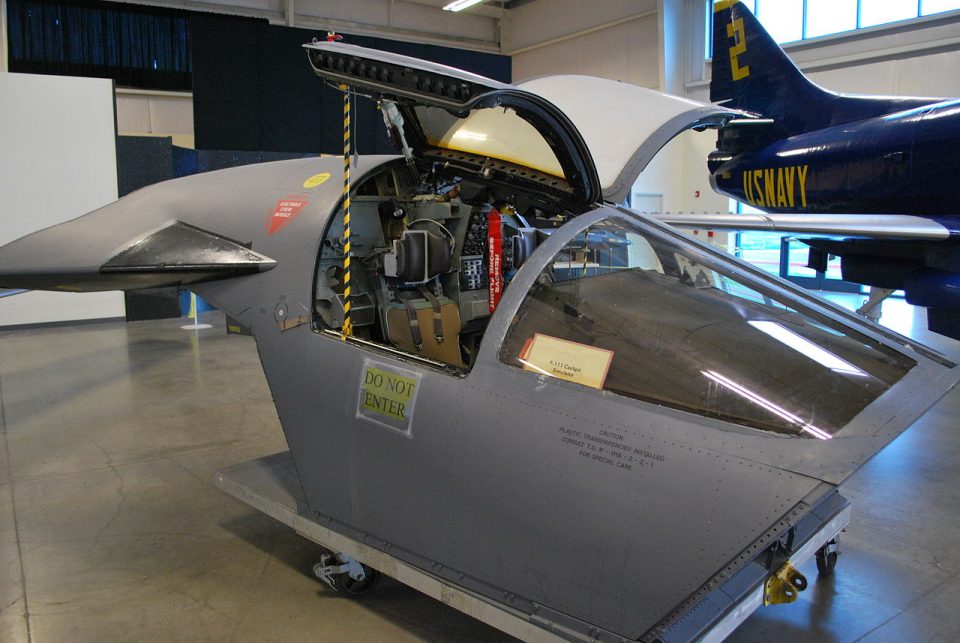
An F-111 escape capsule
The F-111 used a three-point landing gear arrangement, with a two-wheel nose gear and two single-wheel main landing gear units. The landing gear door for the main gear, which was positioned in the centre of the fuselage, also served as a speed brake in flight. Most F-111 variants included a terrain-following radar system connected to the autopilot. The aircraft was powered by two Pratt & Whitney TF30 after-burning turbofan engines. The F-111’s variable-geometry wings, escape capsule, terrain following radar, and after-burning turbofans were new technologies for production aircraft.
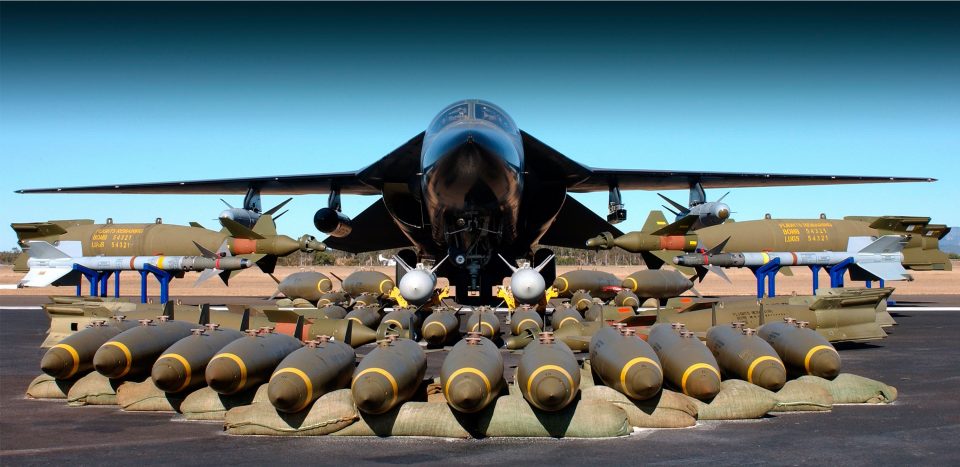
The F-111 featured an internal weapons bay that could carry bombs, a removable 20 mm M61 cannon, or auxiliary fuel tanks .For bombs, the bay could hold two 750 lb (340 kg) M117 conventional bombs, one nuclear bomb or practice bombs. The F-111B for the US Navy was to carry two AIM-54 Phoenix long-range air-to-air missiles in the bay. The cannon had a large 2,084-round ammunition tank, and its muzzle was covered by a fairing; however, it was rarely fitted on F-111s.
The F-111C and F-111F were equipped to carry the AN/AVQ-26 Pave Tack targeting system on a rotating carriage that kept the pod protected within the weapons bay when not in use. Pave Tack featured a forward looking infrared (FLIR) sensor, optical camera and laser rangefinder/designator. The Pave Tack pod allowed the F-111 to designate targets and drop laser-guided bombs on them. Australian RF-111Cs carried a pallet of sensors and cameras for aerial reconnaissance use.
The FB-111 could carry two AGM-69 SRAM air-to-surface nuclear missiles in its weapons bay. General Dynamics trialled an arrangement with two AIM-9 Sidewinder air-to-air missiles carried on rails in a trapeze arrangement from the bay, but this was not adopted. Early F-111 models had radars equipped to guide the AIM-7 Sparrow medium-range air-to-air missile, but it was never fitted.
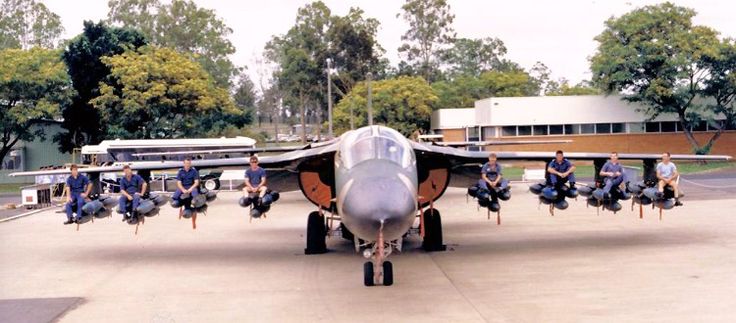
Each wing was equipped with four under-wing pylons. The inner two pylons on each wing rotated to align with the fuselage, while the outer two were fixed. Each pylon had a capacity of 5,000 pounds (2,300 kg). Various bombs and missiles could be carried on the pylons. Auxiliary fuel drop tanks with 600 US gallons (2,300 L) capacity each could be fitted.

Bombs hang under the wing of an F-111
The design of the F-111’s fuselage prevented the carriage of external weapons under the fuselage, but two stations were available on the underside for electronic countermeasures (ECM) pods and/or datalink pods; one station was on the weapons bay, and the other on the rear fuselage between the engines. The F-111’s maximum practical weapons load was limited, since the fixed pylons could not be used with the wings fully swept.
Tactical F-111s were fitted with shoulder rails on the four inner swivelling pylons to mount AIM-9 Sidewinder air-to-air missiles for self-defence. Australian F-111Cs were equipped to launch the Harpoon anti-ship missile, and the Popeye stand-off missile. FB-111As could carry the same conventional ordnance as the tactical variants, but their wing pylons were more commonly used for either fuel tanks or strategic nuclear gravity bombs. They could carry up to four AGM-69 SRAM nuclear missiles on the pylons.

The first of six initial production F-111s was delivered on 17 July 1967 to fighter squadrons at Nellis Air Force Base. These aircraft were used for crew training. 428th Tactical Fighter Squadron achieved initial operational capability on 28 April 1968.
After early testing, a detachment of six aircraft were sent in March 1968 to Southeast Asia for Combat Lancer testing in real combat conditions in Vietnam. In little over a month, three aircraft were lost and the combat tests were halted. It turned out that all three had been lost through a malfunction in the horizontal stabilizer, not by enemy action. This caused a storm of criticism in the U.S. It was not until 1971 that 474 TFW was fully operational.

F-111A dropping MK82 bombs
September 1972 saw the F-111 back in Southeast Asia, stationed at Takhli Air Base, Thailand. F-111As from Nellis AFB participated in the final month of Operation Linebacker and later the Operation Linebacker II aerial offensive against the North Vietnamese. They also supported regional aerial operations against other communist forces such as Operation Phou Phiang III during the Laotian Civil War in Laos. F-111 missions did not require tankers or ECM support, and they could operate in weather that grounded most other aircraft. One F-111 could carry the bomb load of four McDonnell Douglas F-4 Phantom IIs. The worth of the new aircraft was beginning to show; F-111s flew more than 4,000 combat missions in Vietnam with only six combat losses.

F-111As over south-east Asia in 1968
From 30 July 1973 F-111As of the 347th Tactical Fighter Wing (347th TFW) were stationed at Takhli Air Base. The 347th TFW conducted bombing missions in Cambodia in support of Khmer Republic forces until 15 August 1973 when US combat support ceased in accordance with the Case–Church Amendment. The 347th TFW was stationed at Korat Royal Thai Air Force Base from 12 July 1974 until 30 June 1975. In May 1975 347th TFW F-111s provided air support during the Mayaguez incident.

The last three F-111’s at Upper Heyford.
On 14 April 1986, 18 F-111s and approximately 25 Navy aircraft conducted air strikes against Libya under Operation El Dorado Canyon. The 18 F-111s of the 48th Tactical Fighter Wing and the 20th Tactical Fighter Wing flew what turned out to be the longest fighter combat mission in history. The round-trip flight between RAF Lakenheath/RAF Upper Heyford, and Libya of 6,400 miles (10,300 km) spanned 13 hours. One F-111 was lost over Libya, probably shot down.

An air-to-air right side view of a 494th Tactical Fighter Squadron, 48th Tactical Fighter Wing F-111F aircraft releasing its load of Mark 82 high-drag bombs.
F-111s participated in the Gulf War (Operation Desert Storm) in 1991. During Desert Storm, F-111Fs completed 3.2 successful strike missions for every unsuccessful one, better than any other U.S. strike aircraft used in the operation. The group of 66 F-111Fs dropped almost 80% of the war’s laser-guided bombs, including the GBU-15 and the penetrating, bunker-buster GBU-28. Eighteen F-111Es were also deployed during the operation. The F-111s were credited with destroying more than 1,500 Iraqi tanks and armoured vehicles. Their use in the anti-armour role was dubbed “tank plinking”.

A low-altitude aerial view of an EF-111A Raven (foreground) and an F-111F .The aircraft belong to the 27th Fighter Wing, which transitioned from the F-111Ds to F-111Fs and added EF-111As.
The F-111[N 1] was in service with the USAF from 1967 through 1998. The Strategic Air Command had FB-111s in service from 1969 through 1992. At a ceremony marking the F-111’s USAF retirement, on 27 July 1996, it was officially named Aardvark, its long-standing unofficial name. The USAF retired the EF-111 electronic warfare variant in 1998.

Australian F-111C in after-burner
The Australian government ordered 24 F-111C aircraft to replace the RAAF’s English Electric Canberras in the bombing and tactical strike role. While the first aircraft was officially handed over in September 1968, structural issues delayed the entry into service. The first F-111C was accepted at Nellis Air Force Base on 15 March 1973. The RAAF’s first six F-111Cs arrived at Amberley on 1 July 1973, and three subsequent flights of six F-111s arrived on 27 July, 28 September and 4 December. F-111Cs were allocated to No. 1 Squadron and No. 6 Squadron, under the control of No. 82 Wing. In Australia, the F-111 was affectionately known as the “Pig”, due to its long snout and terrain-following ability.

F-111C Aardvark “RAAF Farewell” A8-113, No. 82 Wing, Dec 2010
The purchase proved to be highly successful for the RAAF. Although it never saw combat, the F-111C was the fastest, longest range combat aircraft in Southeast Asia. Aviation historian Alan Stephens has written that they were “the preeminent weapons system in the Asia-Pacific region” throughout their service and provided Australia with “a genuine, independent strike capability. Former Indonesian defence minister Benny Murdani told his Australian counterpart Kim Beazley that when others became upset with Australia during Indonesian cabinet meetings, Murdani told them “Do you realise the Australians have a bomber that can put a bomb through that window on to the table here in front of us?”

The final F-111 take-off. No6 Squadron aircraft, A8-109 lifts off from the Amberley runway to commence its final flight.
The draw-down of the RAAF’s F-111 fleet began with the retirement of the F-111G models operated by No. 6 Squadron in late 2007. There was controversial procurement of 24 F/A-18F Super Hornets as an interim replacement for the F-111s while the F-35 program suffered delays. One of the reasons given for the F-111s’ retirement was the high maintenance time required for every flight hour. The last F-111s were retired on 3 December 2010.

Hobbymaster 1/72nd scale F-111 Pre-Order models available at Flying Tigers !


Hobbymaster Pre-Order Arrivals at Flying Tigers next week!
The next Hobbymaster arrivals will soon be in the U.K. I have listed those below that will be available soon at Flying Tigers. They will be available in limited quantities. There are also a number of Pre-orders that are not featured here as they have sold out prior to delivery. Thank you all for your Pre-orders. Do not worry… on arrival your models will be sent to you as soon as possible.


Hobbymaster Special Offers & Re-Stock arrivals at Flying Tigers !
Again I have listed some great Special Offers below which will be arriving next week. Again they are available in limited quantities. You will have to be quick…so grab yourself a bargain!


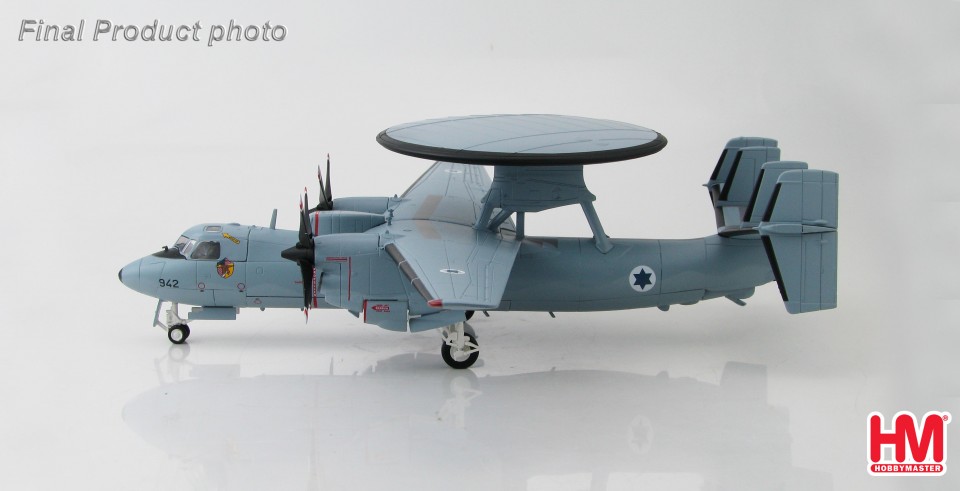
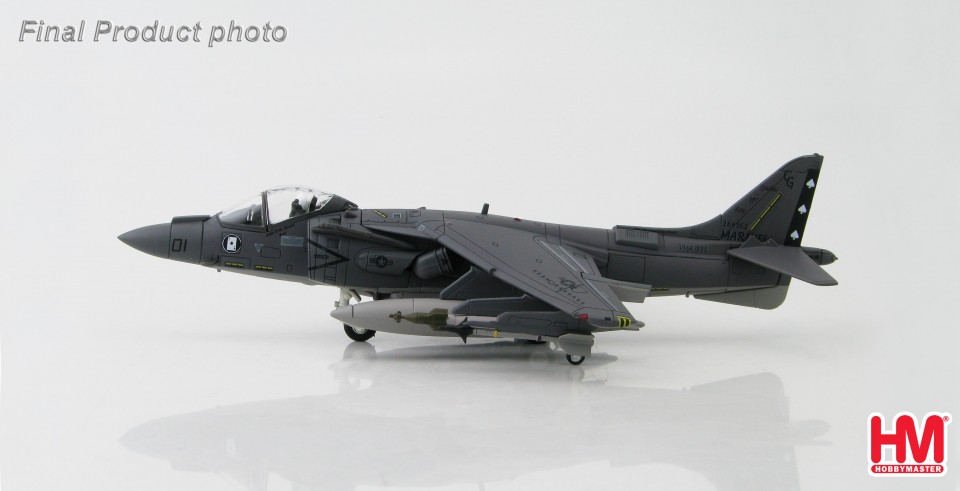

Corgi Aviation Archive Sale
Flying Tigers have been able to buy very limited stocks of the items below at a very Special Purchase Price. They will not last long and are priced to sell out ! Grab yourself a bargain while you have the chance. Please click on the images or links below to go straight to the model of your choice or alternatively please CLICK HERE to go to them all.


That’s all for this weekend. I hope you have a great Bank Holiday Weekend.
Richard.
Flying Tigers.