The Bristol Type 156 Beaufighter was a multi-role aircraft developed during the Second World War by Bristol Aeroplane Company in the UK. It was originally conceived as a heavy fighter variant of the Bristol Beaufort bomber. The Beaufighter was a versatile aircraft used in service initially as a night fighter, and later mainly in the maritime strike and ground attack roles; it also replaced the earlier Beaufort as a torpedo bomber.Variants built in Australia by the Department of Aircraft Production (DAP) were sometimes referred to by the name DAP Beaufighter. The idea of a fighter development of the Beaufort was suggested to the Air Ministry by Bristol. Bristol made proposals of a fixed four-cannon version and a turret fighter with twin cannons; the former was preferred by the assistant chief of the air staff. As a torpedo bomber and “general reconnaissance” aircraft the Beaufort had moderate performance but for fighter-like performance Bristol suggested their new Hercules engines in place of the Beaufort’s Taurus.
Since the “Beaufort cannon fighter” was a conversion of an existing design, development and production was expected far more quickly than with a completely fresh design. Bristol started building a prototype by taking a partly-built Beaufort out of the production line. This conversion served to speed the process—Bristol had promised series production in early 1940 on the basis of an order being placed in February 1939—and the ministry ordered two prototypes from the line and two built from scratch. Although it had been expected that maximum re-use of Beaufort components would speed the process, the fuselage needed more work than expected and had to be completely redesigned. As such, the first prototype flew for the first time on 17 July 1939, a little more than eight months after the design had started, possibly due to the use of much of the Beaufort’s design and parts. A production contract for 300 machines “off the drawing board” had already been placed two weeks before the prototype F.17/39 even flew.The first prototype achieved 335 mph at 16,800 ft, the second prototype when laden with operational equipment was slower at 309 mph at 15,000 ft. Large orders were placed at the start of the Second World War but this meant an expected shortage of Hercules engines. In February 1940, conversion of three aircraft to Rolls-Royce Merlins was ordered; success with the design was expected to lead to production aircraft in 1941. The Merlin engine installations and nacelles were designed for the Beaufighter by Rolls-Royce as a complete “power egg” unit. The first Merlin powered aircraft flew in June 1940. However it was found that the Merlins left the Beaufighter under powered and gave it a pronounced tendency to swing to port, making take-offs and landings difficult and resulting in a high accident rate — out of 337 Merlin-powered aircraft, 102 were lost to accidents.

The Bristol Taurus engines of the Beaufort were not powerful enough for a fighter and were replaced by more powerful Bristol Hercules engines. The extra power presented problems with vibration; in the final design they were mounted on longer, more flexible, struts, which extended from the front of the wings. This moved the centre of gravity centre of gravity forward, an undesirable feature in aircraft design. It was moved back by shortening the nose, as no space was needed for a bomb aimer in a fighter. This put most of the fuselage behind the wing, and restored the centre of gravity to its proper location. With the engine cowlings and propellers now further forward than the tip of the nose, the Beaufighter had a characteristically stubby appearance. Apart from power plants , the differences between the Beaufort and Beaufighter were minor. The wings, control surfaces, retractable landing gear and aft section of the fuselage were identical to those of the Beaufort, while the wing centre section was similar apart from certain fittings. The bomb bay was omitted, and four forward-firing 20 mm Hispano Mk III cannons were mounted in the lower fuselage area. These were initially fed from 60-round drums, requiring the radar operator to change the ammunition drums manually—an arduous and unpopular task, especially at night and while chasing a bomber. As a result, they were soon replaced by a belt-feed system. The cannons were supplemented by six .303 in (7.7 mm) Browning machineguns in the wings (four starboard, two port, the asymmetry caused by the port mounting of the landing light). This was one of the heavier, if not the heaviest, fighter armament of its time, exceeded only by the later marks of the American B-25 gunship medium bomber with up to fourteen forward-aimed 0.5 in (12.7 mm) machine guns. When Beaufighters were developed as fighter-torpedo bombers, they used their firepower (often the machine guns were removed) to suppress flak fire and hit enemy ships, especially escorts and small vessels. The recoil of the cannons and machine guns could reduce the speed of the aircraft by around 25 knots when they fired.The areas for the rear gunner and bomb-aimer were removed, leaving only the pilot in a fighter-type cockpit. The navigator-radar operator sat to the rear under a small Perspex bubble where the Beaufort’s dorsal turret had been. Both crew-members had their own hatch in the floor of the aircraft. The front hatch was behind the pilot’s seat. As there was no room to climb around the seat-back, the back collapsed to allow the pilot to climb over and into the seat. In an emergency, the pilot would operate a lever that remotely released the hatch, grasp two steel overhead tubes and lift himself out of his seat, swing his legs over the open hatchway, then let go to drop through. Evacuating the aircraft was easier for the navigator as the rear hatch was in front of him and without obstruction.

A Beaufighter of No. 30 Squadron RAAF adjacent to Hombrom’s Bluff near Port Moresby, 1942
Production of the Beaufort in Australia, and the highly successful use of British-made Beaufighters by the Royal Australian Air Force, led to Beaufighters being built by the Australian Department of Aircraft Production (DAP) from 1944 onward. The DAP’s variant was an attack and torpedo bomber known as the “Mark 21”: design changes included Hercules VII or XVIII engines and some minor changes in armament. By the time British production lines shut down in September 1945, 5,564 Beaufighters had been built in Britain by Bristol and also by the Fairey Aviation Company at Stockport and RAF Ringway (498); also by the Ministry of Aircraft Production (3336) and Rootes at Speke (260).
When Australian production ceased in 1946, 365 Mk.21s had been built.
The first Beaufighter was delivered to RAF Tangmere for trials with the Fighter Interception Unit on 12 August 1940, and the first operational machines were received by 29 Squadron and 604 Squadron on 2 September.The Beaufighter came off the production line at almost exactly the same time as the first British airborne interception night fighter radar sets. With the four 20 mm cannons mounted in the lower fuselage, the nose could accommodate the radar antennas, and the general spaciousness of the fuselage enabled the airborne interception equipment to be fitted easily. Even loaded to 20,000 lb the aircraft was fast enough to catch German bombers. By early 1941, it was an effective counter to Luftwaffe night raids. The various early models of the Beaufighter soon commenced service overseas, where its ruggedness and reliability quickly made the aircraft popular with crews although it was heavy on the controls and not easy to fly, good landings being a particular challenge.
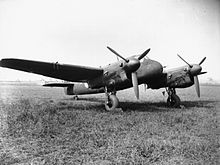
A Merlin-powered, Beaufighter night fighter Mark II of No. 255 Squadron RAF at RAF Hibaldstow, September 1941.
A night-fighter Mk VIF was supplied to squadrons in March 1942, equipped with AI Mark VIII radar. As the faster de Havilland Mosquito took over in the night fighter role in mid to late 1942, the heavier Beaufighter made valuable contributions in other areas such as anti-shipping, ground attack and long-range interdiction, in every major theatre of operations.By the autumn of 1943, the Mosquito was available in enough numbers to replace the Beaufighter as the primary night fighter of the RAF. By the end of the war some seventy pilots serving with RAF units had become aces while flying Beaufighters. In the Mediterranean, the USAAF’s 414th, 415th, 416th and 417th night fighter squadrons received 100 Beaufighters in the summer of 1943, achieving their first victory in July 1943. Through the summer the squadrons conducted both daytime convoy escort and ground-attack operations, but primarily flew defensive interception missions at night. Although the Northrop P-61 Black Widow fighter began to arrive in December 1944, USAAF Beaufighters continued to fly night operations in Italy and France until late in the war.
The Beaufighter arrived at squadrons in Asia and the Pacific in mid-1942. It has often been said—although it was originally a piece of RAF whimsy quickly taken up by a British journalist—that Japanese soldiers referred to the Beaufighter as “whispering death”, supposedly because attacking aircraft often were not heard (or seen) until it was too late.The Beaufighter’s Hercules engines used sleeve valves which lacked the noisy valve gear common to poppet valve engines. This was most apparent in a reduced noise level at the front of the engine.In the South-East Asian Theatre, the Beaufighter Mk VIF operated from India as a night fighter and on operations against Japanese lines of communication in Burma and Thailand. Mark X Beaufighters were also flown on long range daylight intruder missions over Burma. The high-speed, low-level attacks were very effective, despite often atrocious weather conditions, and makeshift repair and maintenance facilities.
The Beaufighter was also used by the air forces of Portugal, Turkey and the Dominican Republic. It was used briefly by the Israeli Air Force after some ex-RAF examples were clandestinely purchased in 1948.any Mark 10 aircraft were converted to the target tug role postwar as the TT.10 and served with several RAF support units until 1960. The last flight of a Beaufighter in RAF service was by TT.10 RD761 from RAF Seletar on 12 May 1960.
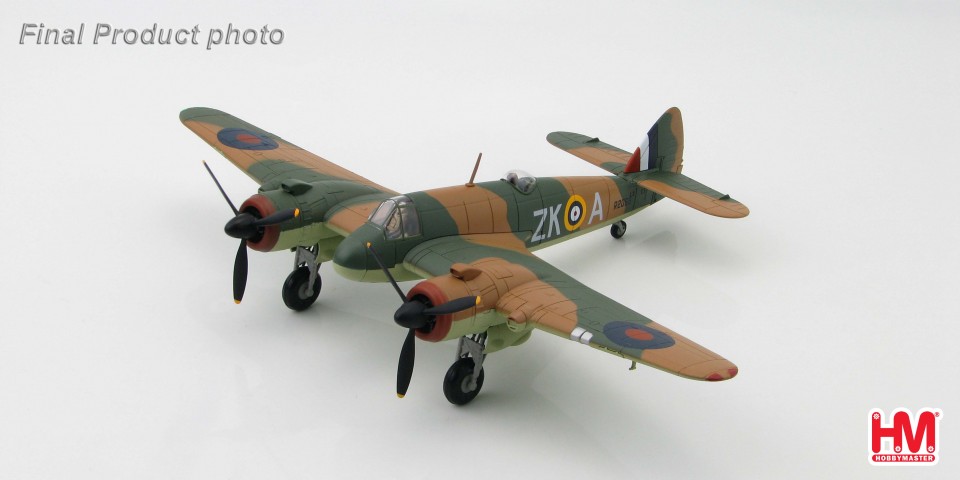
HOBBYMASTER 1/72nd SCALE BEAUFIGHTER SPECIAL OFFERS AVAILABLE.
Please click on the images or links below to go straight to the offers.
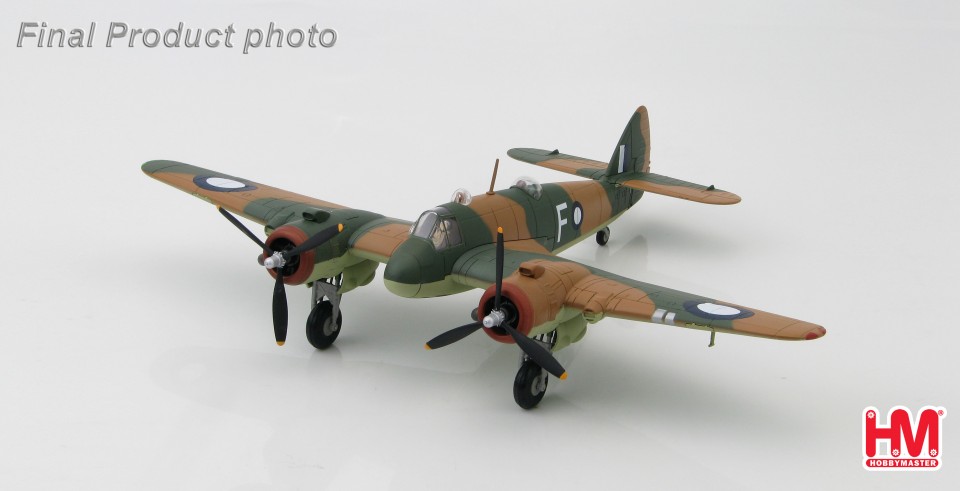
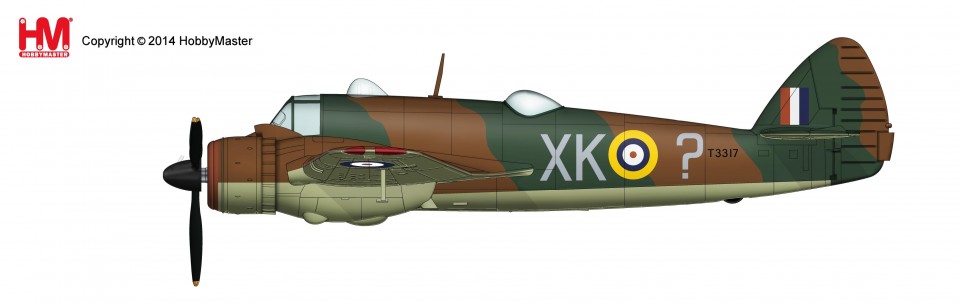
HOBBYMASTER NEW OFFERS OF THE WEEK !
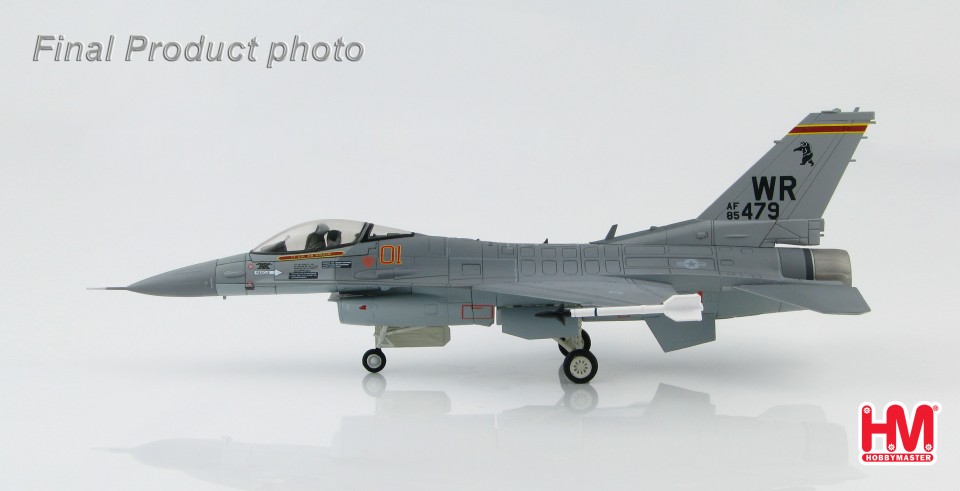
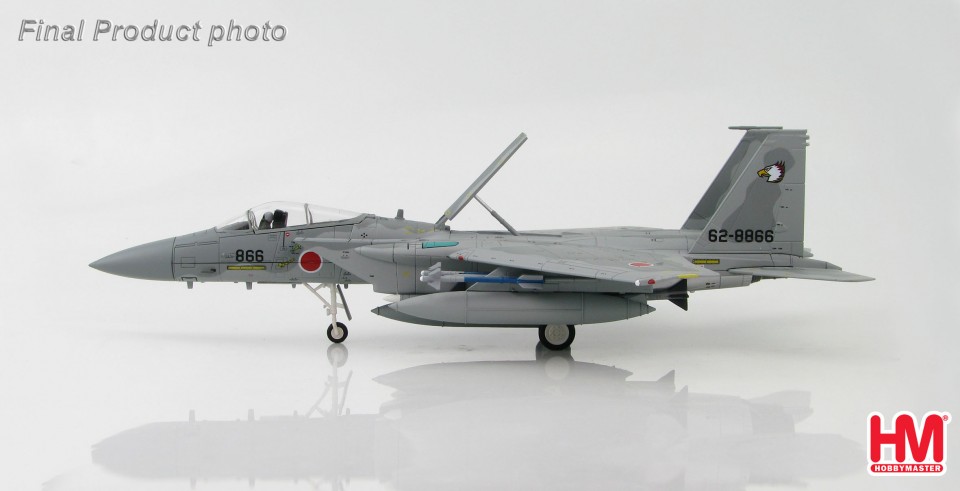
I have added some new “Offers of the week” . In many instances I have only re-stocked with limited supplies , so please be quick if you wish to catch a bargain ! Please click on the link here to go straight to the “Offers of the Week “ Section, or alternatively please click on the individual images/ links below to take you straight through to that model.
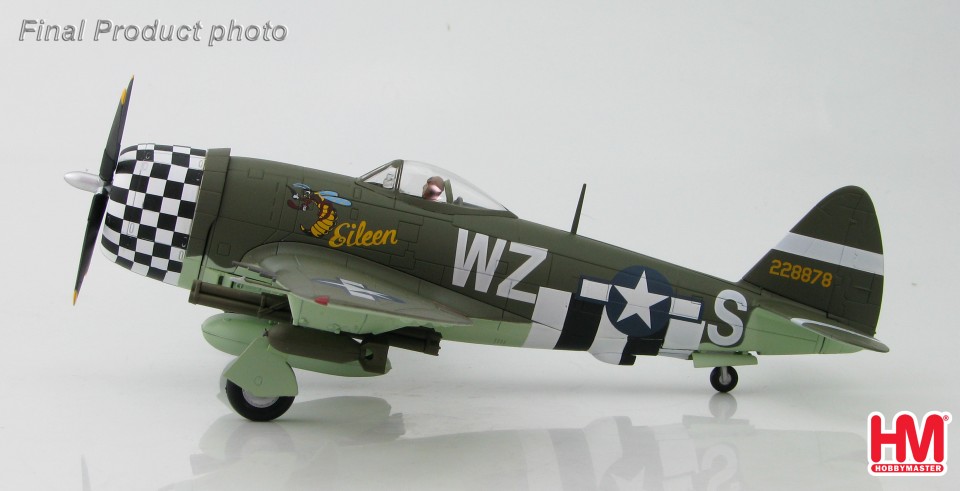 HA8410 P-47D Thunderbolt 228878, 84th FS/78th FG, England, Autumn 1944 RRP £79.00 ONLY £49.99

WEBSITE NEWS AND UPDATES
Some of you may have noticed that the Flying Tigers Homepage has changed. (SEE BELOW FOR DETAILS). We hope you like it ! I have been working hard with my Web Designer to come up with a much clearer site that is easier to navigate. We’ve also developed the Homepage to look great on a mobile device. I have provided an explanatory graphic that breaks down the operation of each part of the Homepage. I have identified all the key areas and explained them below………
A) The new menu drops down to show more links. We will add more to this in the coming weeks in order to aid navigation.
B) The new slider shows links to the shop and our pre-order products. It will also feature some of the newest products and releases.
C) This is a link to the shop
D) This is a link to the Pre-order model sections (i.e. those that are not in stock but are coming soon)
E) This is a link to the latest models that have hit the Flying Tigers warehouse (in stock and ready to ship!!)
F) A new improved SEARCH facility
G) Links to the model brands, such as HobbyMaster and Corgi
H) The weeks featured models (12)
I) Sign up (or sign up a friend) to the newsletter. There is also a link to the LATEST newsletter
J) A map of Sywell Aerodrome and a little history about this fantastic place
K) A little more about Flying Tigers and links to model sections
L) A FAQ section (which we will add to)
M) A “Things to do at Sywell” section
N) More about Sywell
O) New products
P) Flying Tiger Tweets (please follow us on twitter!)
Q) Facebook post (please like us! and share!)
R) Recent News
S) Aviation Links (we will expand these….. if you have any worthy suggestions, please let me know)
T) Contact Information

There is still much to do, and more improvements to be made. Please bear with us whilst we make these changes, but the website is open 24 hours a day, 7 days a week, ALL year round and ready for business.
Thank you for taking time to read this week’s Newsletter .
Richard.
Flying Tigers.